
Lack of rain caused ‘worst yields' Chichester district farmers have ever seen
See the latest news from Your World at https://www.sussexexpress.co.uk/your-world
Weeks of punishing heat and almost no rainfall have left farms across Southern England scorched.


There was just 0.7 mm of rain in July, barely 1% of the long‑term average, while mean temperatures sat more than 3 °C above normal, pushing soils, crops and livestock to breaking point.
Farmers from across the region say this has been their toughest season in years, with shrinking yields and no meaningful relief in sight. They have warned that without swift action on water management, they will be ‘snookered'.
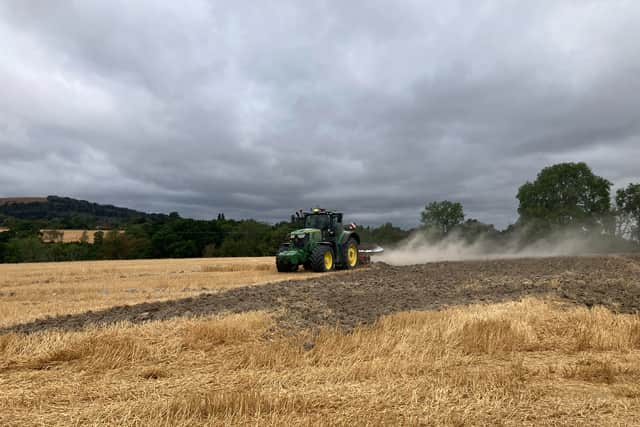
On his 600-hectare farm in Bignor, near Petworth, Will Tupper said it has been an incredibly difficult year:
“Despite winter crops looking good earlier in the spring, the lack of rain and extreme heat has severely impacted yield. Some spring crops have hardly seen any rain from sowing to harvest, resulting in some of the worst yields local farmers have ever seen.
Lambing went well in the dry weather in April, but forage is now extremely scarce with many farmers eating into winter stocks.
Without rain soon, it will be difficult to get ewes in the desirable condition for breeding and will start to impact next year too.”
Nick Evans is an agronomist and farmer from Sidlesham. He said: “Whether you are small-scale or big-scale, the issue is water resource.
“How you are coping this summer correlates to your access to water.
“If you have provision, or can store water on site, you have coped. If not, you have to start making difficult decisions about which crops to support.”
He said that on his family fruit farm they are still able to use mains water, but like farmers up and down the country, are looking ahead to next summer and thinking about how to future-proof the crop.
“We will capture rainwater from the greenhouses over the winter, and I will use shade netting for the polytunnels next year. I am advising other farmers to do the same. It’s what they do in Portugal, Spain and Morocco. But the nets come from China and are expensive.
“There’s lots of money being spent this year on farms to mitigate the heat. We need the government to make more money available – particularly for water resource management.”
That call has been backed by the MP for Arundel and the South Downs, Andrew Griffith, who told DEFRA this week that farmers want simpler planning regulations and access to grants and cheap capital funding to help them build out the lakes, wetlands and small reservoirs they need on their farms.
In a statement, he said: “Water scarcity is now a critical issue, and farmers are calling for action and funding to address this. It is local farmers who understand the land and the environment they manage and what type of water collection works best for them.
“However they do this, the process to be allowed to be build on-farm water storage solutions must be made quick and painless. The government needs to act now to accelerate investment and remove the barriers that are currently preventing some farmers from getting these projects underway.
“Food security depends not only on supporting farmers to produce food; it also depends on ensuring they have reliable access to water when they need it.”
Rising temperatures and lack of rain don’t just affect the quantity of crops, but the quality too.
Nick Evans said: “Plants don’t like it when it’s too hot. The hotter it is, the more energy they have to expend to survive rather than produce fruit.
“Strawberry plants, for example, are happiest at 24 degrees; if they have to grow in 34-degree heat, the fruit is smaller.”
The heat also affects the workers in the fields and greenhouses harvesting the crops. Mr Evans said: “They are exhausted, so the picking speed is slower.
“Farms are having to take on extra staff, but that is difficult because foreign seasonal workers need permits to work here, and the government issues a finite number each year.”
He said he thought his farm had escaped the worst of the drought but then discovered the gooseberry crop had failed.
The impact of the weather reaches far beyond the fields themselves. When farmers in the region bring in smaller harvests, supermarkets face tighter supplies, higher wholesale costs and fewer home‑grown options to put on shelves. That pressure feeds directly into rising food prices for shoppers.
Meanwhile, livestock farmers are also on constant watch for Bluetongue, a midge-borne disease which has been exacerbated by climate change, and has been spreading rapidly in the UK.
In Bignor, Will Tupper said: “Bluetongue is a constant worry; most farmers in the area have vaccinated against the current strain at a significant cost, but it has been well worth it, looking at the devastation it is causing in the West Country.
“However, new strains are close by and an ever-present risk.”
As autumn approaches, farmers across southern England say they are facing a perfect storm: drought‑stricken fields, a resurgent bluetongue outbreak, and fertiliser costs that remain stubbornly high after two years of global volatility.
Together, these pressures form a triumvirate that farmers across the area warn is pushing them to their limits as they head into the most uncertain winter in years.