
Farm Diary: amid the uncertainty, the good news is prices are very good at the moment
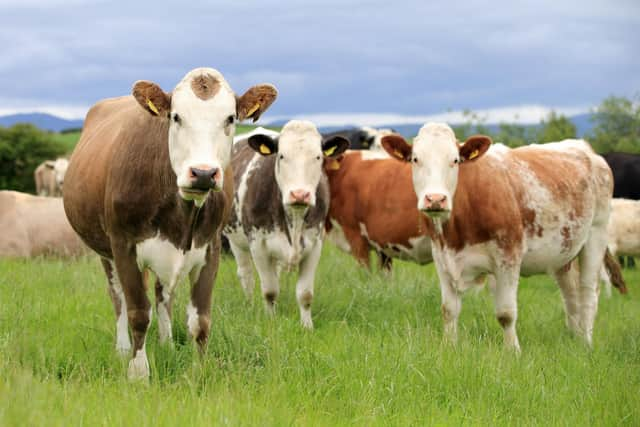
In the midst of all the uncertainty on farms up and down the country, at least prices are very good and in particular beef prices. The live auction marts are very busy as more cattle are sent in to be sold in the ring where farmers feel that competition ensures fair prices. Most would agree that this has been needed for a long time and that many farmers have been losing money in the beef sector of late as costs went up.
A shortage is what follows which is what we have now, and an articulated lorry load of finished cattle leaving the farm these days is worth £100,000 which is up from £60,000 not that long ago. Only the large finishers send such numbers off the farm of course, but the demand for cattle then lifts prices for everyone. The fear is that many are selling breeding stock for killing, tempted by such high prices and this will further affect supply in the future. Normally when prices surge in this way, retailers bring in more Irish beef, but there is also a shortage on the Emerald Isle. This outlook is set to support high prices both in the UK and Ireland this year.
Lamb and sheep prices are also good, but in Wales there is an increasing displacement of Welsh Lamb with New Zealand and Australian lamb in retail stores. Data released by government show that sheep meat imports from NZ and Australia have risen by 40% in 2024, and now account for 86% of UK sheep meat imports. There are several factors at play here, our production has dropped 7% in 2024, prices are low in the southern hemisphere and of course the free-trade agreement post Brexit which allows greater and easier access.
There are many concerns around this in Wales as one would expect. The displacement of a high-quality product, the displacement of world-leading sustainable product on the shelves, for one which has travelled thousands of miles, and the knock-on effect of this on farmers and rural communities. Unfortunately, most consumers go shopping on a tight budget and the differential in price will sway them.

There are plans afoot to ensure pig farmers in this country get a better deal from the supply-chain. The Fair Dealing Obligations (Pigs) Regulations 2025 laid before Parliament, will require buyers to use a written contract from a qualifying seller, which complies with various provisions set out in the statutory instrument. This was initiated by the last government due to the way pig producers were exposed during the pig crisis of 2021-22 where there were no meaningful contracts in play.
The legislation aims to deliver an element of certainty and protection for pig farmers, but offering some flexibility for both sides if they are affected by matters outside their control. There is also scope for adding more teeth to the legislation once in operation if for any reason it does not deliver as planned.
The price of eggs in America has gone through the roof, rising more than 350% per dozen compared to last year. Given that eggs are such a healthy product and full of protein, coupled with the fact that they are not easily replaceable, shops and in particular restaurants are struggling to keep up with the price increases. The biggest factor here is the loss of laying hens due to Avian Influenza, with over 128 million lost since 2022.
Rising costs on farm are also a factor and inflation of course, plus the inelastic nature of egg sales; that is consumers keep buying despite price rises, which drives prices higher still due to demand. This is not over, as a further 12 million birds were lost in February, bringing the total lost this year to 35 million birds. Farmers are also severely affected economically when this happens, whilst the slaughtered birds are paid for by the US government, the period of disinfecting and re-stocking is not and there is a severe gap with no income for the farmer there.
Many farmers and their families have been traumatised by the scale of infection and slaughter on farms and given that eggs are used so widely in food production, a huge rise in price affects many food products on sale. Egg farming in the USA is now seen as a high-risk business to be in, and it will be interesting to see how all this affects the future.
As we all wait for the budget this week, the trailers indicate more severe cuts and bad news across the board as the Chancellor finds herself in a very difficult position indeed. Many would claim that much of it is of her own making due to the strict fiscal rules she set out pre-election in order to instil confidence in the electorate that she would be a prudent and efficient Chancellor. I think that confidence has largely evaporated already as she has had to bear down hard on business due to the inheritance (which was a total surprise), hampering growth.
I don’t think many of us are willing to hear any more about the ‘black-hole’, and it is beginning to grate. Also, why many ask with all these extra harsh measures introduced do her own fiscal rules remain solid? For how long can she hold the line on this? With NHS England axed recently, welfare under the knife and now talk of widespread severe cuts across the board, it is ironic that the Labour Party are doing what the Conservatives did not have the courage to do.
This plays very badly with many Labour MP’s, as they did not come into power after so long in opposition to do this. They also have an eye on their parliamentary seat and jobs only nine months into a new parliament and a huge majority. It is unprecedented for sure, and opposition from the Conservatives is silent; what can they say? Are they suddenly going to criticise what they wanted but failed to do in 14 years of government? They can chip at the edges, but not much more.
However, Conservative leader, Kemi Badenock did make an important statement last week, and that was that there is a central weakness to this government’s policy, just as there was when her own party was in power and that is Net Zero. She rightly states that it is unaffordable, makes no difference globally, and that the target of net zero by 2050 was plucked out of the air, just as the Minette Batters at the NFU did, going one better and aiming for 2040. She correctly states (as this column has done many times) that neither Conservatives or labour have been honest about the cost of net zero to the economy and all of us.
Both have pretended that there is no tension between going green and growing the economy, talking of cheap power and thousands of jobs which is pure fantasy. Those jobs as many have recently been pointing out, will be in China who are well geared to supply all the kit for clean energy generation at a far lower price than anyone else.
Climate change is a challenge of course, but we can do nothing to solve it alone here in the UK, why would we therefore undermine growth to pursue an ambition which we cannot achieve? It needs proper debate.