
Farm Diary: Beautiful spring contrasts with global turmoil
This amazing spring weather continues, and whilst some rain would do a great deal of good for crops and grassland, everyone else wants this weather to continue. What happens next? When it does start to rain later this month or in May, will it know when to stop?
March which came in like a lamb, also went out like a lamb this year, produced record hours of sunshine. Met Office data suggests that it was the sunniest March since 1910, badly needed to try and cheer everyone up. It was our tenth warmest March by mean temperature, but the fourth warmest by average maximum temperature. It has certainly brought spring to us all in a splash of colour, and one of the best I can remember for blossom.
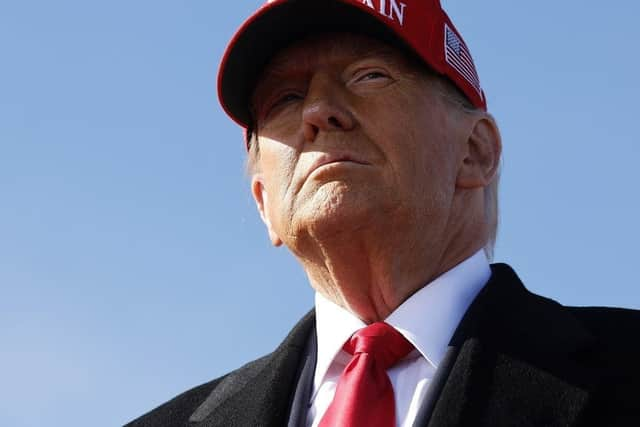
Unlike the month of March, Donald Trump and his government has brought whirlwinds and hurricanes to the financial markets, and total instability to the world order of trade. In true 21st century fashion it feeds our 24-hour news, endless bulletins and expert opinion, foaming keyboard warriors on social media and the proliferation of the new curse, the podcast.
Despite the long list of issues affecting agriculture since this government came to power, everyone is now focussed on tariffs, and how they will affect trade and growth. One thing is for sure, they will not help our position very much, but it is too early to be all doom and gloom. The big concern agriculture has is over imported foods and our animal welfare standards. Will our government give way to Trump in order to try and rid themselves of the 10% tariff on our goods to the USA.

Chief amongst these concerns is chlorine washed chicken and hormone beef, and the danger of our industry being sacrificed on the altar of a Trump deal. Nigel Farage has said that if he was in charge, he would allow them in and leave it to consumer choice whether they bought them or not. There are plenty of surveys of British citizens and consumers who say animal welfare is important to them, but when shopping, price is almost always the most important thing for most people.
Those who are better off can afford to buy more expensive goods, but again time is short, and it is completely unrealistic to expect people to read labels on all the products they buy, especially as they seem deliberately complex, with fine print whilst logos and nutritional values are splashed all over, which are meaningless to most. Supermarkets are masters at manipulation and the whole shopping experience is geared to their advantage, using subtle ways of guiding people around the store and selling them items they didn’t realise they needed.
Whilst all this global turmoil takes place, protesting arable farmers have decided that it would be a good idea to draw attention to the inheritance tax issue by going on strike! They are refusing to sell their milling wheat which they say will mean no hot cross buns for Easter and no baps for BBQs for those enjoying this sunny weather. How to make yourself popular with the public and gain their sympathy! No thought for anyone else or the repercussions for the beef, lamb and chicken which go into the bap.
Traders say that there is currently too much milling wheat in the country which is why prices are currently falling (is this the real reason for this so-called strike?) and buyers might be happy to have contracts cancelled as they can buy it cheaper today. Campaign ‘Farmers to Action’ (I am just waiting to hear David Handley from ‘Farmers for Action’ has entered the fray) are taking to the streets and organising more tractor runs later this month. It is unlikely to move government’s position, given that this Chancellor has not given an inch to anyone so far and has far bigger issues to deal with now.
NFU President Tom Bradshaw is trying to distance himself from this protesting, but he is damaged and his credibility and negotiating power with government is not what it might have been. He is of course in a difficult position as social media has brought an added dimension to things, and those who were always a thorn in the NFU’s side, deluded by the thought that protest and action could change things, when in fact considered negotiation with government always delivered the most. They always hated that approach and now with social media they have a loud voice and far mor influence than they once had.
However, a calm measured approach from the NFU has always worked best in public, with any emotion expressed only behind closed doors. Emotional Presidents over the 40 years or so that I have been involved with the NFU have delivered the least. Tantrums in the office, yes, lambasting officials and Ministers in private, occasionally, but never in public. Public criticism entrenches politicians’ position and they are far less likely to help. The art of politics (getting your own way through persuasion) has always escaped the radicals who want to shout.
Having hammered farmers on several fronts since it came to power, this government is keen to change the one-sided supply-chain, giving farmers a better deal. That is a huge challenge, and it is difficult to see how it can be achieved, but it must be something farmers would want to engage with after decades of complaining about wafer thin margins and supermarket dominance? It appears not. Such is the grievance over inheritance tax (which was a tax break for the last ten years or so), that it seems no one wants to listen. We may all regret this in years to come.
How mad is this world we live in? Totally mad is the answer if one takes the case of the kidnapped lamb last week, by a vegan! No, in fairness the lady in question had not abandoned her appetite for lentils, she had in fact spotted a pair of lambs without a mother, stole one of them as she thought it would be better off in her ‘care’. She took it home, washed off the identifying number on its side, put it in nappies and fed it cow’s milk and a formula she bought on Amazon. You could not pack more of the world we live in into that story.
Meanwhile, the hapless farmer on his farm in Dorset had lost a ewe when she died suddenly, leaving two lambs to be artificially reared. As it was dark, he decided not to take them away which would upset the other ewes and lambs in the field, thinking it best to leave it until morning. When he returned in the morning, he could only find one lamb, and he thought the other must have been taken by a fox. Three weeks later, acting on a tip-off, police found the lamb at the vegan lady’s house and not in good condition. The lamb weighed half the weight it should have been and lucky to have survived.
The lady has now been banned from keeping sheep after admitting one offence of theft and one of causing unnecessary suffering to a protected animal. She was sentenced to a 12-month community order with a 6 month alcohol treatment requirement, and six rehabilitation activity days. This shows that vegans do not make for good stock farmers.