
Farm diary: row over rights of way in the countryside
Many of our farmers have been coping with adverse weather over the last week, as floods, sleet, snow, and heavy frost hit parts of the country, especially further north, with the coldest night on record, -14.5c in Scotland.
Plenty of heat however, as another major issue with this government and the farming community has blown up, and its about scrapping the last government’s 2031 cut-off date on adding unrecorded rights of way. This had meant that all rights of way would need to be recorded by 2031, and no others could be added after that date and reversing this, has been branded as an attack on the countryside. There have been plenty of examples in the farming press of members of the public being rude to farmers, with abuse and a general attitude that they can do as they like in the countryside.
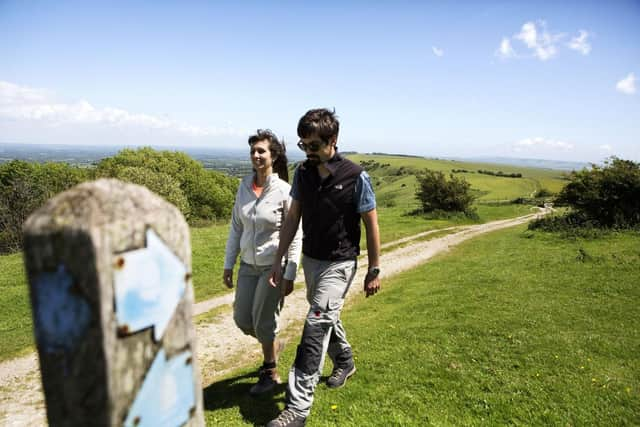

Whilst this is undeniably true, it’s difficult to see why denying more access through more paths encourages this minority to somehow go away or change behaviour. The vast majority of walkers are very well behaved, decent people enjoying the countryside. The majority of dog owners are responsible, enjoying fresh air and the views. As always, just as it is in our own industry, the minority grab the headlines with their irresponsible behaviours and attitudes.
Defra Secretary Steve Reed commented that 40,000 miles of footpaths and historic rights of way have been saved from plans to scrap them. I have sympathy on both sides here, firstly that false hopes were raised for farmers which were quite unrealistic if we are honest. Unrealistic in that local authorities are so slow and inefficient; it would mean that the cut-off date would arrive with thousands of footpath miles put forward for recording not dealt with. Unrealistic also as our population continues to increase, almost 1m a year in legal migration alone under the last government.
This increases the imbalance between city and town dwellers, and those of us in the countryside. Add to that the huge concern about mental health and how getting out for a walk is a good thing to do, early retirement and the general fitness of people on reaching the retirement age. The general fashion for middle-classes to go walking quite long distances, all adding to the number of walkers.
Baroness Hayman, Parliamentary Under-Secretary, said that reversing this decision would mean that thousands of miles of pathways would not be lost to the general public, adding that the creation of nine new river walks and three new National Forests would see decades of renewal, allowing millions to enjoy nature. That is all well and good, providing more space for people to walk other than on farmland, but more paths on farms will also have its issues.
There is the challenge of livestock and even a minority of walkers and irresponsible dog walkers cause huge damage, disruption and financial costs, and indeed mental health problems for the farmers and families affected. More paths on a farm will mean greater access to more fields which means that livestock have fewer fields to graze undisturbed, especially at lambing and calving times. There is also the issue of bulls being run with herds of cattle, which is another challenge to be dealt with.
No one in government or in any of its arm’s length bodies ever admit that all these walkers have a huge effect on wildlife, which is another real problem, especially if they have dogs. Allowing walkers to have access to a further 40,000 miles will indeed pose a threat to wild animals and birds. That is before the irresponsible allow their dogs to run around hunting, whilst owners claim that they are only having fun.
However, I believe we have bigger issues to fight for than this, and whilst it will disproportionally affect some farmers more than others, and recognising how frustrating it might be to allow access to paths that have not been perhaps used for a very long time; meant for people to get to work by foot decades ago, at least it is not ‘freedom to roam’. That is what we can unite against and giving on this issue will decrease that risk, especially with the pressures on government for greater access.
The big fight remains the one for survival and this has several components, each one contributing to the threat of many farms giving up. The big one in the press and grabbing all the headlines is of course the Inheritance Tax issue, but the phasing out of farm support, rising input prices from a few very big suppliers, pressure of farm gate prices by the big players who buy our produce, lack of labour to work on farms, lack of opportunity for new blood to get into our industry, banks tightening up on borrowing due to this economic squeeze, tenant farmers under pressure, are also at least as telling, with adverse weather thrown in for good measure.
At the Oxford Farming Conference last week, the Environment Secretary Steve Reed walked into the lion’s den and started by apologising for the shock of Inheritance Tax introduced in the last budget. He said he knew how unpopular it was and that it was not something they had intended to do before they saw the state of public finances, and he regretted that. This did not stop the clarion call for a reversal of this policy, with accusations of betrayal. The President of the NFU welcomed Reed’s apology, then added that he had only apologised for the shock and not the policy.
Leaders of our industry accept that this is a Treasury matter and that Defra, and the hapless Steve Reed is a bystander in all this. The focus must therefore be on the Treasury but given the trouble this country is in after decades of decline, the hard men and women at the treasury will not be in any mood to give in on the policy, I fear. A way through needs to be agreed fast and probably entails raising the threshold before the tax kicks in and allowing time for those who have made no plans to hand over, say 10 years to get that done.
There will be more protests no doubt, but it does seem that Steve Reed has moved on to see how the real problem here can be tackled. The problem of farmers not making sufficient money to pay the tax in the first place, and his solution here is to try and bring more fairness into the supply chain, where dominant players on both sides allow farmers to survive; just. I have always thought that retailers who buy produce, given that they know costs of production to the penny, have always factored in the rising price of land and the taxation significance of that.
Whilst of course greater fairness is needed in the supply chain, making it happen I don’t believe is within Steve Reed’s gift or any government. He is right that in targeting 50% of public sector catering to British produce will have influence, and well overdue. That schools, hospitals, our armed forces, and prisons have not had British produced food is a national disgrace, based on cost. It should be way over 50%, as we depend on all these institutions to do the best for their patients, pupils, serving soldiers and inmates and that starts with decent food surely.
There is a great deal to do, and we can only do it by working with whichever government is in power.