
Farm Diary: The challenges facing the UK's beef farmers
More wet weather with many areas far exceeding the September average, as the unsettled month which takes us from summer to autumn once again delivers stormy weather.
Cultivations and other field operations vary from sticky and difficult, to impossible, depending on soil type. On the other hand, fencing repairs at Tillington is now far easier, as the ground is soft and driving posts requires less effort. Trimming all the brambles (again) which are currently touching the electric fences seems to be an never-ending job this year as they certainly thrive in wet weather.
Farmers have written to the six largest supermarkets asking them to stop pretending that their own brand food comes from some quaint family farms. Farmers Against Farmwashing campaign are claiming that supermarkets are using fake brands and the union flag, to fool consumers into thinking that the produce comes from rustic, independent producers, whereas in fact, much of the food is sourced from overseas, masking the decline of British farms.
The AHDB Milk Forecasting Forum (MFF) met on the 18 September to discuss the factors impacting on future GB milk production. The main points of conversation were focussed on latest trends in herd size and milk yields. In particular, the discussions focussed on how farmers may adjust their herds and management strategies to maximise returns in the face of labour issues, higher cost of borrowing and volatility in feed costs.

The effect of herd size is regional, it was noted, with some regions having to comply with tighter environmental rules there is often a decline in herd size. Poor quality silage this year in many areas will drive up costs, as high protein feed will be necessary to support yields. This could increase if conventional soy is replaced following the deforestation regulations. One of the bigger questions is, what will be the impact of falling youngstock numbers on long-term rate of decline in the national herd. The uncertainty around weather, input cost, government support, coupled with the potential longer-term impact of environmental legislation, is causing a great deal of concern.
Organic dairy farmers have had a horrible time of late, but things are changing. In June, there was a positive increase of almost 4% in the volume of organic milk sold, whilst conventional milk sales have declined slightly which indicates that the organic recovery is continuing. It is important however to note that organic milk is still a small proportion of overall category volumes (3%) and, longer term, the picture is still down year-on-year as the cost of living has had such an adverse impact. Other areas of organic dairy which are showing signs of recovery are cheese, yogurts, butters, and spreads which is all good news.
This recover has been helped by a number of farmers converting back to conventional farming, leading to reduced supplies. It is reported that 123 million litres per annum (25%) have been lost since the 2020/21 milk year. The path back to organic status takes time and farmers will want to feel sure of the direction of travel before committing to return to, or gain, organic status. Organic dairy processors are actively recruiting currently, and the organic milk price is more attractive for those farmers who want to go back or convert. However, consumer confidence is fragile and further economic shocks and uncertainty could put a dampener on the organic demand recovery.
On a very different note, Australian cattle farmers look set to ramp up production of intensively farmed beef to export to the UK. The government’s impact assessment on the UK’s free-trade deal with Australia anticipates an increase in production to make the most of new tariff-free quotas. However, a meeting of the Environment, Food and Rural Affairs (Efra) Committee a few months ago warned of the environmental consequences of accelerating production of intensively farmed beef on the other side of the world and shipping it to the UK.
We are told that Australian farmers were very pleased with the deal, signalling their intention to accelerate production. This does seem to be at odds with the last Conservative government’s promises, criticised for ignoring climate change concerns when striking the free-trade deal, as apparently, according to pressure groups, more than 30% of tree cover in Australia was lost in the two years to 2018 and around 35.000 acres since then; a large proportion of that was due to beef production.
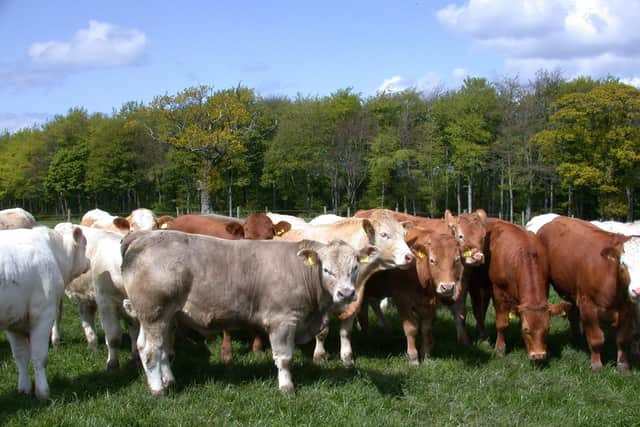
Beef farmers in the UK are under a great deal of pressure on the environment too, as well as the anti-meat protesters. However, they rightly claim that they have great success on food miles, contribution to the landscape, and food security. On animal welfare they are rated as highly as anywhere in the world by the Animal Protection Index, doing better than the US, Canada, Australia, and South America.
Our beef farmer’s carbon footprint is 19.1kg carbon dioxide equivalent/kg beef compared with a global average of 48.7kg – much better than Australia or any South American countries, but worse than the US and Canada. Now that is interesting, and we should consider why, especially the environmentalists who tend to have a very narrow focus. Growth hormones are used in beef production in the US, allowing for greater feed conversion ratio, accelerated growth and, crucially, reduced days to slaughter.
Nothing has as great an effect on the carbon efficiency of beef as days to slaughter and whilst this is an area British beef farmers can improve on; it will be by adopting improved genetics and management. However, it is often normal practice in the States or Canada to inject cattle prophylactically with antibiotics and a hormone ear-tag. Antimicrobial resistance is a huge concern both globally and here in Europe for both human and animal health. We have an excellent record in the UK beef industry, with low levels of antibiotic use compared with some other countries, and we need to demonstrate that with hard data.
Our unique voluntary approach to responsible use of antibiotics in this country, led by RUMA over the last 10 years or so has been one of the industry’s greatest success stories. I chaired RUMA at the time of change when we accepted the governments targets, did rather better in short order and continued to reduce usage ever since. We now use hardly any of the critically important antibiotics, and our usage of antibiotics overall has been reduced by over 60%. I have been in many countries, and in Europe, talking about this unique approach which others find fascinating.
I now chair the Governance and Ownership Industry Group, which oversees the Industry Medicine Hub at AHDB (levy body), where we collect and collate medicine records from dairy, beef, and sheep farms (pigs and poultry have their own systems). This again is done on a voluntary basis and so far, we have hit all our annual targets, but this year is a challenge. We need more data, otherwise legislation as we now see in Europe will follow here, if we do not talk to our vets, software suppliers and supply chain partners to insist that our farm’s antibiotics records are shared with the national medicine hub. It is an important way to back up the claim that British beef, lamb and dairy is the best.