
Farm Diary: the fight against inheritance tax continues
Whilst Blue Tongue Virus is now in the UK and will again start to spread once the weather warms up this spring promoting midge activity, African Swine Fever is spreading across Europe and is getting closer, and now we have a Foot and mouth outbreak in Germany. All this is of great concern. The water buffalo in Germany were on a re-wilding project and seemed to have been infected with Foot and mouth for some time. Many animals have been slaughtered as a precaution in the protection zone, but no sign of the disease.
No one knows for sure, but the suspicion is that it could be in the wild boar population which is of real concern. Many countries including the UK have banned all meat and animals from Germany until its all deemed safe once again. 2025 has not got off to a good start here either with Lynx roaming around the Cairngorms, reigniting the debate over wild species introduction. Abandoned and starving big cats pose a huge danger to sheep farmers, especially as we approach lambing time. Let’s hope our total opposition to such schemes are enough to stop those who want to see extinct species re-introduced to this country.
The fight against Inheritance Tax continues and indeed strengthens as supply chain joins farmers following Defra Secretary, Steve Reed’s comment that farmers should have a bigger share. Retailers, led by Morrison’s made the first move, calling for the government to think again. The farming press are suggesting that whilst supermarkets are often cast as the villains of the food supply chain, they may just be farmer’s saviours in this fight. That is rather naïve I think, as retailers fear that a good look at the supply chain may do them no favours with their one-sided long-term contracts and many punitive clauses.
I don’t believe for a minute that there is enough profit in the food chain to put farmers in a position to pay these new taxes without the price of food going up, but there was a great deal of talk at Oxford about the risk in the supply chain, and how all of that is passed down to the farm.
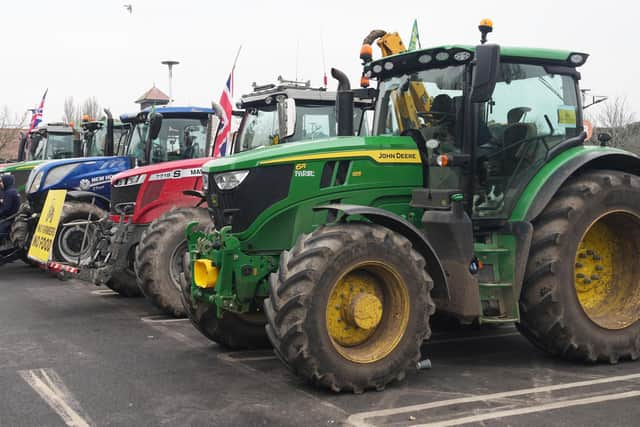

The introduction of the Groceries Supply Code of Practice ten years ago has not changed much as the regulator does not have enough power, and the inherent problems in the supply chain continue. In his speech at Oxford, Steve Reed talked about fairness and tighter regulation and now is certainly the time to have discussions around food security, as the just-in-time approach means that shortage is never far away. Add to that the devaluation of our currency, putting up the cost of imported food, whilst our farmers will be held to the same prices; it only ever works one way.
Processors are in cahoots with retailers, as their very existence often depends on it. Their margins are squeezed at every opportunity, giving them little room to pay more to farmers, even if they wanted to. Tight supply is the only mechanism which works, prices rise in the face of growing demand or tighter supply, nothing much else moves market price. Markets work where there is a reasonable equilibrium between the various players, but in farming our inputs are by and large in the hands of global multinationals (feed, fertilizer etc) and a few very large buyers dictate our farm-gate prices.
If we are honest, our best farmers are profitable as the prices at both ends are dictated by the average, and there is such a range of performance and profit, that the average farmer ensures the best are doing well. The bottom quartile either lose money, have no borrowings, and own their farm, whilst living on very little or a combination of all three. It’s not good whichever way one looks at it, as the vast majority of farmers in this country would have little chance of paying the Inheritance Tax without selling at least a part of the farm or re-mortgaging the whole over a long period of time.
At LAMA, the vast show of agricultural machinery, there has been much talk as the threat of farmers drastically reducing their purchasing of kit is real in the face of this uncertainty. NFU President warned all suppliers at the event, that everyone will lose out in a big way if this policy comes to fruition. In the meantime, the Office of Budget Responsibility (OBR), has distanced itself from the government, as its analysis show the government’s figures to be uncertain and unlikely to reach a steady state for at least 20 years.
Whilst the government is under pressure on its prediction that only 500 farmers would be affected, Defra has also come under pressure from MPs on the EFRA Committee, on its management of the Farming and Countryside Programme. With frustration that much of the plans to support the environment are still in development, and weaknesses which need to be addressed. Defra senior officials were grilled on the shock caused by the sudden acceleration in the loss of the Basic Payment Scheme (BPS) and de-linked payments.
They commented that the Treasury did not think the BPS scheme of old offered value for money and were forced to admit that not every farm will be viable under the new scheme. They claimed that farmers were enthusiastic about the scheme, when in reality farmers have no choice, and Steve Reed had already found since taking the job that a large percentage of farmers will not be viable without BPS payments. It is a sorry mess, and if nothing else the Inheritance Tax issue has brought it all to the fore and something will need to be sorted out.Whilst Chancellor Rachel Reeves tackles the regulators who stifle growth with their red tape and burden of regulation on business, I was reminded once again of Brexit and the promises made. Today the UK is one of the most regulated countries in the EU as we regulate for risk and not for growth.
I was also pleased to see Kemi Badenoch, new leader of the Conservatives admit the catalogue of mistakes made, as she rightly said that showing contrition and building trust is the only way to get a hearing with voters again.
We always knew of course, but it was good to hear from the leader that there was no plan for Brexit, and that is the scandal. Brexit was always going to be eye wateringly expensive and continues to cost us dearly but having not taken advantage of the few opportunities that there were, it has cost us even more. No plan for net zero Kemi said, but an announcement made anyway, and she apologised for the mistakes made on immigration, where the focus was deliberately kept on stopping the boats, whilst the Conservative government brought in record numbers of legal immigrants to work and study here.
She did not mention the other sleigh of hand, which was to publicly refuse pay increases to civil servants but allowed juniors to be promoted to middle management in order to get around the pay squeeze. ‘Grade inflation’ means the salary bill goes up just the same and has distorted the civil service with less able and experienced people promoted, as middle management doubles costing a whopping £2 billion a year.