
Farm Diary: Wheat harvests are low this year due to wet weather
Farmers and industry leaders are losing patience and becoming frustrated with this government for holding Defra back, especially in providing grant funding to support land recovery following flooding.
Farmers and industry leaders are losing patience and becoming frustrated with this government for holding Defra back, especially in providing grant funding to support land recovery following flooding. Apparently, only £2.1 million of the £50 million allocated in the recovery fund has been paid, leaving many farmers waiting for assistance. Given current weather there is an urgent need for support to manage water resources and protect from future flooding events. Apparently, the Farming Recovery Fund has been caught up in the autumn spending review.
Farmers affected by Bluetongue virus are not only having to cope with the disease and the restrictions that (quite rightly) entails, but are also docked up to 50p a kilo by abattoirs due to the extra costs involved. Industry leaders have expressed real disappointment over this whilst acknowledging these extra costs of cleaning down procedures and disinfecting, they feel that the industry should be working together in the face of this disease.
Yet another strain of Bluetongue has now been found in the Netherlands; BTV 12. This serotype is genetically unrelated to the BTV3 virus we have here in England and it’s worrying that it has been found so soon after a vaccine for BTV3 has just been developed. A warmer climate and global trade both play a part in the spread of disease and there is going to need to be a real tightening of biosecurity and safe trading for sheep and cattle in this country, which many farmers, markets and dealers will not like.

Leading dairy Co-op Arla has just launched free vending machines in North London for food banks. These vending machines will offer free fresh dairy products and there are also plans to have 100 fully stocked fridges put out to charities across the UK. This will enable charities to properly store dairy products which they are currently unable to take, due to a lack of storage facilities. This is a great initiative as the demand for dairy products is high and they are the most sought-after items.
Organic sales continue to increase slowly as consumers recover from the cost-of-living squeeze due to inflation, with an increase of 6.4% in 12 month sales to August. Apparently only 27% of consumers now say that cost is their biggest concern, against 57% who said that two years ago. Health and sustainability are now the labels 70% of consumers look for according to Nielsen who monitor retail sales and customer trends.
Following the description of the new monster John Deere tractor last week, it is reported that whilst tractor sales are down on arable farms (no surprise there) in the UK over the last year or so, livestock farms have been replacing machinery. Higher livestock prices have given farmers the confidence to replace machinery and according to the Agricultural Engineers Association report, the further north one looks the greater the tractor sales.
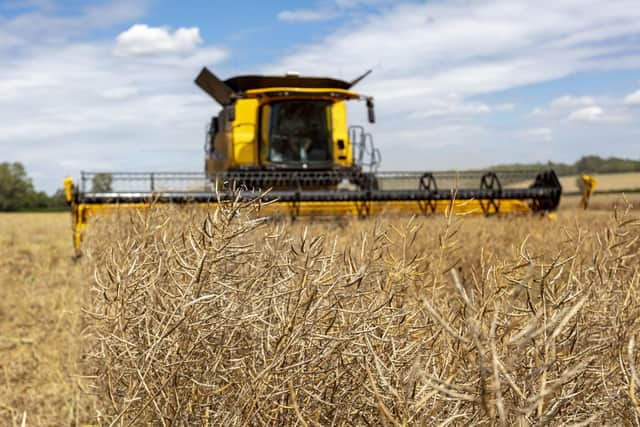
The poorest harvest this year has seen wheat tonnage drop to 11.1 million tonnes, which is almost 3million tonnes less than 2023 and a 21% fall on the 5-year average, leading to greater reliance on imports. Winter crops were the worst hit by weather, and spring crops suffered from late planting, however yielding far better than expected. Oil-seed rape production also fell by more than 30%, to the lowest figure in 40 years and less than half of our needs as a country. Wet weather has again affected planting this autumn in many areas across the country as the rain keeps falling! The EU has also reported a severe drop in yields, the lowest figures there in a decade.
We have serious concerns about the availability of vaccines in agriculture. Many vaccines used by farmers are either unavailable or in short supply which is affecting the health and welfare of our animals and potentially going to drive up antibiotic use, something we have strived so hard to reduce. There is a dire need for a national plan and whilst this is a global issue, I believe countries will aim to look after themselves and with the UK out of Europe, our need for a plan is greater than most.
The Oxford scientists who were at the forefront of the Covid vaccine agree. They believe that we are less prepared now than we were in 2019, they believe that once again we are complacent and that like other countries, we should have the capability to respond to emergencies. The EU has invested heavily in its capability to produce vaccines and could now respond far faster than we could in an emergency; we have gone from leaders to followers. Agricultural vaccines play second fiddle to human medicines as you would expect, but given that we need manufacturing capacity in this country there must be an opportunity to combine the two?
There is a new documentary which throws an interesting light on cattle and their impact on the world. It presents a more science led perspective on the role of cattle in supporting human life, global food systems and of course the environment. ‘World without cows’ looks at the challenges of feeding a growing global population, the essential role of animal protein in our diets and the contribution cattle make to biodiversity, soil health and carbon capture.
The documentary informs with evidence-based discussions from experts, academics in science and climate, and yes, farmers. According to Justin Sherrard, a strategist at Rabobank, 800 million people (one in ten) rely on cows for their livelihood and whilst of course cows contribute to emissions, Oxford Dr John Lynch states that they are not the biggest contributors to climate change; fossil fuels are. Jack Bobo from Nottingham University highlights the urgent need to produce more food as global population continues to grow. Rational discussions rather than opinions, visit worldwithoutcows.com
How our young people are indulged and wrapped in cotton wool these days, customers of cash strapped universities to be pampered and protected at all costs. The Canterbury Tales have been issued to students at Nottingham University, together with a trigger warning that they contain expressions of Christian faith! Investigations taken recently have found that books with what the protectionists consider to be challenging content, have been removed and that trigger warnings have been applied to more than 1000 texts, often by the most influential writers. We are in danger of breeding a generation of limited, if not ignorant academics?
I have not invested in Boris Johnson’s latest novel; it is by all accounts an entertaining read as one would expect. His has been an extraordinary life, both personal and public, popular with the media as he kept on giving; no end to the dramas (again both personal and public). There is no doubt that he has qualities, the greatest of which is as an effective communicator and a seemingly jovial character. However, having fooled many in the Conservative Party desperate for a big beast, his occupation of various public offices created turmoil and real damage; damage which we will all be dealing with for many years to come.
The next Conservative Party leader needs to be a leader of stature, a true leader who will offer credible and effective opposition to the government (always an essential ingredient of democracy), and a personality large enough to enable us all to forget Boris Johnson, who historians will undoubtedly write about rather differently to how he portrays himself.