
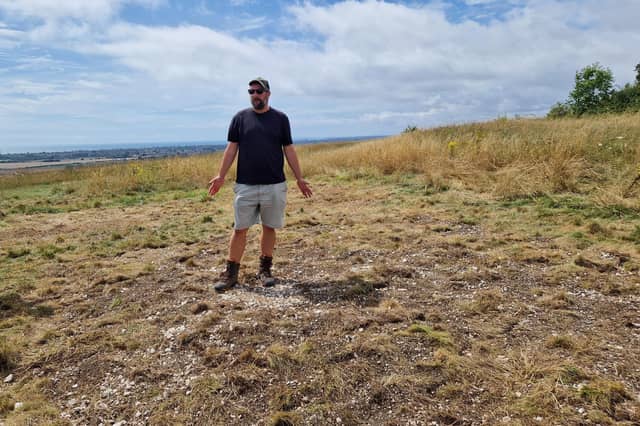


More than 4,000 people visited Highdown Hill over the two weeks, with daily tours proving popular and an open day with living history group Weorod demonstrating the way of life for Jutish settlers.
Project lead James Sainsbury, curator of archaeology at Worthing Museum, said: "There was an incredible atmosphere throughout and a real buzz about our work.
"We've had at least 4,000 people visit our Big Dig – we've simply been astounded by the interest from the public in our work. A huge thank you to the people of Worthing and beyond who have shown so much interest and support for our work."
The Big Dig's most important find was revealed for the first time on July 31 – a complete skeleton, believed to be a female aged 14 to 18. No treasures were found nearby but James believes it could be an additional cemetery, previously unknown.
He surmises the skeleton could be a Romano-Briton from the 2nd Century. Detailed investigations will reveal the truth over the next few months.
A number of trenches have been dug on Highdown Hill, an archaeological site of national importance on the South Downs in Ferring, just across the Worthing boundary.
The interest in the Big Dig, the first excavation to take place on Highdown Hill in nearly 40 years, has been astounding, giving the team of archaeologists huge encouragement as they worked to uncover stories from the past. James said none of it would have been possible without the volunteers from Worthing Archaeological Society.
He explained: "What many don't see is the organisation behind these projects, and the hours spent assessing the finds after the excavation itself has closed down. We can only begin to reveal the stories of the site when these elements all fall into place.”
Antonio Reis from the UCL Institute of Archaeology also volunteered to produce 3D models of the trenches and finds, as well as all-encompassing drone videos of the site within the landscape.
James has been impressed with the finds, some of which back up what he already knew and some which reveal a whole new history.
He said: “We are now off the site, and work will begin in the coming weeks on our finds – whether cleaning 4th Century Roman coins or using cutting edge analysis on our skeleton, we will be updating everyone on results as they come in."
Later next year, Worthing Museum will be hosting a major exhibition, showcasing the results from the Highdown Big Dig, as well as a conference, entitled The Story of Highdown Hill, with speakers from across the country discussing the multi-period history of this special landmark.
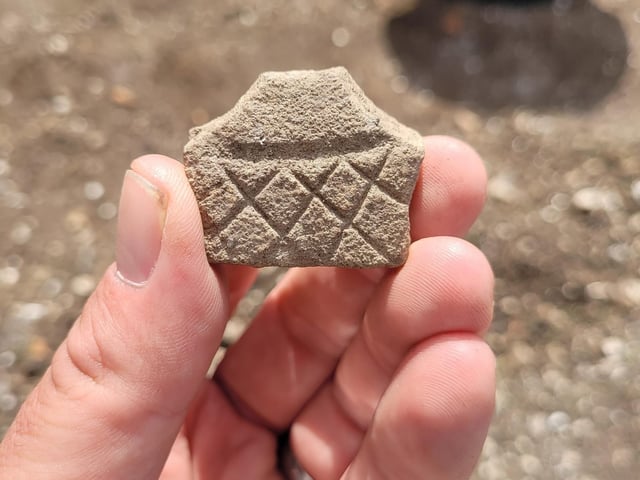
9. Highdown Big Dig
A decorated Roman pot sherd Photo: Worthing Museum
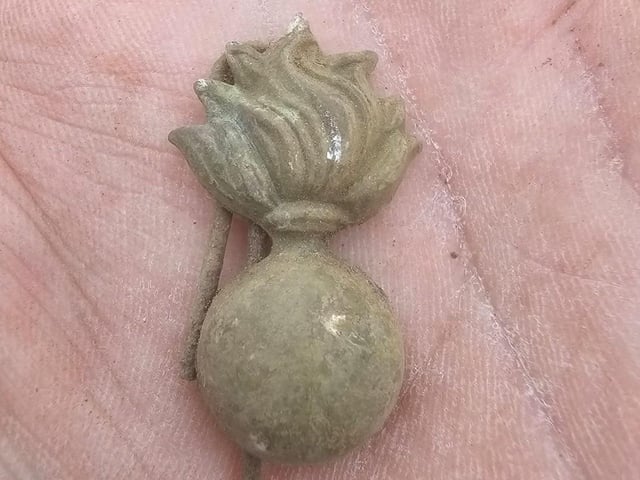
10. Highdown Big Dig
Fusiliers regimental cap badge Photo: Worthing Museum
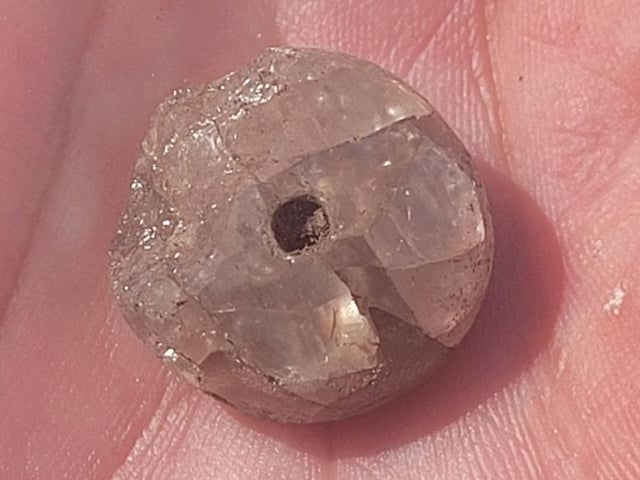
11. Highdown Big Dig
A beautiful Anglo-Saxon rock crystal bead Photo: Worthing Museum