
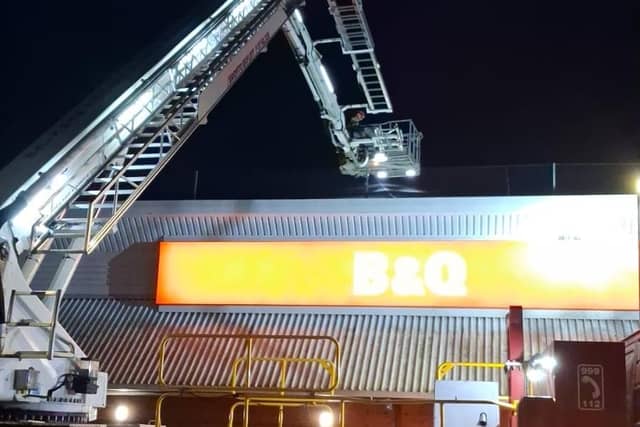

Building Better for Birds was established following incidents at Friston House/Waverley Court in St Leonards, Hastings Library and B&Q at Ravenside, Bexhill.
The group has already secured a commitment with East Sussex County Council agreeing to remove the netting at Hastings Library. Campaigners have also asked the council to review netting across its other buildings.
At the library, at least nine pigeons were found dead behind the netting. Seven bodies were recovered, while two remained beyond reach. A surviving pigeon, subsequently named Hattrick, was rescued with the help of Coussens Cranes after earlier attempts involving the Fire Service and access specialists could not reach him.
Hattrick was taken into the care of RSPCA Mallydams Wood. His survival has become the central story behind the campaign with the slogan “prevention is better than rescue”.
The library rescue followed an incident at Friston House/Waverley Court, where the height of the netting also presented serious difficulties for rescuers. A further incident involving a trapped crow at B&Q in Bexhill reinforced concerns about the risks.
David Walters, from the group, said: “Building Better for Birds is seeking clearer answers from B&Q about inspection frequency, its escape arrangements, previous incidents and possible alternatives to netting. The company has described netting as a last resort and referred to monitoring and an escape system. Dialogue remains open.
“The group wants building owners to assess whether netting is necessary, consider humane alternatives and ensure that any netting retained is properly maintained and checked, with effective arrangements for responding when birds become trapped.
“Its approach brings together evidence from incidents, the experience of local rescuers and constructive contact with those responsible for buildings. The aim is to prevent further suffering and reduce the need for difficult rescues at height.”
Residents who become aware of birds trapped in building netting, or who have photographs or information about previous incidents, are invited to contact the group by emailing [email protected].
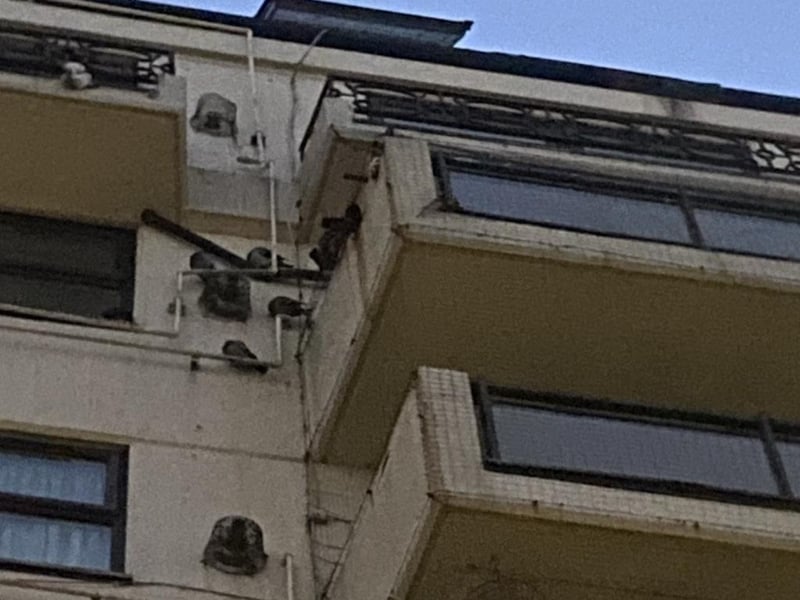
1. Friston House at St Leonards, where a bird became trapped
Friston House at St Leonards, where a bird became trapped Photo: supplied