
Children held at Sussex immigration removal centre amid serious concerns over care

More than 20 detainees brought to Tinsley House Immigration Removal Centre were subsequently found to be children, a watchdog has revealed.
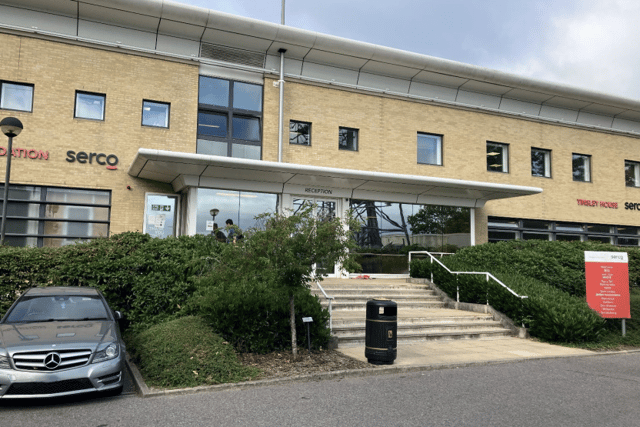
Tinsley House opened in 1996 and was the first purpose-built IRC in the UK. It is located approximately at Manor Royal – half a mile from Brook House, on the perimeter of Gatwick Airport.
HM Chief Inspector of Prisons identified six concerns requiring immediate attention, following an unannounced inspection of the Serco-run centre. Inspections were carried out between June 15 and July 2.
A Home Office spokesperson said: “We take the welfare and safety of people in our care very seriously, and it is vital that detention and removals are carried out with dignity and respect.

“We carefully consider all of the HMIP’s recommendations and are working to strengthen support for vulnerable individuals across the detention estate, including at Gatwick.”
Inspectors said poor practice and significant delays in resolving disputed ages meant some children were not safeguarded while their claims were assessed. The 21 cases arose during the six months before the inspection.
The centre held 136 men when inspectors visited. Many had recently arrived in Britain by small boat and were being held under the UK–France ‘one-in-one-out’ arrangement.
Chief inspector Charlie Taylor described Tinsley House as ‘overall, a reasonably safe and decent establishment’, but said standards in health care had ‘substantially deteriorated’. Inspectors found poor oversight, staffing and supervision, as well as no psychological or therapy services despite a high level of need.
“It was disappointing that the centre had not responded to many of the concerns that we raised last time,” Mr Taylor wrote.
He said inspectors were likely to return within a year to review progress.
The report also raised concerns about the identification of possible victims of modern slavery. Inspectors said indicators were poorly recognised or acted upon, even when detainees repeatedly described exploitation. Reports intended to identify vulnerable detainees took too long to produce and were not always submitted when needed.
Accommodation was another priority concern. Inspectors found poorly ventilated rooms, extensive graffiti and little storage space. Problems with drainage left communal toilets and showers with a ‘pervasive foul smell’.
Inspectors also said detainees being removed to France had too little information about what to expect. Release planning for people with complex needs was weak, and some vulnerable detainees had been released homeless.
In the previous six months, 52 per cent of detainees had been released and 41 per cent removed. Mr Taylor questioned ‘why so many were locked up at a huge cost to the taxpayer in the first place’.
Some detainees returning to France waited up to a week for a legal advice appointment. The report also found that interpreting services were not always used when needed, while expensive calls and difficulties accessing email hindered contact with family, friends and lawyers.
The inspectors lowered Tinsley House’s rating for respect from ‘reasonably good’ to ‘not sufficiently good’, chiefly because of health care and accommodation. They identified 14 concerns in total.
There were positive findings. Most detainees said staff treated them well, and inspectors observed generally positive interactions. They praised a free minibus for visitors from Gatwick airport train station, social workers’ support for family contact and smartphones that helped detainees access emails and translation tools.
Mr Taylor said he expected to ‘see the deterioration halted and a renewed energy amongst leaders and staff to address our findings’.
A Serco spokesperson said: “We have a great team at Tinsley House who carry out a challenging role with dedication and professionalism. We are pleased that the majority of detainees were positive about their relationships with staff.”
According to the Home Office, IRCs provide ‘secure but humane accommodation’ for detained persons in a ‘relaxed regime’. People are given ‘as much freedom of movement and association as possible’, consistent with ‘maintaining a safe and secure environment’.
IRCs hold a mixture of time-served foreign national offenders and immigration offenders while Home Office workers ‘prepare to remove them from the UK’.
The Home Office added: “Since the general election, over 80,000 individuals have been returned or deported, including 11,733 foreign national offenders.
“Independent scrutiny is a vital part of assurance that our detention facilities are safe, secure, and humane.
"Robust statutory oversight is provided by HM Chief Inspector of Prisons, the Independent Monitoring Boards, ensuring that detained individuals are treated with proper standards of care and decency.”