
Deadline looms in fight by Genesis guitarist against West Sussex solar farm
Time is running out in a fight spearheaded by rock legend Mike Rutherford to stop a huge solar farm from being built on land in a West Sussex village.
Energy firm Renewable Connections Developments want to build the ‘industrial scale’ solar farm near the musician’s home on 61 acres of farmland east of the B2133 at Wisborough Green.

Chichester District Council is due to decide whether or not to grant planning permission for the development at a meeting on September 10.
Meanwhile, local residents have submitted a flood of objections and nearly 2,000 have signed a protest petition. They say the solar farm would be on an industrial scale and altogether would straddle more than 100 acres between Wisborough Green and nearby Loxwood. They say it would threaten wildlife, cause noise pollution and increase traffic.
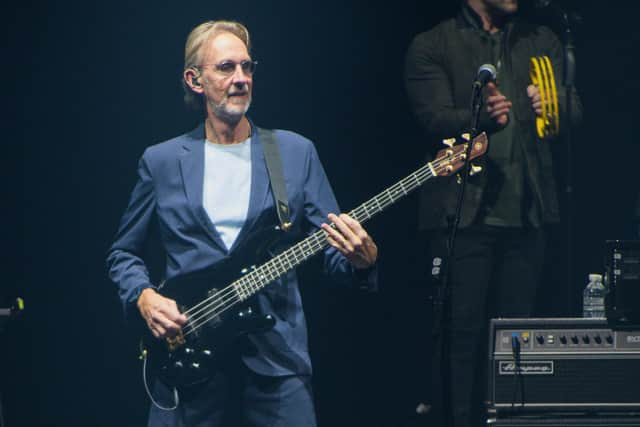
Mike Rutherford – co-founder, lead guitarist and bassist of the rock band Genesis and Mike and the Mechanics – has posted a video on YouTube outlining his opposition. In it he explains how he and his family have lived in the area for 44 years and also expresses concerns over the effect on local wildlife, ancient woodland and large volumes of heavy lorries on ‘a beautiful spot.’
He says he is in favour of green energy but the chosen location for the solar farm ‘is so wrong.’ And in a message to the public adds: “If you would join me in objecting to this proposal I will be very pleased.”
Meanwhile, opposition is also being put forward by Wisborough Green and Loxwood Parish Councils who say that the land near Drungewick Lane – proposed as a solar farm access route – “is high grade agricultural land which should not be used for development.”
The developers say they plan to widen Drungewick Lane in Wisborough Green as an access route for the solar farm, if planning permission is granted.
Wisborough Green Parish Council says in a letter to council planners: “The scale of the solar farm will result in a dramatic change to the character of the local landscape, introducing industrial infrastructure into an undeveloped rural area.
"The visual intrusion will be significant, especially from public rights of way and the highway, neighbouring properties, and would erode the openness and tranquillity of the countryside.”
Protesters, in their petition to the council, say that the development would also destroy vital habitats, fragment eco systems and increase flood risks.
However, Renewable Connections say the solar farm would supply enough power for up to 6,300 homes “and make a valuable contribution towards tackling the climate emergency in West Sussex.”
They say the solar farm would be spread across six parcels of land, altogether encompassing around 100 acres including access and cable routes. They say the land beneath the solar panels could still be used for grazing instead of its current intensive arable use.
And, they point out, the solar development would be temporary – for up to 40 years – and would be reversible.