
East Sussex charity reports increased cases of badgers found sleeping in 'unexpected locations'

An East Sussex wildlife charity said it has been responding to an increase in reports of badgers sleeping in ‘exposed or unexpected locations’.
East Sussex Wildlife Rescue & Ambulance Service (WRAS) volunteers were called to Heathfield after a badger was found curled up asleep in a narrow gap between two fences, ‘exposed to the elements and unable to move on easily’.
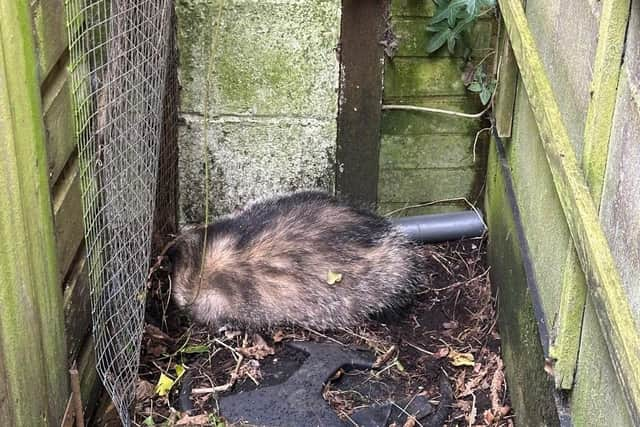

The charity said the badger was found to have fresh injuries to both ears, which have now been treated at the WRAS Casualty Centre in Whitesmith, near Lewes.
The badger is recovering well and is expected to be released back to the wild later this week after a short stay, according to the charity.
Rescuers have also responded to similar reports in Hastings, Seaford and Newick in recent weeks.
WRAS said badgers can become temporarily displaced at this time of year.
“This can happen when badgers are pushed away from their sett or social group by a dominant female while young are being raised,” a WRAS spokesperson said.
"Displaced badgers may wander into neighbouring territories where they can be attacked and seriously injured, or they may bed down during daylight wherever they can find shelter — sometimes in gardens or other awkward places — before moving on again at dusk.
"Badgers may also hide up after being frightened or chased by dogs, or following a glancing blow or near-miss with a vehicle. In some cases, these badgers can be injured and in need of urgent help.”
While WRAS will often attend reports of badgers sleeping out in the open, the charity is warning the public not to attempt to handle a badger themselves.
Trevor Weeks MBE, Founder and Director at WRAS, said: “Badgers are incredibly strong animals.
“Even a frightened or injured badger can cause serious injury if someone tries to pick it up, and the badger itself may be further harmed in the process.”
For more information about WRAS, visit: https://wildlifeambulance.org/.