
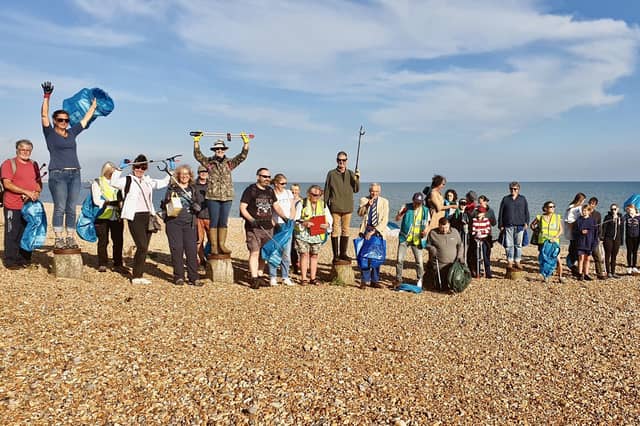

It all began with one man’s love of the beach and marine environment. Twenty years ago naturalist Andy Dinsdale was leading a walk at Pett Level beach, searching for natural things like cuttlefish eggs and mermaid purses, which show us the health of the marine environment.
He came across a sea heart, a large tough, heart-shaped plant seed that he discovered had travelled 5,000 miles across the Atlantic ocean to wash up on the beach where he grew up.
On a quest of walking the beach to find another Sea Heart, he learnt about beach topography, tides, currents. He also learnt about the plastic washing up on our beaches and the stories that each piece
of flotsam and jetsam has to tell. This was his awakening – his call to help raise awareness of plastic pollution in our environment and Strandliners was born.
One of the big stories Andy came across was that of Tracey Williams who found a printer cartridge washed up on the beach. Her research found that thousands of ink cartridges had washed up throughout northern Europe. When questioned, the ink cartridge manufacturer admitted they had lost a container at sea and donated a substantial sum towards beach cleans as well as setting up a free phone line and email recycling service for anyone who had found a cartridge. Tracey had previously tracked washed-up Lego pieces which had come from a container spill in 1997.
While much of the plastic pollution washing up on our beaches is unidentifiable, Andy was finding strange tags with writing and numbers on and threats of fines and imprisonment. After some more research, he found that these were tags from lobster and crab traps from the north east coast of the US and Canada. Some were fishing licences, bearing the name of the boat and the fisherman – sometimes even the fisherman’s phone number.
Andy was enjoying the forensic aspect of the plastic pollution he was finding. He says: “The plastic that is not within our focus at first sight seems everywhere when we start opening our eyes.”
He added: “Since then, the Strandliners family has grown, and the Strandliners aim of raising awareness of environmental pollution through citizen science and community engagement has gone far and wide. The process of identifying and recording everything we collect has become even more important, as we collect evidence to bring about change. We may be small, but as Peter Lewis of the Guardian says: “To defeat the global Goliaths devastating our planet, we must raise an army of Davids.”
Strandliners has run in at least 112 events for the Marine Conservation Society as part of the Great British Beach Clean. It collects data on type of material and use, which enables the MCS to determine the source of the mismanaged waste.
Strandliners volunteers have taken part in at least 200 citizen science surveys, giving more than 5,000 hours of their time and have removed around 4,000 kg of mismanaged waste from the environment as well as identifying and recording at least 157,000 individual items.
Strandliners said it was facing one of its biggest challenges, playing a leading role in dealing with the millions of plastic micro-beads that have washed up on East Sussex beaches following a spill from a Southern Water treatment plant at Eastbourne.
Andy said: “It is only through building a data-rich picture of pollution that we can hope to create change. Many organisations count bags, but this says nothing about the nature of the pollution. We need to know and record what is out there, to build a body of evidence, if we are to have any chance of bringing about the legislative change that will stop it coming back.”
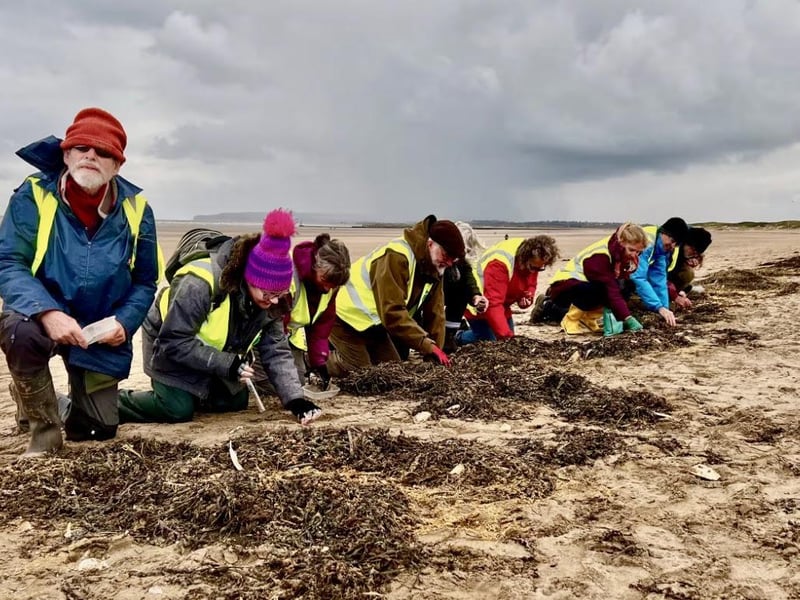
1. Strandliners clean-up
Strandliners clean-up Photo: supplied
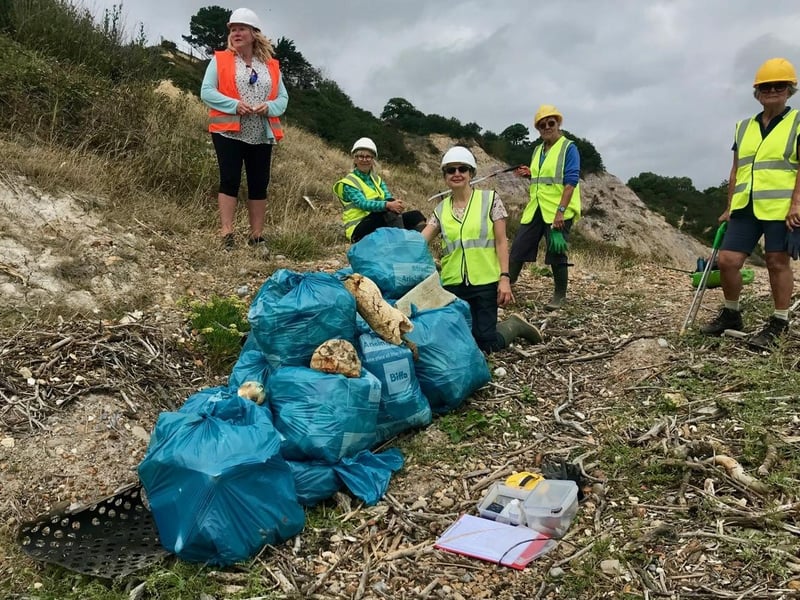
2. Strandliners bagging up rubbish at Pett Level
Strandliners bagging up rubbish at Pett Level Photo: supplied
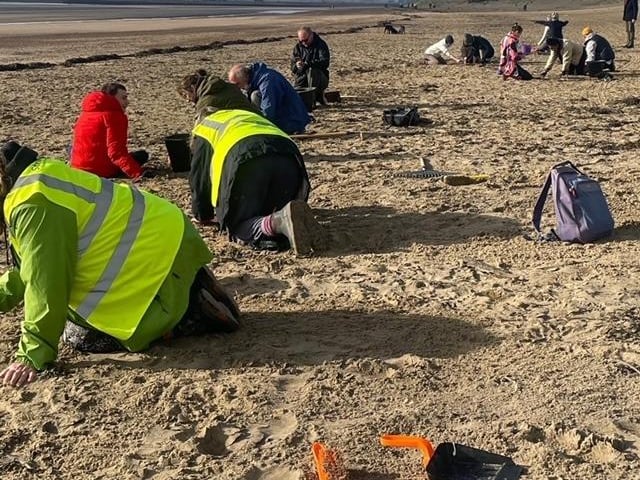
3. Cleaning up plastic micro-beads at Camber Sands
Cleaning up plastic micro-beads at Camber Sands Photo: supplied
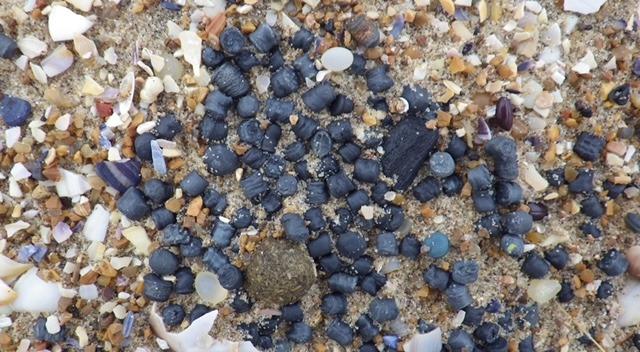
4. The plastic micro-beads that have washed up along our coast
The plastic micro-beads that have washed up along our coast Photo: supplied