
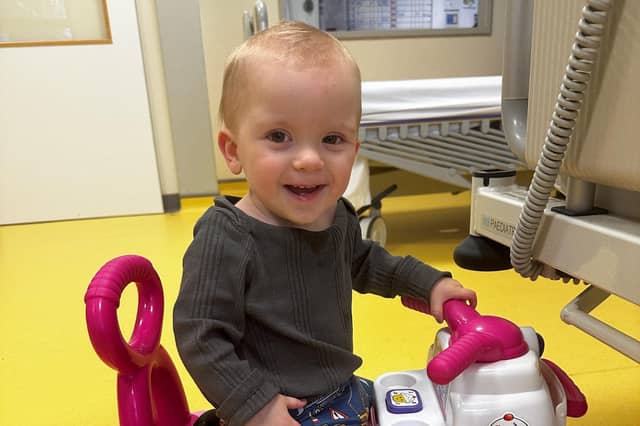

Woody Mayers, aged 22 months, has the extremely rare genetic condition Congenital Dyserythropoietic Anaemia (CDA) Type 1, which is estimated to affect around one to five out of every million babies, the NHS said.
This means the DNA within the red blood cells is disordered and the cells do not fully mature.
People with CDA have low levels of haemoglobin, a protein in red blood cells that carries oxygen throughout the body.
Concerns about Woody’s health began before he was born, with 20-week prenatal scans showing abnormal development.
He was born prematurely at 34 weeks with haemoglobin levels around a quarter of what they should have been.
His mum Polly, 35, said: “When he was born, he was very poorly and pale. He didn’t cry for a few minutes. He needed ventilation breaths. It was really frightening.
“The first few days were very critical for Woody. He was extremely unwell. Nobody knew the cause for his haemolytic anaemia.
“Woody has been on the chronic transfusion pathway for more than a year.
“He produces his own red blood cells but they do not mature. He’s completely reliant on blood donors. Every four weeks he gets about 140mls of red blood cells to boost his haemoglobin.”
NHS Blood and Transplant (NHSBT) said it has set up a personalised test for people with rare conditions who need regular blood transfusions, which will allow donor blood to be matched to such patients more closely, thereby reducing the risk of severe reactions.
Woody’s family is now supporting an appeal for all patients with similar rare conditions to get the new NHS genetic extended blood group testing performed.
Polly, from Robertsbridge, said: “Woody will need the blood to be well-matched so that his transfusions don’t become too difficult or risky. The test will help him and anyone else with a similar condition. I hope everyone eligible gets it.”
Woody’s family is also urging people to donate blood.
Polly said: “There’s no way to sugar-coat it – if it wasn’t for blood donors, Woody would not be alive. I’m incredibly grateful to blood donors for ensuring blood is available when he needs it.”
Polly, a community matron, and husband Matt, 42, a carpenter, also have two girls, aged four and seven.
The new genotyping testing programme is a partnership between NHSBT and NHS England. Samples are taken at routine hospital appointments and tested at NHSBT’s molecular diagnostics laboratory in Bristol.
NHSBT said there are around 300 people with transfusion dependent rare inherited anaemias who are eligible for the new test, which tests the patient’s DNA to find out their blood types. It added all people with sickle cell disorder and thalassaemia are eligible whether transfusion dependent or not.
Kate Downes, head of genomics at NHS Blood and Transplant, said: “The new genotyping test can test blood groups faster and more extensively than standard testing methods. This enables comprehensive testing to be rolled out for people with sickle cell, thalassaemia, and transfusion dependant rare inherited anaemias.
“Woody has very rare disorder and he relies on blood transfusions to stay alive but these need to be well-matched. We want everyone eligible, like Woody, to be tested so they can get better matched blood. We also need more people to donate, so we can supply the matched lifesaving blood to Woody and people like him.”
People can register as a blood donor at www.blood.co.uk or via the NHS Give Blood app.
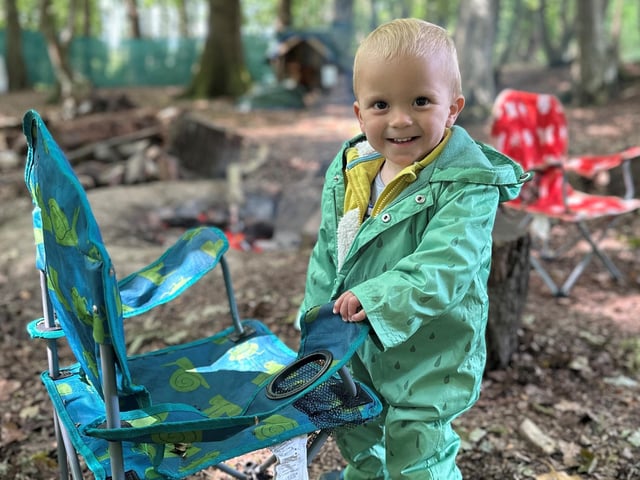
5. Woody smiling outside by chair.jpg
Woody Mayers. Picture: NHSBT/Mayers family Photo: NHSBT/Mayers family
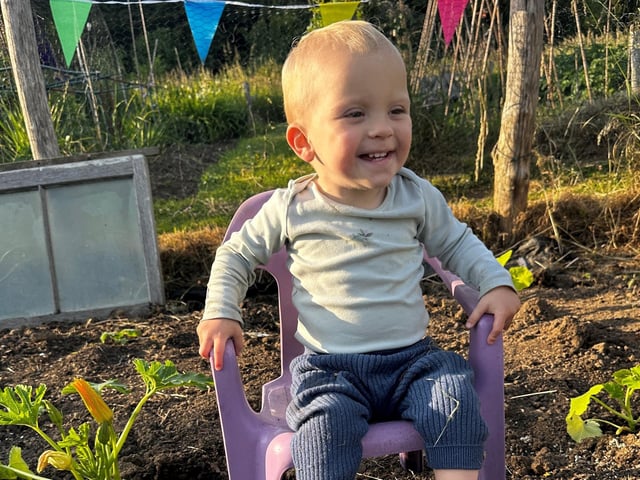
6. woody outside.jpg
Woody Mayers. Picture: NHSBT/Mayers family Photo: NHSBT/Mayers family