
Field naturalist and author concerned about fate of ‘Sussex Tiger’ sea trout: ‘charismatic’ fish threatened by housing development proposals in Cooksbridge and Plumpton

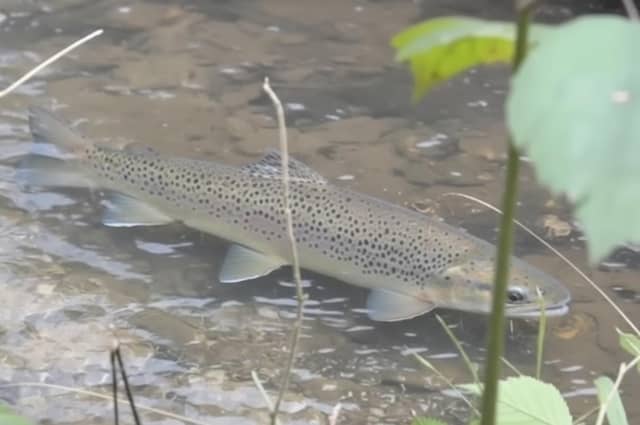

A field naturalist and author has voiced concern that major housing development proposals in East Sussex could threaten the existence of a unique variety of trout.
Dave Bangs, who has written books like The Land of the Brighton Line, described the Sussex sea trout as an ‘iconic’ top level predator with ‘critically low’ numbers.
Dave said he is particularly concerned that hundreds of proposed homes at Cooksbridge would front one of the fish’s ‘key spawning streams’ – the North End Stream and its subsidiary streams. At the same time, he said there is the ‘threat’ of new housing and ‘a revived major housing proposal’ near Plumpton, next to the Bevern Stream. He said this has already lost water quality and seen declining sea trout populations.
Dave said the Sussex sea trout is also known colloquially as a ‘Sussex Tiger’ sea trout. He called it a ‘charismatic beast’ that is highly distinctive. He also feels that its nickname is appropriate, despite the fact that it is spotted and not striped, because it is endangered like Asian tigers.
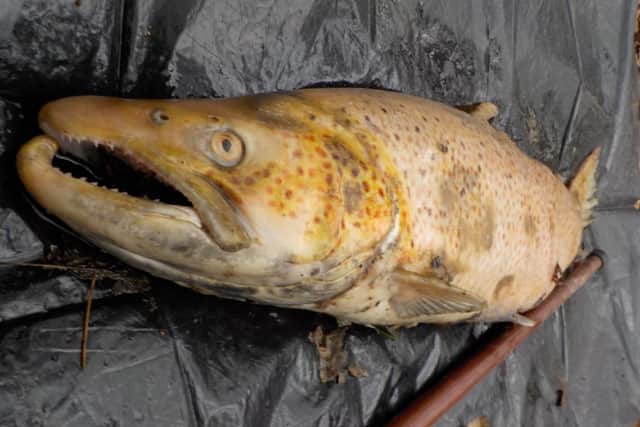
Dave said: “The poor creature’s in a really similar state to the real tiger that we all know about.”
He continued: “All sea trout are special and endangered but the Sussex sea trout is the biggest. It’s the biggest sea trout on average in the whole of England and Wales, which is astonishing really.”
Dave explained that these trout have a different spawning season, which is later than other English and Welsh varieties. Dave sometimes refers to them as ‘Christmas fish’ because the peak of their spawning period is around Christmas Day.
He called them ‘very special creatures’ but said most people do not know about them. He explained that local fishing groups are worried about giving away particular locations. But Dave believes this ‘strong culture of secrecy’ to protect the trout from disturbance and poaching may have actually put them at greater risk.
Dave said: “I think the lack of publicity over the past 20 years (for good reasons) and the culture of secrecy around these creatures has done none of us any favours really. Developers come up and think ‘well, what’s the problem?’ ‘Why is this a problem here?’ ‘This is not a designated National Landscape/Park etc’. ‘It’s not an SSSI (Site of Special Scientific Interest), it’s not got special national nature conservation designations’ and all that.”
He said: “But the reason it’s not got national designations is precisely because of the culture of secrecy, because everyone’s been so terrified to give out about where these creatures are. So we’ve shot ourselves in the foot collectively.”
Dave said the housing proposals he is concerned about are contained within Lewes District Council’s ‘Local Plan Spatial Strategy for Development in Our Plan Area’, Site Allocation Policies, Cooksbridge. He said they are currently the subject of the Phase 2 Consultation, which ends on February 28. He said comments on Strategic Policy CB1: Land to the north of Cooksbridge (Site ref 11HY) and Strategic Policy CB2: Land to the east of Cooksbridge (Site ref 19HY) must be submitted by this date to Lewes District Council.
Dave also said that a planning application for 151 residential dwellings in Cooksbridge (LW/25/0339) is viewable on the LDC planning portal at planningpa.lewes-eastbourne.gov.uk/online-applications where people can comment until February 20.