
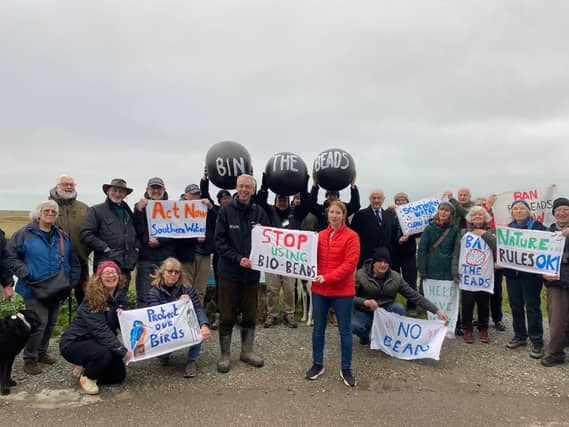

The MP, together with local environmentalists, launched a Ban The Beads campaign after millions of plastic micro beads washed up on beaches at Camber and Hastings last October and contaminated Rye Harbour Nature Reserve.
The incident happened following a failure at Southern Water’s Eastbourne waste-treatment plant.
Rye Harbour Nature Reserve is one of the largest and most important wildlife sites in England, home to more than 4,355 species of plants and animals including 300 that are rare or endangered. The discovery of the beads in the saltmarsh at the reserve caused great upset amongst wildlife lovers in Sussex and beyond, in a find the local MP described as “devastating”.
The plastic beads are harmful if swallowed by birds, fish and marine mammals who mistake them for food.
In an emergency residents’ meeting chaired by the MP in the days following the first reports of the beads, Southern Water bosses admitted that the use of bio-beads was an outdated technology that only older plants use.
Southern Water representatives also answered questions from residents and agreed to pay for the clean-up operation and organise for marine surveyors to assess the damage to marine life, as well as funding a long-term programme of nature restoration in the area.
Ms Dollimore said: "I present this petition on behalf of the 9,915 people who have supported my campaign calling on the water companies to end the use of plastic beads in wastewater treatment.
"A few months ago, I had no idea that plastic beads were used in wastewater treatment, and then 300 million of them washed up on our coastline at Camber Sands and along the Sussex coast, causing an environmental catastrophe. I have since been working with the Sussex Wildlife Trust because the use of plastic beads in wastewater treatment is an outdated technology and better, modern methods exist. Why are the water companies still using them, especially in coastal areas where they can do so much damage?"
Henri Brocklebank, Director of Conservation, Sussex Wildlife Trust said: “Rye Harbour Nature Reserve is internationally important for its birds, with species travelling thousands of miles to feed and breed here. Bio-beads are small and buoyant, not dissimilar to many of the food items these birds are searching for.
"The impact of bioplastics accumulating in the digestive systems is well documented, but the effects of any contaminants that could be released in the acidic gut systems of these birds are far less understood. The removal of the bio-beads from the environment is paramount, but I fear that our grandchildren will still be finding them in years to come.
“There is only one way to guarantee that we never have a spill of bio-beads again. That is to stop our wastewater treatment works from using them. They are an old and redundant technology, and we must see their use ended swiftly.”
A Southern Water spokesperson said: “We’re continuing to cover all clean-up costs and working in partnership with Rother District Council and microplastic removal experts, Nurdle, to remove the beads from beaches as quickly as possible.
"We have paid for three specialist microplastic vacuums to be made to support the ongoing effort. We’ve also commissioned the build of a large towable beach screener that will act like a giant sieve to remove the top layer of sand to retrieve any beads that may be just under the surface.”
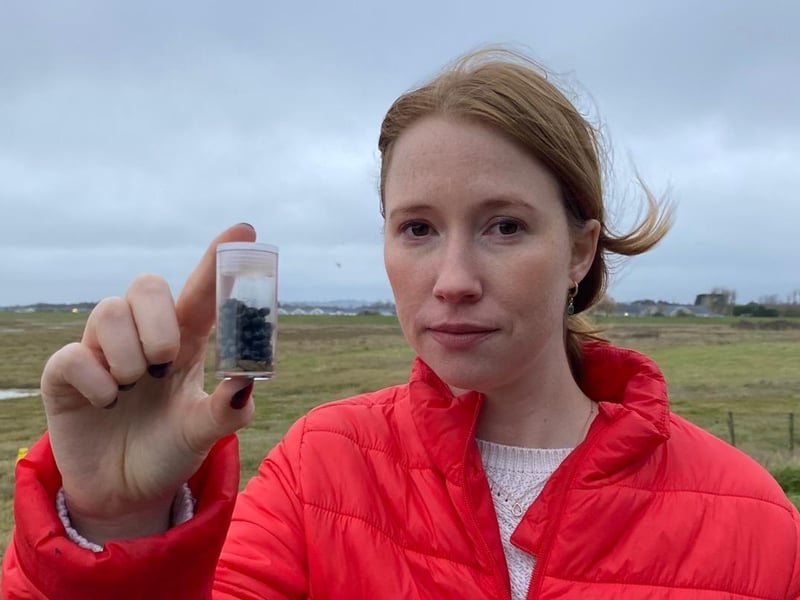
1. Helena Dollimore with micro beads found at Rye Harbour Nature Reserve
Helena Dollimore with micro beads found at Rye Harbour Nature Reserve Photo: supplied

2. Helena Dollimore hands in the petition at Parliament
Helena Dollimore hands in the petition at Parliament Photo: supplied