
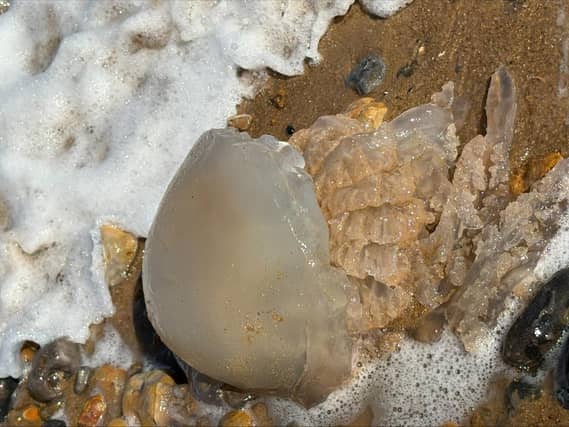

It comes after barrel jellyfish – the UK’s largest type – were spotted in Eastbourne and Littlehampton in the past week.
Compass jellyfish have also been reported on beaches in Eastbourne and Seaford – a strikingly colourful type that give ‘a nasty sting’ according to The Wildlife Trusts.
Lisa Terry, who came across a washed up jellyfish in Eastbourne, admitted she was unsure what to do before a Google search warned her that the dead animal could still sting.
She said: “It was quite scary to witness to be honest, especially with all our children playing on the shore or in the sea.”
Sarah Ward, marine conservation officer for Sussex Wildlife Trust, said: "Influxes of jellyfish over the warm summer months is nothing new, however there is evidence to suggest that climate warming may contribute to longer and more extensive blooms.
"This is due to critical life stages being affected by temperature, as well as increased food availability (jellyfish feed on plankton). With warmer summers and heatwaves becoming more frequent, increased jellyfish will be an unsurprising result.
“Jellyfish are nearly always around at this time of year, and it’s highly unlikely that we’re suddenly going to be completely swarmed with them; that said, as jellies aren’t active swimmers, we do occasionally find them grouped together in numbers, usually as a result of drifting together on the tide or current. This is always amazing to see!”
And on what to do if you encounter one, she added: "No one should be put off using the beach and sea because of jellyfish, but it’s important to be aware of their presence, and to know what to do if you do get stung.
“Most of our UK jellyfish only have a mild sting, a bit like a nettle sting, and can be treated by rinsing with water or vinegar. Jellyfish can still sting even if they’re dead, so it’s best not to touch one if it’s washed up on the beach."
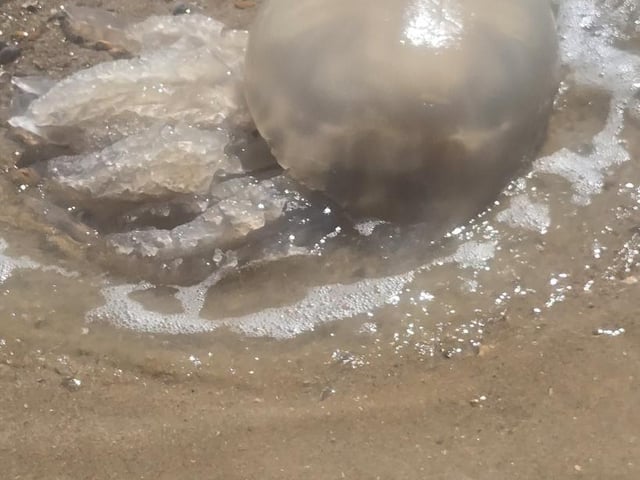
5. Here's why more jellyfish are washing up on the Sussex coast - and how to treat a sting
Here's why more jellyfish are washing up on the Sussex coast - and how to treat a sting. Photo: Paige Pardoe Photo: Paige Pardoe