
Lewes welcomes back herd of Exmoor ponies
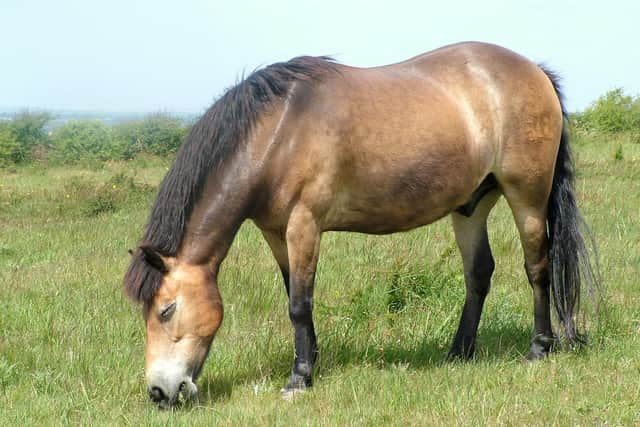
Lewes Town Council is welcoming back a herd of Exmoor ponies to Landport Bottom Nature Reserve after their 'holiday’.
A spokesperson said: "Our team has been out sorting the fencing and the ponies returned shortly afterwards. They are in the pond field at the southern end in an enclosure protected by an electric fence. We have recruited ponies to Landport Bottom Nature Reserve as a trial to help manage the chalk grassland. Ponies thrive eating lots of different plants and can cope easily with uneven ground and bad weather.
"Using this traditional grazing method has proved to be both sustainable and effective in managing habitats like Landport Bottom.
"Please don't feed them. And please be mindful in keeping children and dogs away from the fence to avoid any unexpected shocks."

Landport Bottom Nature Reserve comprises three fields of priority habitat chalk grassland lying just on the edge of Lewes. It is part of the three per cent chalkland habitat that remains in the South Downs.
Chalk grassland is one of Britain's most threatened and sensitive habitats with many lost to development of houses and roads. It hosts many rare chalk downland flowers such as the pyramidal orchid, fairy flax, restharrow, wild thyme, wild basil, kidney vetch and dropwort as well as butterflies such as the small blue, marbled white and Essex skipper.
Unlike other livestock, ponies use their front-facing incisors to graze tough, coarse grasses and can even browse on scrubby species like gorse, bramble and thistles. By grazing in different ways and trampllng vegetation they create a varied structure in the grass sward. This mosaic provides diverse micro-habitats, shelter and perch sites.