
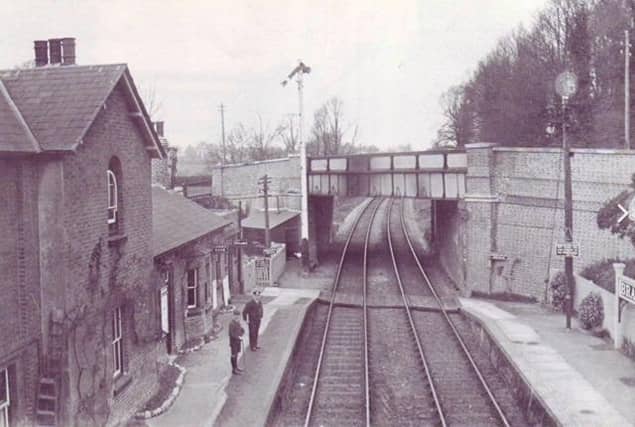

Some beautiful looking stations have been rep-purposed as shops or homes, some are abandoned and derelict and the sites of others remain only as a patch of countryside where you would never know that a station existed. In some cases whole lines, such as Three Bridges to Tunbridge Wells and the Adur Valley line have disappeared.
Britain’s railways came as a result of the industrial revolution and helped to create the wealth of the country. The first steam railway locomotive which was introduced by Richard Trevithick in 1804.
During the 1960’s, the increasing number of motor cars saw people looking toward the roads rather than the railway. A landmark report by then head of British Rail, Richard Beeching, led to the closure of many stations and whole branch lines in the 60s. Many architectural treasures, and the memories they contained, have been lost forever.
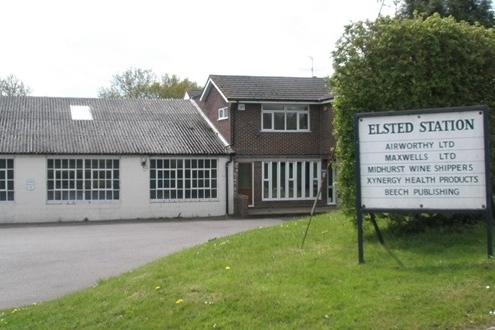
5. Elsted railway station
Elsted railway station served the village of Elsted. The village itself was a mile away to the south-west. The station was on the line between Petersfield and Midhurst, which was operational between 1 September 1864 and the last train ran on 5 February 1955. The station building has now been cleared for an industrial development, although nearby railway cottages are still in existence. Photo: supplied
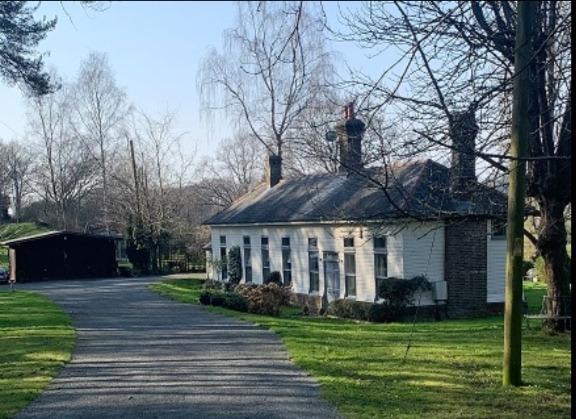
6. Fittleworth railway station
Fittleworth railway station served the village of Fittleworth in the county of West Sussex in England. It was on the London Brighton and South Coast Railway's line between Pulborough and Midhurst. The station opened some years after the line (1859) in September 1889 and closed to passengers in February 1955. Freight traffic from Fittleworth ceased in 1963 three years before total closure in 1966. The small station building remained undeveloped for many years. However it was restored and converted into a private dwelling in 1987. Photo: supplied
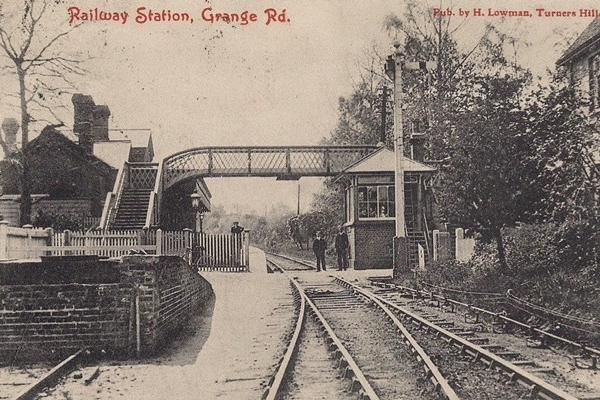
7. Grange Road railway station
Grange Road was a railway station on the Three Bridges to Tunbridge Wells Central Line. The station opened in 1860 and was rebuilt on an enlarged scale in 1876, with a footbridge added in 1897. The station and railway closed in 1967, a casualty of the Beeching axe. The station buildings were swept away to be replaced by a small parade of shops with flats above them and a new medical centre Photo: supplied
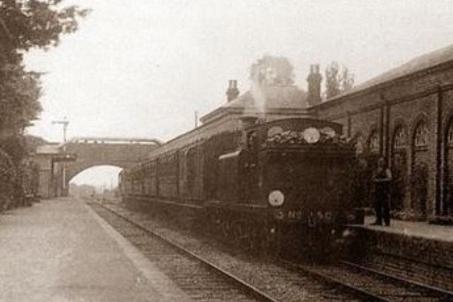
8. Henfield railway station
Henfield was a railway station on the Steyning Line which served the village of Henfield. It was equipped with a siding which received coal to serve the Steam Mill and Gas Works. It opened in 1861 and closed in 1966. Nothing remains of the station today other than the name "Station Road". A housing estate named "Beechings" occupies much of the station's site, somewhat ironically given that it was British Rail Chairman Richard Beeching whose report recommended closure of the line. Photo: supplied