
Proposals for new Hastings museum celebrating John Logie Baird's TV legacy
A pop-up exhibition celebrating Hastings’ place in broadcasting history is taking place with the aim of shaping plans for a television museum in town.
Tea & Telly, will be held at the British Tea Museum in George Street on Saturday, August 8 and Saturday, August 22, from 11am to 4pm.
Organisers said the event will recreate the atmosphere of past living rooms with retro TVs, decade-specific paraphernalia and free cups of tea.
Visitors will be invited to share their memories, favourite programmes and ideas for what they would like to see in a future permanent museum.
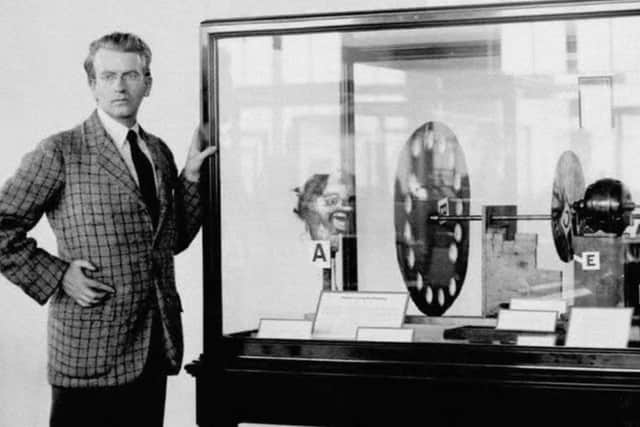

The events are part of an initiative led by charity Screen Culture UK. Its goals include an oral histories project, educational outreach and creating a new cultural space that explores television's story from its invention to the streaming age.
In the 1920s, pioneering engineer John Logie Baird conducted some of his earliest television experiments in Hastings.
This year also marks the centenary of Baird’s first public demonstration of television.
Martin Dickie, project co-ordinator, said the project has the support of Smack the Pony writer and comedian Doon Mackichan, Desmond’s creator Trix Worrell, film actor Paul Freeman, and documentary filmmaker Jan Leman, as well as Hastings Museum & Gallery and the Electric Palace Cinema.
He said: “Television has shaped how we see the world, but its human story is rarely told in a way people and families can experience together. Tea & Telly is about giving visitors a glimpse of what a future museum in Hastings could be. We’ll be looking forward to meeting and talking with anyone interested in this exciting new project.”
Local historian Steve Peak said Baird created the world’s first television images in a room above a shop in the Queen's Arcade, opposite Hastings town hall in late February or early March 1923.
Baird, who was born in Glasgow in 1888, had come to Hastings due to poor health.
Steve said that as a youngster Baird studied mechanical engineering at what is now the University of Strathclyde until 1914, and in following years he embarked on a career as an inventor-entrepreneur.
Baird spent all of 1923 making his historic invention workable.
He took out a patent, and in the summer of 1924 he moved to Frith Street in London’s Soho.
Baird gave his first public demonstration of his ‘televisor’ system, as he called it on January 26, 1926 in Hastings.
In 1927 Baird then began experimenting with the possibilities of colour television.
He constructed a device which was demonstrated at a meeting of the British Association in Glasgow in 1928.
In 1928, his company, Baird Television Development Company/Cinema Television, broadcast the first transatlantic television signal between London and New York, and the first shore-to-ship transmission.
In 1931, he made the first outdoor remote broadcast, showing the Derby, and in 1932, he demonstrated ultra-short wave television.