
Reports of sightings have been made at Southwater Country Park and in Horsham Park in the town centre.
Local resident Henry Proudlock was walking his dog in Southwater on Wednesday morning (January 7) when he spotted the black swan with another swan – a white bird – on the frozen lake in the country park.
“It was amazing,” he said. Others have reported seeing a black swan on the pond in Horsham’s park.
Black swans are rarely seen in most parts of Britain and are native to Western Australia. However, they were introduced to various countries as ornamental birds in the 1800s.
Experts say that the black swan was once thought to be sedentary but is now known to be nomadic but has no set migratory pattern.
Like many water fowl, the black swan loses all its flight feathers when it moults after breeding and is unable to fly for about a month. During this time it will usually settle on large open waters for safety.
The Wildfowl and Wetlands Trust recorded nine breeding pairs in the UK in 2001 and estimated there were 43 feral birds in 2003–2004.
A small population of black swans exists on the River Thames at Marlow and on a brook in the Devon town of Dawlish. The Dawlish flock is now so well associated with the town that the black swan has been the town’s emblem for 40 years.
Black swans have also made homes near the River Itchen in Hampshire and on the River Tees near Stockton-on-Tees.
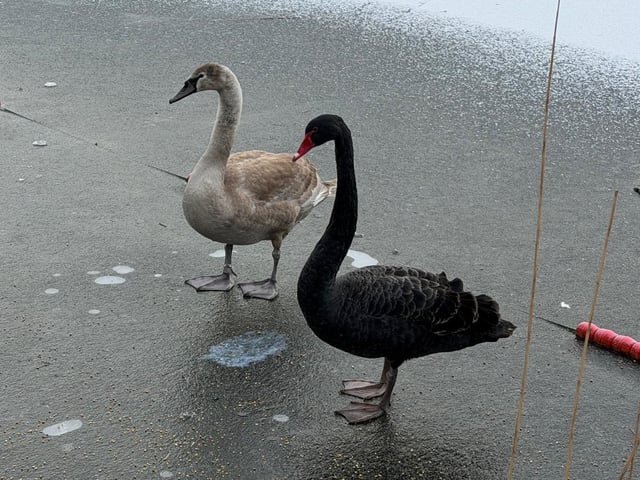
1. Black swan
The black swan on the lake at Southwater Country Park. Photo: Henry Proudlock Photo: Henry Proudlock
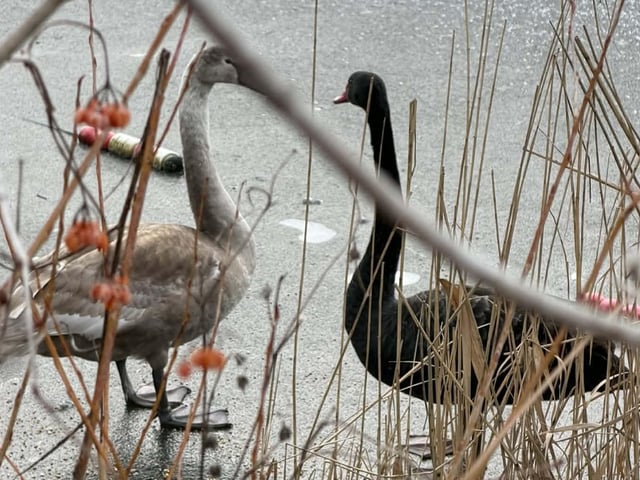
2. Black swan
The black swan was spotted in Southwater by Henry Proudlock when he was out walking his dog. Photo: Henry Proudlock Photo: Henry Proudlock
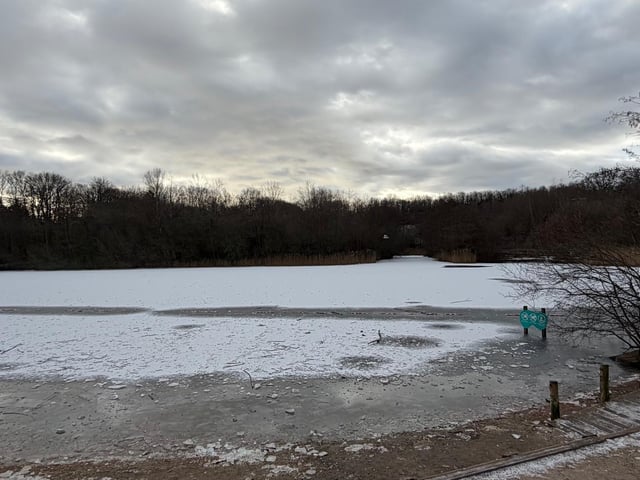
3. Black swan
The frozen lake at Southwater Country Park where a rare black swan was spotted. Photo: Henry Proudlock Photo: Henry Proudlock
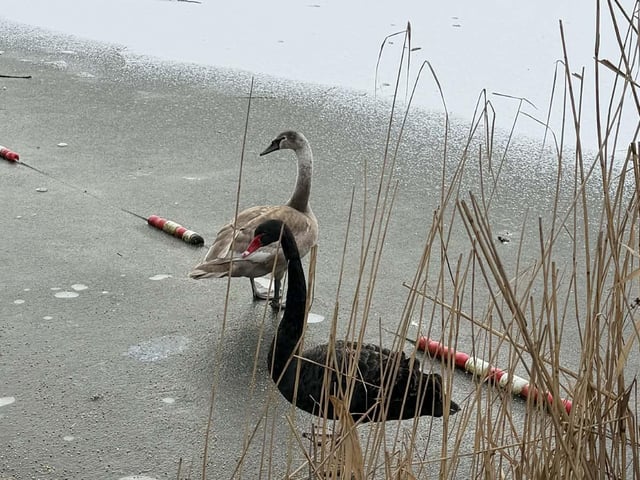
4. Black swan
Reports have have also been made of a black swan being spotted in Horsham Park. Photo: Henry Proudlock Photo: Henry Proudlock