
This extraordinary tree, a living legacy of legendary plant hunter George Forrest, was planted in 1928 by Colonel Stephenson R. Clarke, founder of Borde Hill’s renowned botanical collection. It was grown from seed collected by Forrest during one of his daring expeditions to the remote forests of southern China. Famously reluctant to flower in Western climates, the Emmenopterys henryi was described by fellow plant hunter E.H. Wilson as ‘one of the most strikingly beautiful trees of the Chinese forests’. At Borde Hill, the tree has flowered only five times in its near-century of life, usually in late summer, making this year’s early budding an exceptionally rare event. Previous blooms occurred in August and September in 2011, 2012, 2016, 2018 and most recently in 2021. Andrewjohn Stephenson Clarke, the Colonel’s great-grandson, reflects on family’s long connection to the tree: ‘We are incredibly lucky to have both the Wilson and Forrest Emmenopterys at Borde Hill. My grandfather planted the 97-year-old specimen but never saw it flower in his lifetime. Neither did his son or grandson – it took four generations before we first saw blooms in 2011. The Colonel would have been fascinated by the climate changes we now experience in southern England and how they are influencing our plants. He kept meticulous records of every seed and tree planted, and his correspondence with both Wilson and Forrest makes for fascinating reading. If he were here today, he would be thrilled to see Forrest’s Emmenopterys henryi in bud and ready to bloom again.’ Nearby stands another Emmenopterys henryi, now 47 years old, which was micropropagated from an original Wilson specimen at Kew. The tree had been in decline for several years, with the drought of 1976 further impacting its health. Although this younger specimen at Borde Hill has produced a few blooms on rare occasions, it has never flowered fully - highlighting just how exceptional and significant the current display on the older Forrest tree truly is. Admired for its striking beauty, the Emmenopterys henryi features reddish-purple young shoots and red spring foliage that matures to dark glossy green, producing clusters of fragrant, creamy-white funnel-shaped flowers, 2.5cm wide, surrounded by large white bracts. In 2023, the Emmenopterys henryi inspired Borde Hill’s new logo and rebrand, reflecting its importance to the Garden’s botanical heritage. George Forrest was one of the most successful plant hunters of the early 20th century, introducing hundreds of plant species to Western cultivation, including the Emmenopterys henryi. His expeditions through China were perilous, involving treks through dense jungles, encounters with warring tribes, tropical diseases, and life-threatening terrain. His dedication made possible the introduction of this extraordinary tree to Borde Hill and to British gardens.
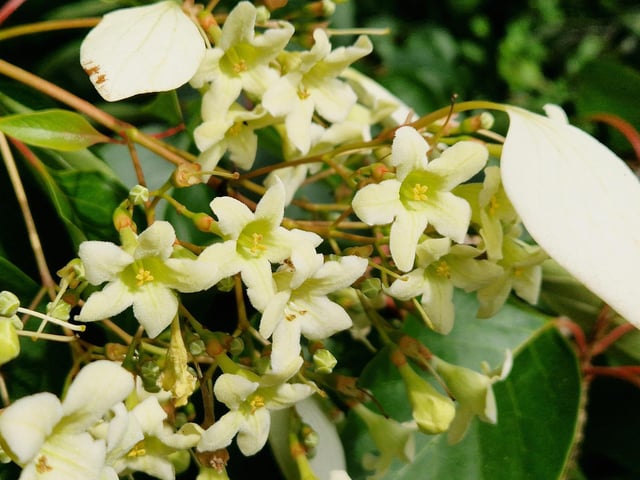
1. Borde Hill's 97 year old Emmenopterys henryi bursts into bloom.. SR2508081 Pic S Robards/Nationalworld
Borde Hill's 97 year old Emmenopterys henryi bursts into bloom.. SR2508081 Pic S Robards/Nationalworld Photo: S Robards
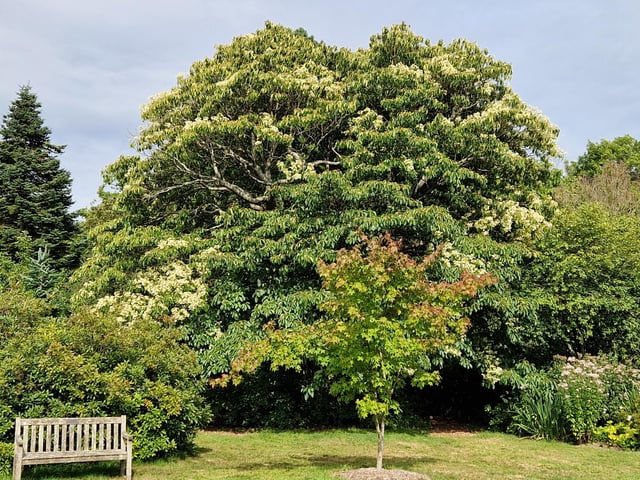
2. Borde Hill's 97 year old Emmenopterys henryi bursts into bloom.. SR2508081 Pic S Robards/Nationalworld
Borde Hill's 97 year old Emmenopterys henryi bursts into bloom.. SR2508081 Pic S Robards/Nationalworld Photo: S Robards
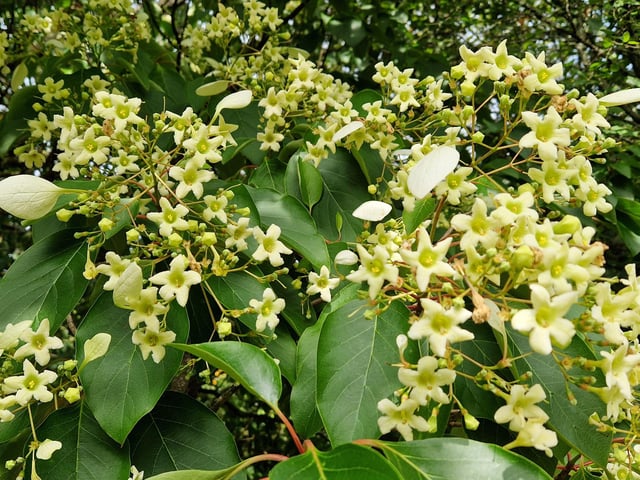
3. Borde Hill's 97 year old Emmenopterys henryi bursts into bloom.. SR2508081 Pic S Robards/Nationalworld
Borde Hill's 97 year old Emmenopterys henryi bursts into bloom.. SR2508081 Pic S Robards/Nationalworld Photo: S Robards