
Recycling rejection rates in the South East revealed: how does West Sussex stack up?
New figures have revealed how much household recycling is actually being thrown away across the South East.
The government’s new Simpler Recycling legislation, due to take effect in 2026, aims to make recycling easier for households across England.
However, new data from businesswaste.co.uk shows that many councils in the South East are still struggling with high recycling rejection rates, where collected materials are often discarded instead of being recycled.
According to Brighton waste management experts BusinessWaste.co.uk, Arun District Council ranks 34th in the South East, with 6.1 per cent of recycling rejected.
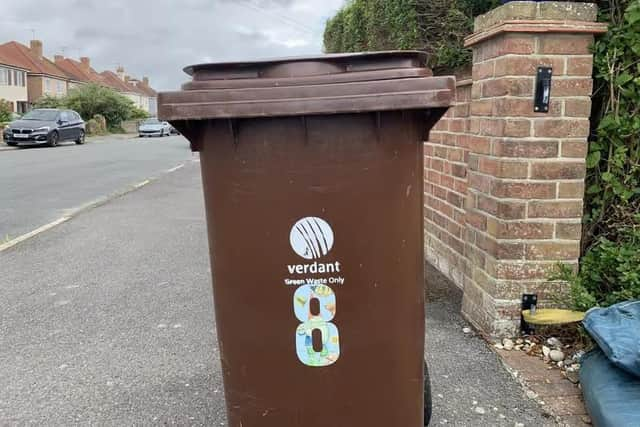

By contrast, West Sussex County Council performs much better, with just 3.67 per cent of its collected recycling rejected, placing it among the lowest in the region.
The figures show sharp contrasts between neighbouring areas. Chichester District Council reports a rejection rate of 4.68 per cent, while Worthing sits at 5.63 per cent, and Adur slightly lower at 5.28 per cent.
Crawley fares higher at 7.45 per cent, while Mid Sussex reports 6.7 per cent.
At the top of the table, Southampton City Council has the region’s highest rejection rate at 24.15 per cent, meaning almost a quarter of its recycling is not processed.
Out of 23,756 tonnes collected, 5,737 tonnes were rejected, waste that will likely be sent to Energy-from-Waste plants or landfill. Portsmouth follows with 18.59 per cent, and Gosport sits third at 18.14 per cent.
At the other end of the scale, Thanet District Council records the lowest rate in the South East at just 1.21 per cent, followed by Tunbridge Wells at 1.69 per cent and Folkestone and Hythe at 1.75 per cent.
Mark Hall, a Brighton-based waste management expert at BusinessWaste.co.uk, said: “There is a certain onus on households to ensure they are recycling correctly to reduce contamination.
"However, we’d encourage local councils to dedicate resources to educating the public on how best they can avoid recycling rejection with guidance on what can and can’t be recycled, alongside tips for cleaning materials.
"Local councils could also consider imposing fines more frequently for those who regularly disregard recycling rules as a deterrent.”
As the government’s new recycling rules approach, the findings highlight both progress and inconsistency across the South East, and suggest that education, as much as enforcement, may hold the key to reducing waste contamination.