
The sum was secured by Hastings and Rye MP Helena Dollimore after she held talks with water company bosses.
Millions of plastic beads washed up on Camber Beach last year after a breach at a Southern Water treatment plant at Eastbourne. They were later found to have contaminated the sensitive Rye Harbour Nature Reserve.
Residents attended public meetings at Rye Community Centre and Camber Memorial Hall on Saturday (October 17) to vote on what the money should be spent on.
A total of 30 projects have been proposed, including marketing support for Camber and local businesses to help boost tourism, a new late-night bus service connecting Lydd and Camber to Rye Station, and a beach response quad bike, as well as a new boat for the Pett Level Independent Lifeboat, supporting life-saving efforts at sea and protecting beachgoers.
Improvements to Rye Harbour Nature Reserve was another option.
A massive clean-up operation using machines developed by Southern Water has resumed at Camber Sands after a pause over the summer months. George Taylor, director of wastewater operations at Southern Water, said: “From the outset we committed to cleaning up the beads and working closely with the community - this is the next phase of that commitment. We hope some good will come out of this incident." Southern Water also says it is working to prevent similar biobead releases in future. The release in October 2025 happened when storms overwhelmed Eastbourne treatment works, causing a screen to break. Initially it was believed the beads had been caught on-site but it was later understood some had escaped. A spokesperson for Southern Water said: “We have already put in place stronger and more resilient containment measures for the biobeads at the Eastbourne Wastewater Treatment Works. Stronger screens have since been installed and additional controls put in place to quickly detect if any beads are outside the tank where they are used in the final stage of wastewater treatment. “Biobeads were the best technology available when sites like Eastbourne were built in the 1990s, where previously there was no sewage treatment at all. Newer treatment works now make use of other technology. Five out of 367 wastewater treatment sites still use bio beads, but Southern Water are working closely with DEFRA on options for updating them.”
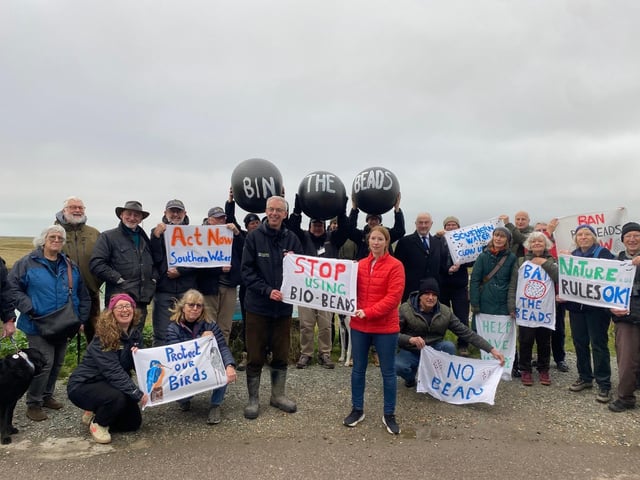
1. The Hastings and Rye MP Helena Dollimore launched a campaign to ban the use of bio beads
The Hastings and Rye MP Helena Dollimore launched a campaign to ban the use of bio beads Photo: supplied