
Secondary school teacher finds what could be a mammoth bone on Selsey Beach
A secondary school teacher has found what he believes is a fossilised mammoth bone while on a walk on Selsey Beach.
Speaking to the Chichester Observer, Mr James Waterfield, from Selsey, said he is an avid fossil hunter, and loves rooting around for treasures while walking his dog.
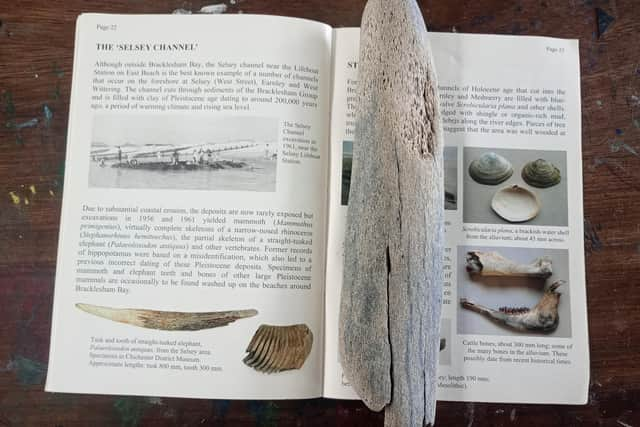

"We keep an eye out in the flotsam while I’m on the beach,” he said. “It’s a lovely walk and the dog loves it, too; he gets to have a good old dig around in the sand. I’ve found quite a few fossils so far, but this is the first time I’ve thought ‘wow this is a really big one’ and showed it to my friends.”
When he found the tusk and shared it with friends online, Mr Waterfield thought it might have been a kind of whale bone, but one colleague – and a fellow fossil enthusiast – Josh Macefield said it looked much more like a mammoth bone, potentially from the Pleistocene era.
"When I put it up on the Selsey news Facebook page, lots of people came forward to say they’d found elephant and mammoth teeth on the same beach,” James said.
It sounds surprising – but it’s not beyond the pale. In 1909, a fisherman discovered the remains of a mammoth in a mass of red clay while working off the coast. A full excavation revealed it measured some 30 feet in length, and drew attention from all over the country. At first, archaeologists believed it was an example of the iconic Woolly Mammoth, but modern day research has revealed it’s actually much more special: a steppe mammoth, of which fewer than a dozen complete skeletons have been found. The first ever example of the steppe mammoth was believed to have been found in Germany, in 1910 – meaning Selsey’s 1909 discovery could very well be the first of its kind.
"It was crazy to find on my doorstep, but this stuff is out there. I’ve always loved fossils since I was a kid, and obviously to have all this stuff right here on your local beach is amazing.” Mr Waterfield said.