
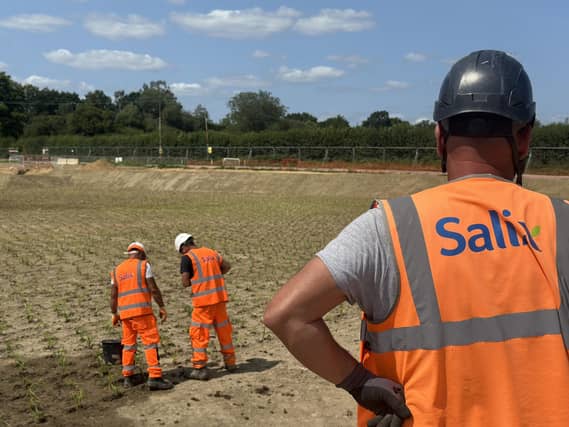

Work, which involves planting more than 80,000 wetland plants across multiple cells on repurposed farmland, started in May and is expected to continue until this Autumn. Once finished, the wetlands will form part of the onsite treatment works; wastewater will be pumped through from the treatment works themselves to the first cell and then dispersed, via gravity, throughout the wetlands.
Southern Water says the wetland plants, specially selected for their ability to absorb phosphorus from the water, will breakdown and assimilate pollutants in the already-treated water, thereby making it even safer, while simultaneously contributing to a biodiversity net gain and creating a vital new habitat for birds, insects and amphibians.
Dr Caolan Harrington, a senior wetland engineer for Vesi Environmental, said the new wetlands represent a considerable evolution of the wastewater treatment process. “The system is more or less self-maintaining,” he said. “Once the wetlands have been established, they require very little maintenance, and that makes it a very robust system. Our current estimates for the (operational lifespan of a) an ICW (Integrated Constructed Wetland) are somewhere between 50 and 100 years. The oldest example at the moment is about 31 years, that supports an agricultural system, and it’s still going strong.”
Unlike mechanical systems, which often also require much more maintenance, the wetlands will also significantly contribute to local ecosystems, according to Dr Harrington: “Part of the concept with an ICW is that you blend it into the landscape; it looks seamless. It’s not a rigid structure; it’s all curved shapes. And because it’s a gravity-fed system – the water naturally cascades from cell 1 to cell 2, to cell 3 and so on – that enhances the residence time and the performance of the system. Once you have the plants established, you create this plethora of habitat types. This was previously a series of agricultural fields and we’re replacing that with rich wetland habitat.
"That means we’re introducing macro-invertebrates, from dragonflies, mayflies, to diving beetles and so on. This is rich wetland, which, alongside forests, is one of the most heavily-lost habitat types in Europe.”
“This nature-based solution will help us treat wastewater, while protecting the environment and biodiversity,” added Project manager Cecile Stanford.
“We’re working closely with the Environment Agency and a range of stakeholders including Natural England, the Rivers Trust and local authorities, together with our key advisors Mott MacDonald and GTb, to plan and deliver the wetland project.”
Lee McGrattan, GTb Project Manager said, “We’re delighted to be working on Southern Water’s first Integrated Constructed Wetland. It’s fantastic to see water companies investing in more environmentally friendly ways to treat final effluent.
“This wetland will, once completed, allow for treated effluent coming out of the treatment works to be treated to an even higher standard. The system relies on specially selected plants to removed nutrients from the water before it reaches the river.”
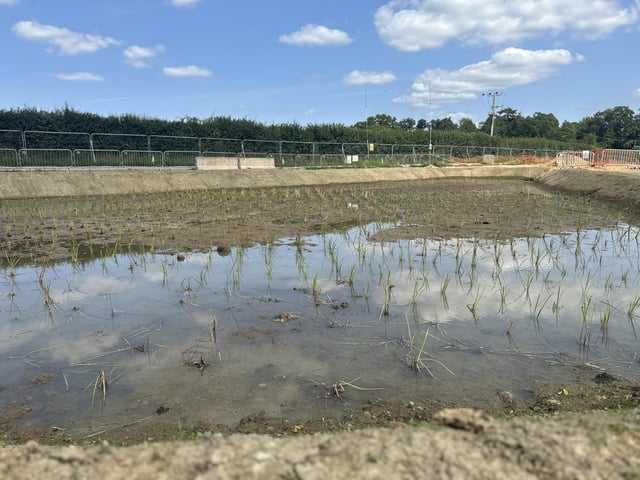
1. Southern Water invests £1 million into wetlands project that will use nature - not chemicals - to clean wastewater
The wetlands consists of several cells. Photo: Connor Gormley
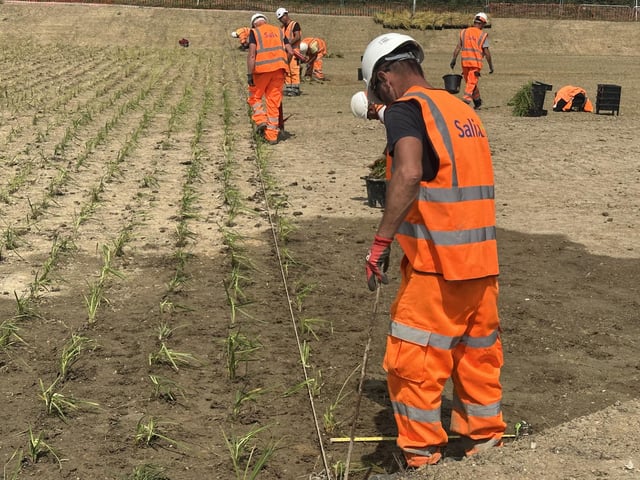
2. Southern Water invests £1 million into wetlands project that will use nature - not chemicals - to clean wastewater
Staff at work on the new site. Photo: Connor Gormley
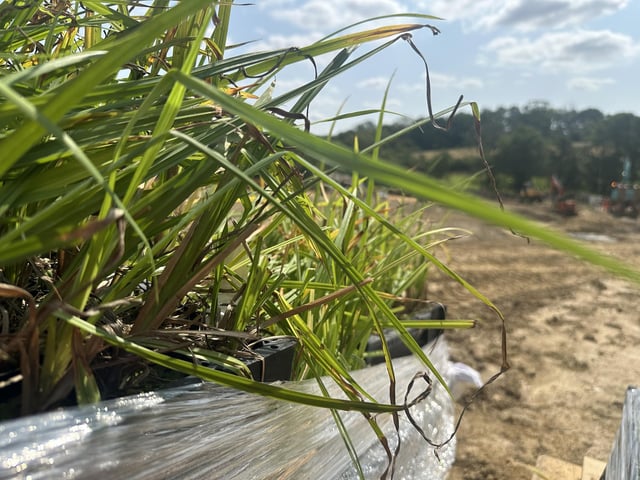
3. Southern Water invests £1 million into wetlands project that will use nature - not chemicals - to clean wastewater
The 80,000 plants have been specially selected for their ability to break down ammonia. Photo: Connor Gormley
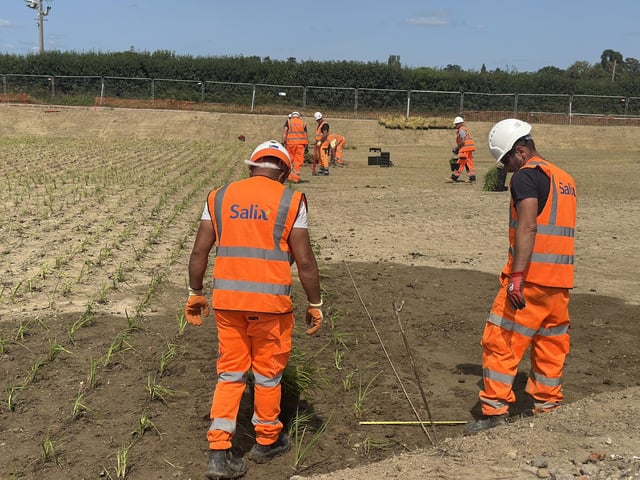
4. Southern Water invests £1 million into wetlands project that will use nature - not chemicals - to clean wastewater
It takes a lot of work to plan a new wetland! Photo: Connor Gormley