
Stunning images capture partial lunar eclipse over Fishbourne

A photographer has captured stunning images of a partial lunar eclipse in Fishbourne.
Vincent Gray was up in the early hours, on Friday (August 28), to photograph the Sturgeon Full Moon.
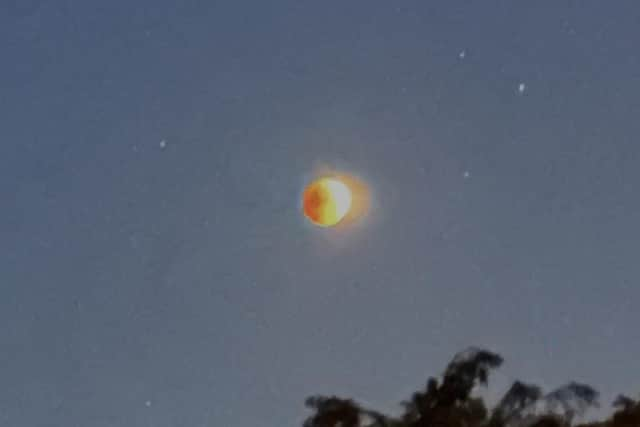

Photographs show the Moon glowing a deep orange-red, with part of its surface passing into the Earth's shadow while the remaining section is brightly illuminated.
The BBC reported the ‘added bonus’ of the Sun, Earth, and Moon lining up to create a lunar eclipse in parts of the world.
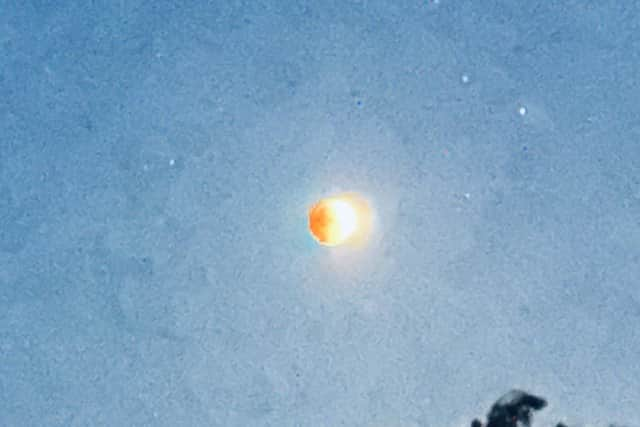
The Met Office said sky-watchers across the UK had the chance to see a ‘striking partial lunar eclipse’, also known as a Blood Moon, during the early hours of Friday.
The eclipse began at 2.23am, when the Moon entered the penumbra – the lighter outer part of the Earth's shadow. The Met Office said the dimming at first was ‘subtle and may be difficult to notice with the naked eye’.
The more obvious partial phase began at 3.33am, as the moon moved into the umbra, the darkest part of the Earth's shadow. From then, the Met Office said observers ‘may see a curved shadow gradually spreading across the lunar surface’.
Maximum eclipse occurred at 5.12am, when around 93 per cent of the Moon was immersed in the Earth's darkest shadow.
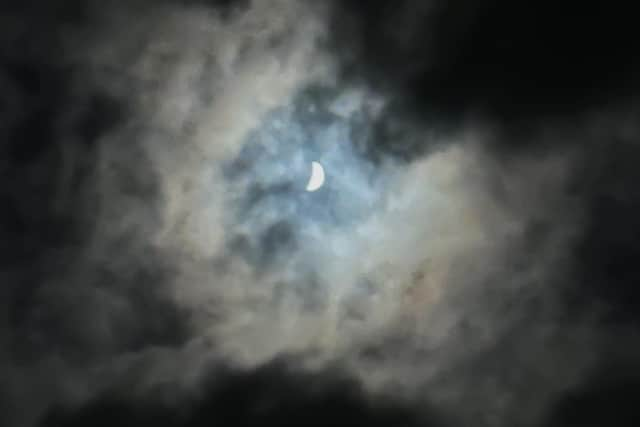
The Met Office said weather conditions were expected to be challenging for many people hoping to see the eclipse.
It said the ‘best initial viewing opportunities’, were likely to be across southern and eastern England, where conditions were expected to remain relatively cloud-free from around 2am, potentially allowing people to see the opening stages of the eclipse.
However, cloud was forecast to increase across the south and east as the night progressed.
The Met Office said: "As a result, there may not be one location offering ideal conditions throughout the event. The greatest chance of seeing something is likely to be across southern and eastern England during its earlier stages, before cloud becomes more extensive."
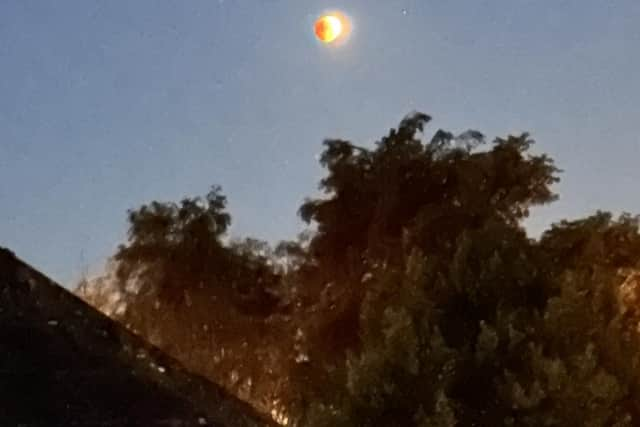
It added that ‘elsewhere, any temporary breaks in the cloud could still provide brief views’, while warning that cloud cover can vary over relatively short distances.
The Moon's low position also meant that even where there were gaps in the cloud, cloud close to the horizon could have obscured the event.
The Met Office said a hill, coastline or another open location could offer a better view, provided local weather conditions were suitable.
Friday's event was technically a deep partial lunar eclipse, rather than a total eclipse, as nowhere in the world saw the Moon become completely covered by the Earth's darkest shadow.
The Met Office said the term ‘Blood Moon’ refers to the ‘reddish or copper colour that the eclipsed portion of the Moon may take on’.
It explained that sunlight passing through the Earth's atmosphere is scattered and bent towards the Moon, with shorter blue wavelengths scattered more strongly, while more red light reaches the lunar surface.
The partial phase continued until approximately 6.51am, although the Moon had already set across the UK by then. In London, moonset was expected at around 6.15am, with timings varying elsewhere.
Unlike a solar eclipse, the Met Office said a lunar eclipse was ‘safe to watch directly’ and no specialist eye protection is required.