
Sussex charity’s new film narrated by Downton Abbey’s Peter Egan shows improvement to donkey welfare at Egypt’s brick kilns

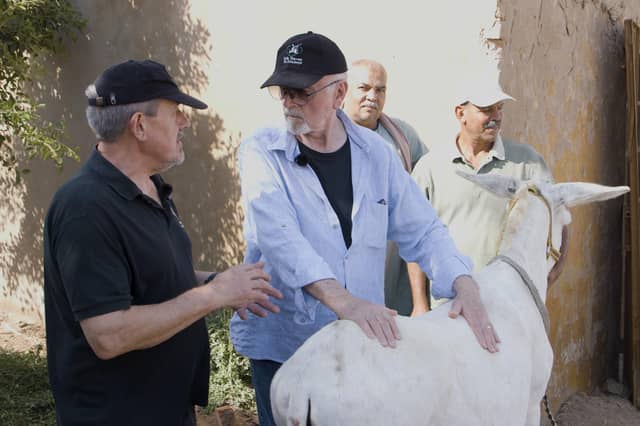

A Sussex charity’s inspiring new short film, which is narrated by Downton Abbey’s Peter Egan, is showing the improvements to donkey welfare at Egypt’s brick kilns.
Safe Haven for Donkeys, based at More House Farm in Wivelsfield, helps thousands of working donkeys in Israel and Palestinian territories, as well as Egypt. Visit www.safehaven4donkeys.org.
‘Beyond’, the final documentary in a trilogy, looks at the ways that veterinary care, education and cooperation with kiln owners have helped the animals in just three years.
CEO Andy Foxcroft said the films came about after the charity invited one of its patrons Peter Egan to visit the Egyptian kilns in 2023.
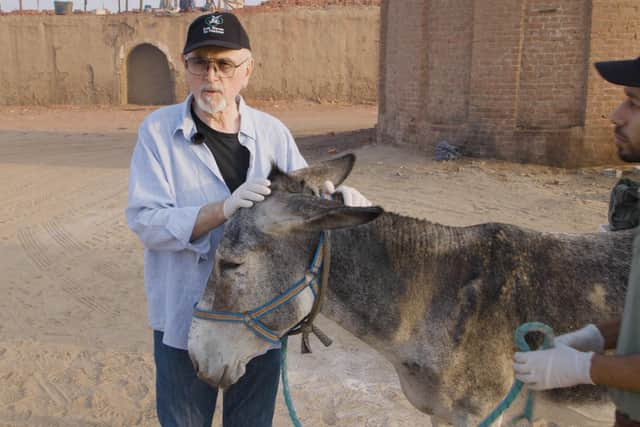
Andy, who also features in the documentary, said: “Peter thought that was a good idea and asked ‘can I bring my friend Andrew Telling along to record the visit on film?’.”
Andy said: “That was the first film and we’d just really started work in Egypt at that time. We’d just moved into the brick kilns and things were still pretty bad.”
The team recorded so much footage that they were keen to return for a follow-up documentary in 2024.
“It was always envisaged after that there would only be three films,” said Andy, adding that the visit for this latest one took place in late 2025.
He said: “It really shows the progress that’s been made in three years – a relatively short time in terms of animal welfare – and the huge improvements that have been made are clearly shown in the film. It’s a positive end to the trilogy.”
The online premiere date is Thursday, February 26 (7.30pm) with Peter and Andy Foxcroft taking part in a live Q&A afterwards with filmmaker Andrew Telling. People can watch the film when it premieres at www.youtube.com/@OrangePlanetPictures.
Andy explained that when work started in 2023 the experienced team started assessing each kiln’s problems in detail and setting a programme of activities to address any issues. He said: “They introduced a RAG score – read, amber, green – and at the time of the film in 2024 there were more red kilns that green kilns. That was really transformed over the next couple of years and most of the kilns now are either green or amber.”
Andy, who has visited the kilns many times, said the team has been trying to replace donkeys with machines like tractors over the past 12 months.
But he said: “It’s been virtually impossible.”
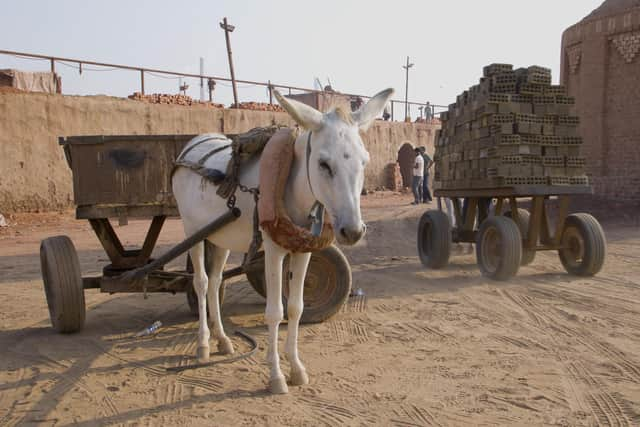
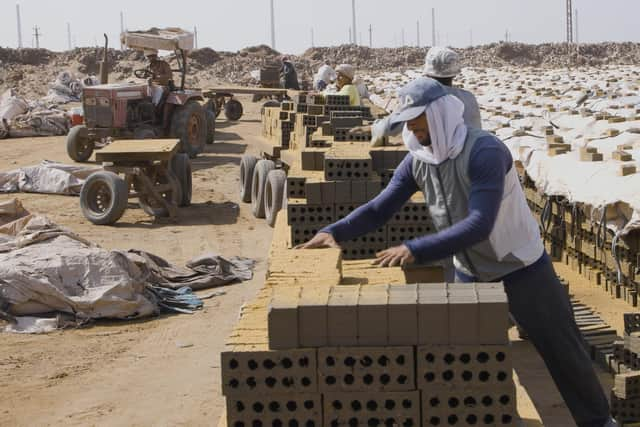
He explained: “Prior to modern times donkeys were prevalent in the brick kilns – they were doing everything basically. There are all sorts of different functions within the kiln, different stages of the process. Most of those have now been mechanised apart from this last phase, which is taking the sun-dried bricks.”
Andy said that once bricks have been made out of raw clay they go to a sun-drying area. They are left for a day to dry out and then taken into the kiln. Andy said: “The kiln has normally about 16 entrances so the donkeys will pull a cartload of bricks, probably 1.5 or two tonnes, and they pull them through these very, very small doors in the side of the kiln. Then they are taken off the trolley and the donkeys are manoeuvred out. It’s a really tight space and we’ve tried using a small tractor, we’ve tried using rotavators.”
But Andy said ‘nothing is as good as a donkey’ so the animals have remained for this last part of the process. He said: “Essentially, it’s a design fault. The kiln entrances are made very small because they’ve got to be bricked up once the oven has been loaded. They’re bricked up and then the firing starts and, of course, the smaller the door the less heat you’re going to use.”
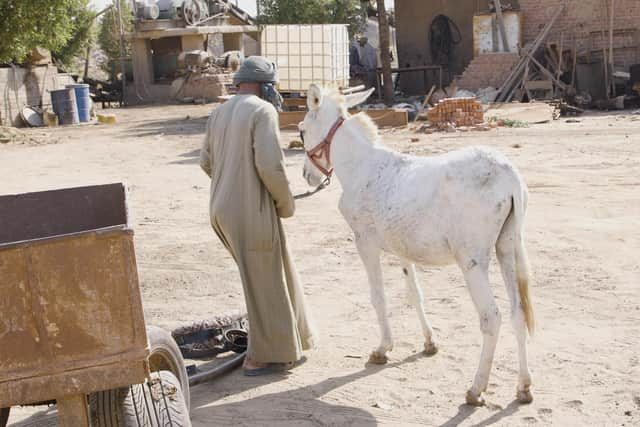
But Andy added that Safe Haven for Donkeys has not given up on finding an alternative to donkeys.
He went on to say that in 2023 and 2024 the charity was servicing about 120 kilns in the relatively small El-Saf City area, about 80km south of Cairo. Andy said there are up to 1,000 kilns in Egypt and most use donkeys.
Andy said: “One of the team used to be a kiln owner himself and that’s helped us enormously in terms of building good relationships with the kilns.”
He said the team now has a phase-out programme. “That doesn’t mean to say we’re leaving the kilns,” he said. “It means we’ve put in provisions and projects so that the kilns can be more self-sufficient because you can’t get a vet into those areas.”
The charity is now trying to create a more sustainable system so people at the kilns can help themselves. This, in turn, will free the charity up to move into other kilns that have not been serviced.
Andy said the work is ongoing and requires support. He encourages people to donate and to watch the film, which he called ‘superb’ and ‘really uplifting’. He said “We’ve got a long way to go but in such a short space of time we’ve achieved more than I thought we’d achieve, that’s for sure.”
Andy added that the kiln owners themselves want to improve conditions.
He said: “In the kilns you’ve got kids who are mainly the ones used to drive the donkeys and load up the carts. We’re taking about children as young as 12 years old.
“So we’ve done a lot to educate as well as improve the health and welfare of the donkeys. We’ve managed to provide some education for the kids to help them understand the needs of the donkeys. There are a lot of misconceptions about donkeys throughout the Middle East but as part of our work we’ve provided education to help people understand their needs a lot better. So I think it’s just a really inspiring film that shows what can be done with the right focus.”