
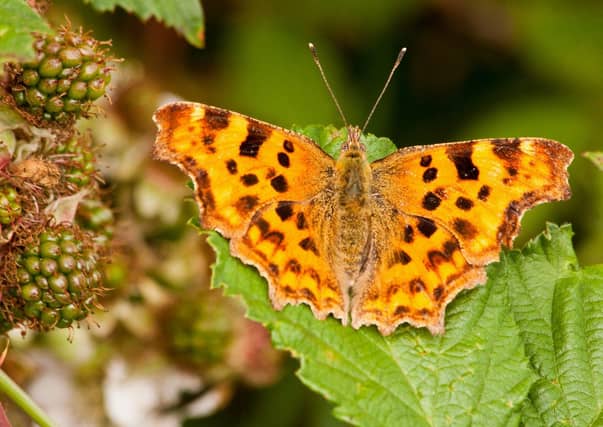

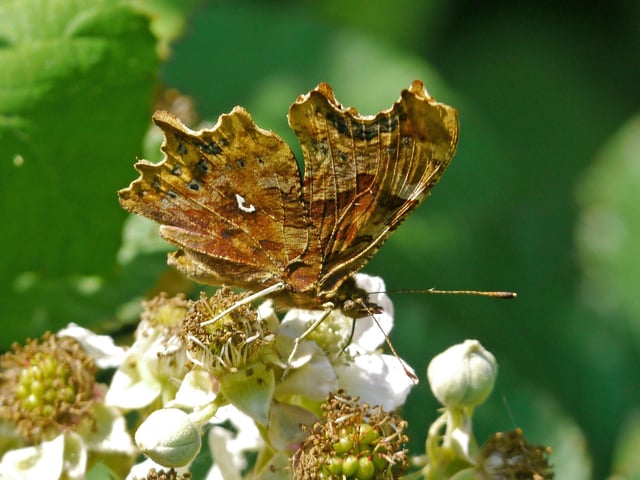
The comma is named for the white punctuation mark on the underwing and best known for its cryptic camouflage. James explained: “With its jagged, heavily-scalloped wings in a closed position, any resting or hibernating comma does a superb impression of a dead leaf, and an accurately decaying one at that. Amongst branches and leaves, it’s almost entirely inconspicuous. The camouflage doesn’t stop at the adults, as the caterpillars bear a remarkable resemblance to a bird dropping, helping them to avoid predation. They’re undoubtedly a powerful flyer, furious flaps interspersed with bouts of gliding. Helpfully for observation, they’re also a predictable butterfly and the males have a tendency to return to the same perching spot after short flights.”

1.
James Duncan, learning and engagement officer at Sussex Wildlife Trust | User (UGC)
2.
The comma butterfly. Picture: Roger Wilmshurst/Sussex Wildlife Trust
3.
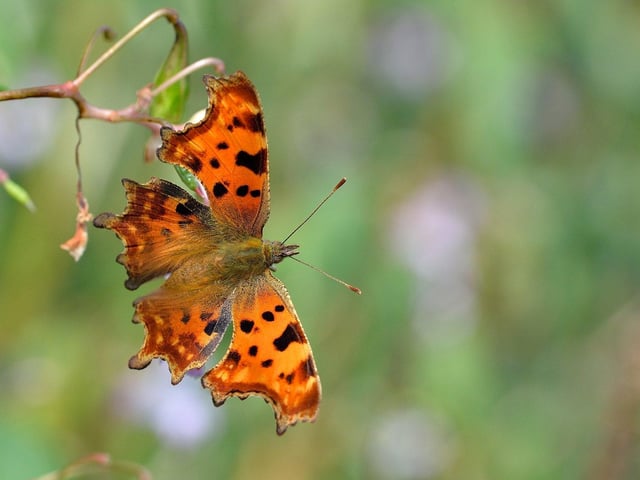
The comma butterfly. Picture: Bob Eade/Sussex Wildlife Trust
4.
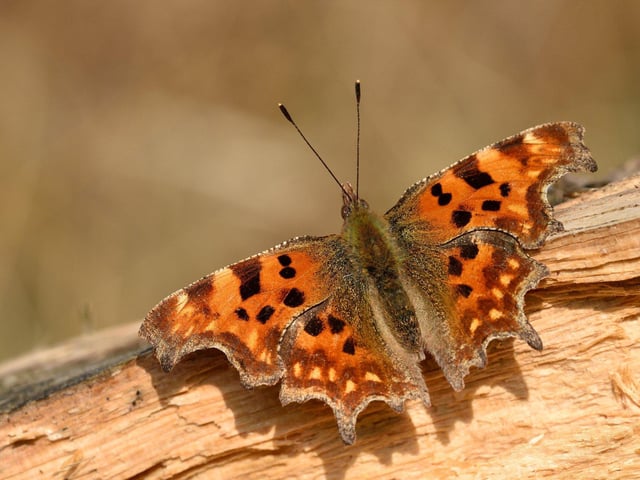
The comma butterfly. Picture: Bob Eade/Sussex Wildlife Trust