
West Sussex heart patient becomes first to benefit from new type of medical care
A West Sussex man has become the first heart patient to benefit from a new type of medical care.
Specialists at University Hospitals Sussex have introduced a new way of working to ensure faster and better care for patients with heart valve disease. And David Brown, 79, from Burgess Hill, became the first person to benefit from it this summer.
The specialist team, based within the cardiac unit at Royal Sussex County Hospital, now provide same day care for patients which improves patient experience while also reducing cancellations when demand for hospital beds is high.
The expert team treats patients with restricted blood flow caused by the narrowing of heart valves by a procedure called TAVI, which improves blood flow in the heart by replacing the faulty valve.
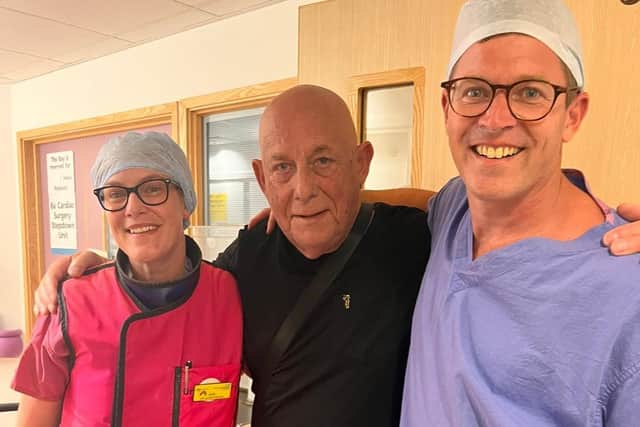

After becoming the first patient to benefit from it, David Brown said: “I was so pleased to get the procedure as my heart condition was making everyday tasks a struggle. When I got the procedure it went really well, I had a great team looking after me who kept me informed every step of the way. I was even able to go home the same day as my surgery to recover at home with my family.”
“It’s been five months since the procedure, and there’s been a huge improvement in my symptoms. I can now walk on average about 7,000 to 10,000 steps a day without needing to stop to catch my breath.”
The cardiac unit performs over 320 TAVI procedures annually, receiving referrals from across the south. It is one of only a handful of centres in the country offering same day discharge for patients.
Patrick Mejia, structural heart nurse specialist at Royal Sussex County Hospital said: “The introduction of same day discharge is truly transformative for managing elective TAVI procedures.
"By treating and discharging patients on the same day, we eliminate the need for an overnight hospital stay. This not only enhances patient convenience but also mitigates the risk of delays and cancellations that can occur due to bed shortages during busy times.
“These changes ensure that our patients receive timely care without the added stress of potential postponements.”