
Chichester chalk streams ‘well on the way’ to major changes despite restoration delays
The Western Sussex Rivers Trust is ‘well on the way to achieving some really significant changes for our chalk streams’, councillors have been told.
The news was shared by Aimee Felus, CEO of the Trust, during a meeting with Chichester District Council’s environment panel on Monday (September 21).
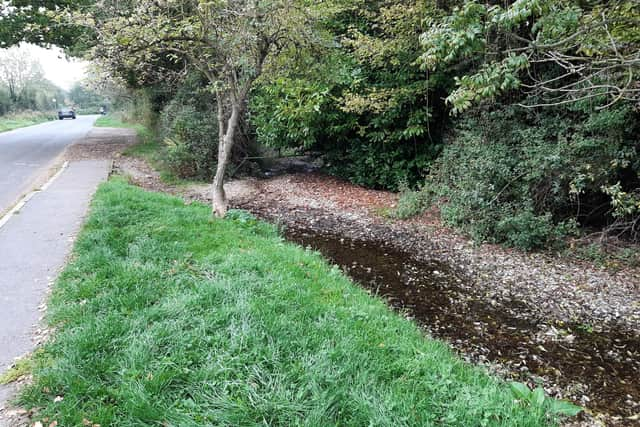

In 2024, the council agreed to give the Trust £180,000, spread across three years, to help fund Chalk Stream Resilience projects for the rivers Lavant, Ems and Hambrook.
The third payment is due and members of the panel were satisfied that it should be paid.
Chalk streams are among the rarest and most valuable habitats in the district. But pollution and over-abstraction have affected their water quality and flow, with the Lavant in particular described by Ms Felus as being in a ‘terrible condition’.
Under the agreement with the council, the Trust has to provide a progress report each year. The latest report showed a number of changes to what work could be carried out and when.
Ms Felus told the panel that the physical restoration projects planned for the rivers were proving ‘far more complex and larger scale’ than had been envisaged, so a number of Key Performance Indicators (KPIs) had been missed.
She said: “We were already working on the Ems and the Hambrook, and we knew those catchments pretty well. But nobody had ever given any attention to the Lavant, which was extremely sad and probably one of the reasons why it was in such a terrible condition.
“So consequently, some of the things that we originally put in he KIPs were not necessarily possible within the first two years.
“There have been many more significant issues highlighted on the Lavant that we could not have foreseen.”
On the Ems, the Mill Meadows wetlands creation project has been completed, but work at Westbourne Mill will not go ahead. Improvement work on theLumley sluice has morphed into several projects due to the flow, gradient and course of the river and the flood risk.
The projects include Constant Springs and Lumley Stables, which are due to be completed next summer, another at Brook Meadow and others further downstream at Slipper Mill Pond and Peter Pond, which are due to be completed in 2028.
Ms Felus warned that there was no short-term fix when it came to improving water quality and flow.
She added: “This is going to be a long slog for us to sort out the water quality issues on the Lavant in particular and the flow issues on the Ems in particular.
“This is the kind of thing that has come about due to the nature of how we govern and manage our water resources in the UK, which frankly is pretty dire. It’s going to require systemic change at all levels in order for that water quality to improve.
“We are making really good strides on the Lavant, looking at the levels of phosphate from the waste water treatment works there.”
The panel agreed that, while not all KPIs had been met, there was no need to panic, but to take a long-term view of a process which was never going to be solved over night.
Jonathan Brown, deputy leader of the council, said there were ‘strong grounds’ for releasing the third year of funding. He added: “Real progress is now being made and we can have confidence that more is coming – and also that that progress will be put at risk by us pulling funding now.”