
Unitary authorities would 'erode public trust' says Horsham council leader
Plans for a major redesign of local government will ‘erode public trust in local government’, a West Sussex council leader has said.
The English Devolution White Paper, which was published earlier this month, proposes replacing district and borough councils with unitary authorities covering more than 500,000 people.
It also proposes extending combined authorities – those made up of more than one council – across the whole country, serving populations of around 1.5 million people.
Each authority would have a mayor.

The idea is to devolve – transfer – powers from central government to local authorities.
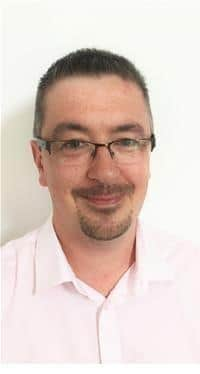
Martin Boffey, leader of Horsham District Council, welcomed the opportunities that devolution would bring locally – as long as it was operated on a ‘whole of Sussex footprint’.
But he added: “However, the government’s proposal for local government reorganisation represents centralisation of this council’s services to a higher level.
“The services we run, and local democratic accountability work best when delivered as close to our residents as possible, as the district council does at present.”
Mr Boffey said the idea of unitary authorities being able to cover 500,000 people was ‘not proven’, with only a handful of the current ones having such high population figures.
He added: “There are significant risks that this will erode public trust in local government and result in institutions which are remote and have little direct engagement with the communities they serve and represent.
“Nevertheless, the government has stated its intention clearly and has a huge majority in Parliament with which to force through its plans. We will therefore work closely with our neighbouring authorities and our county council to deliver the best possible solution for Horsham district’s residents and businesses.”
Hypothetically, the whole of Sussex could be governed by three unitary authorities.
Horsham district has a population of around 147,000, Chichester district has 126,000, Crawley borough has 119,000, Worthing borough has 111,000, Adur district has 64,000, Arun district has 165,000, and Mid Sussex has 153,000.
Add that to the 546,000 in East Sussex and that’s a population of just over 1.4million.
But it is early days yet. The government said it would reveal which parts of the country it was prioritising for devolution in due course, with the aim of holding mayoral elections in May 2026.
A spokesman for West Sussex County Council said: “We welcome the publication of the English Devolution White Paper and will consider how to respond following discussion with neighbouring councils.
“We will not be making any further comment until we have considered the content of the paper and reflected on its implications.
“Our focus remains on delivery of core services to our residents in line with the priorities in Our Council Plan, and it is crucial that the government provides sufficient funding to local authorities, in particular to cover the increased costs to those who provide care to vulnerable adults from changes in the National Living Wage and National Insurance.”