
Watch: Chichester museum manager shares excitement at chance to display rare paintings
Chichester’s Novium Museum ‘can’t wait’ to share a set of extremely rare paintings with the public.
The Worthy Women, also known as The Amberley Panels, are painted on oak and show eight heroines of antiquity. They date from c1526 and are to undergo two years of vital conservation work before being displayed at the museum.
Manager Amanda Rogan said: “These panels are extremely rare. Tudor panel paintings do not really survive very well. The fact that we have them makes them one of the most unique objects in our collection.
“We are extremely lucky to have them and we are really excited that we are going to be able to conserve them and also do some further testing and research about the panels when they’re away with the conservators to hopefully find out a little bit more about them.”
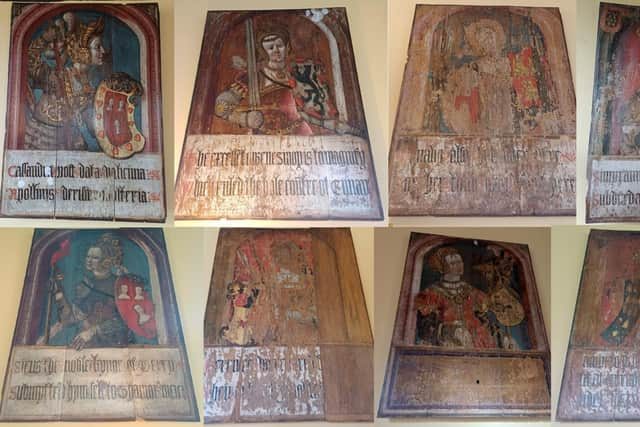

The panels were commissioned by Robert Sherborne, Bishop of Chichester, and were the work of artist Lambert Barnard (c1490-1567). They were bought by the district council in 1983 for £6,500, with the help of a £4,000 grant from National Heritage.
They are thought to have been specially painted for the Queen’s Room at Amberley Castle, where Katharine of Aragon – Henry VIII’s first wife – was meant to stay on a visit with her husband during his Royal Progress through Sussex.
While she never made the trip, it is thought very likely that the King saw the panels.
The Worthy Women are: Amazon Queens Lampedo, Hippolyta and Menalippe, Middle Eastern Queens Sinope, Thomyris and Semiramis, and the prophetess-princess Cassandra.
One of the panels is of an unknown figure while a ninth has been lost at some point in history.
The Hippolyta character is depicted in a Tudor head dress, which is believed to represent Queen Katharine.
Amanda explained that, because of the materials used, such panels rarely survived. Sometimes the wood was reused for something else. While they used to decorate the Queen’s Room at the castle, new tenants over the centuries had new ideas for decor and the panels were removed – eventually being found in a loft.
Amanda added: “They are wonderful, wonderful pieces and we’re lucky to have them.”
The conservation work was made possible by a £191,200 grant from the district council. Special crates will be built to move the panels from the Bishop’s Palace, where they are currently kept, to specialists at the Hamilton Kerr Institute in Cambridge.
A further £57,250 of grant money will be used to set up an environmentally controlled space for their display at the museum.
Amanda added: “When they return to the museum in just over two years, they will go into a newly designed re-fit gallery where they will be in ideal environmental conditions for the panel paintings and we can’t wait to share them with members of the public and visitors to the museum.”