
Worthing law courts drop-off bay to become paid parking

New signage outside the Worthing Law Courts has confirmed changes to the area’s parking arrangements.
West Sussex County Council (WSCC) has moved to implement a permanent Traffic Regulation Order (TRO) on Christchurch Road.
Previously, the bays outside the courts allowed up to two hours of free parking. However, under the new TRO, the spaces will become shared-use bays. They will allow up to four hours of pay-and-display parking, while still being available for residents and visitor permit holders.
A WSCC spokesperson explained: “In August 2025, West Sussex County Council advertised a Traffic Regulation Order proposing several amendments to waiting restrictions within the Worthing Controlled Parking Zone, including changes to Christchurch Road outside the Law Courts.
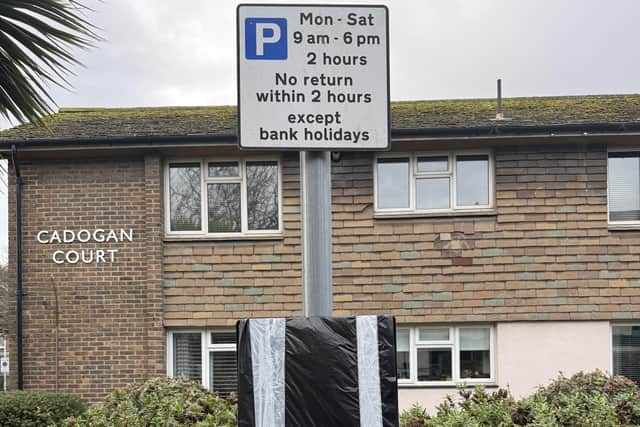

“Previously, the bays outside the Law Courts allowed up to two hours of free parking. The proposal sought to convert these into shared‑use bays, permitting up to four hours of pay‑and‑display parking while also allowing use by residents and visitors permit holders.
“The scheme documentation explained that the change was intended to increase overall parking capacity and provide more flexibility, particularly for residents living south of Stoke Abbott Road who under the previous arrangement had no long‑stay parking available.”
The council said the 21-day ‘standard consultation period’ closed on August 28, 2025. This gave members of the public a chance to have a say.
"No objections were received to this element of the scheme,” the council added.

"The Traffic Regulation Order is now due to be implemented and become legally binding.”
The bays will still be available to residents and visitor permit holders but court visitors and local commuters will need to pay if they park for extended periods.
TROs are legal instruments used by councils to manage parking, waiting, loading, and other traffic restrictions on public roads. They ensure that changes such as new parking rules, pay-and-display zones, or restrictions on certain vehicle types are enforceable by law. Changes are typically advertised in advance, and members of the public have the opportunity to comment or object before the order is finalised.