
General Election 2024 - this is why so many Sussex Tory MPs lost their seats and how a handful survived

Sussex residents will be waking up not just to a new Labour government but a different political landscape in their own counties too.
On July 4, the true blue colours – outside the splash of red and green in Brighton and Hove – dominated every other part of East and West Sussex. The Conservatives held every seat. But after the political earthquake of the following few hours, the Tories had been driven back after decades – and even centuries – of dominance to their rural heartlands.
Of the 14 Conservative seats – changed slightly by boundary alterations – by morning the Tories still held only five of them: Bognor Regis and Littlehampton; Arundel and the South Downs; East Grinstead and Uckfield; Sussex Weald; and Bexhill and Battle.
Historically, Crawley and Hastings and Rye have always been swing seats between Tory and Labour. Not surprisingly, given the national Labour landslide, both turned red.
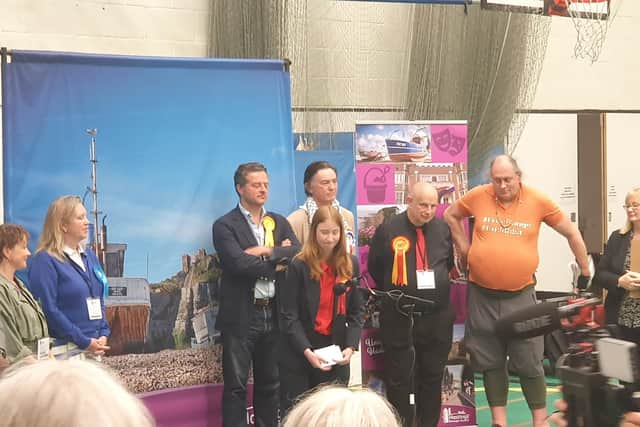

But Labour also captured East Worthing and Shoreham and West Worthing – coastal seats that have long been held by the Tories. The writing had been on the wall for some time given Labour’s huge advances on the local councils there.
Elsewhere in Sussex, Brighton and Hove remained proudly Labour in two constituencies and Green in the former seat of Caroline Lucas, Brighton Pavilion. Sian Berry comfortably retained the legacy with 55 per cent of the vote.
The rest of Sussex now belongs to the Lib Dems. They have taken back Norman Baker’s old seat of Lewes and reclaimed Eastbourne. Of more historic significance is their huge success in Chichester, Horsham, and Mid Sussex – a changed boundary but the parliamentary home for many years of Nicholas Soames until he stood down in 2019.
Of course the national campaign will have been responsible for much of the sweep of change in Sussex – not least the splitting of the right of centre vote by Reform UK driven by the Tories’ total failure to slash taxes and control both legal and illegal immigration and ‘woke’, key requirements of the Conservative’s core vote.
But higher mortgage costs will have been particularly acutely felt in Sussex where property prices are high and a larger proportion of incomes are spent servicing the interest payments.
There has been a sense too of being taken for granted and ignored.
The coastal stretch – Hastings, Shoreham and Worthing, is no longer the unrivalled affluent area that it once was.
Vast house building has also changed the political dynamic and demographic of the area – with many newcomers moving to the county, especially from the London region, where political aspirations are often different from traditional rural ones.
Added to this, the state of the roads – decimated by pot holes that the Conservative county councils have failed to maintain; the lack of a solution to endless traffic jams most notably on the A27; and the complete absence of infrastructure – health, schools, facilities – to support all the extra housing in a meaningful way.
Sewage discharges into the sea, rivers and Chichester harbour have particularly outraged residents – and the last government’s apparent inability to force Southern Water to move faster than it is currently trying to do.
Sussex has been trapped by its historic Conservative outlook. Successive Conservative governments have given the impression of taking it for granted – safe votes with no need to invest. Labour governments have seen it as alien to its core vote.
All that will change. Labour and the Lib Dems will be keen in future years to secure their base in Sussex and demonstrate with actions as well as words that they intend to make a difference. Tories will know that they need to do much more for the county if they are ever to win it back.
Finally, the election proves that hard work pays. In Chichester, for example, the successful Lib Dem victor Jess Brown-Fuller fought a hugely engaging and energetic campaign which pre-dated the calling of the election by many, many months. She truly established herself as the rightful heir to the constituency.
On the other side of the political divide, Andrew Griffith did the same for the Conservatives in Arundel and the South Downs. Long before the election was called he was exposing himself to frank interrogation by his electorate through many public meetings and hustings, a number of which I independently chaired.
Both of them also took full advantage of Sussex World – our website with a vast audience – to share news of their activities. Candidates and MPs who engaged far less through our digital platforms, possibly coincidentally, tended to attract far fewer votes. Trusted, independent communication platforms such as ours have never been more important in a democracy.
Sussex World and its weekly newspapers support no political party. We never have done.
Today we applaud everyone who put themselves forward as candidates in the election – that always takes courage.
We commiserate with those MPs who have lost their seats.
And we congratulate our new MPs – whatever their party colours. We wish them well in the huge challenges ahead – and guarantee that as well as holding them to account we will do everything possible to encourage them, as collectively we all make Sussex a better place in which to live and work.
[] Gary Shipton is the Editor In Chief of Sussex World and its weekly newspapers across East and West Sussex. He is also the senior editor of its parent company with newspapers and websites across the UK. He is not a member or supporter of any political party.