
Seth Lakeman plays Brighton on back of new album
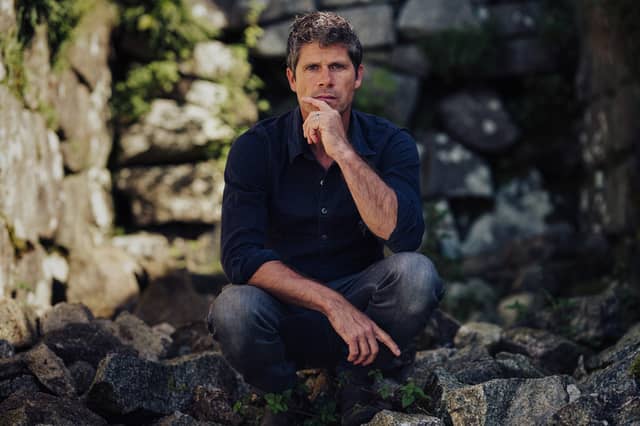

In a way, folk musician Seth Lakeman consciously comes full circle with his latest album – going back to the approach with which he began.
Releasing his debut album The Punch Bowl in 2002, it was the follow-up album Kitty Jay that saw him catapulted into the spotlight after it received a nomination for the Mercury Music Prize in 2005.
“And I think thinking about that kind of rubbed off on me when I was doing this new album The Granite Way, wanting to tell these stories, to get the narratives together and also just playing with the sort of musicians that I used to work with back then. Consciously I did think that I could write another album in that kind of way. I got the musicians together. They hadn't heard the material and I just wanted to capture the magic of those first moments. So forgive the fluffs and the coughs. It's warts and all!
“I had written the stories and songs beforehand and had the melodic tunes ready for us all to explore when we recorded in the room, and the musical interplay between this line-up really displays their appetite for sounds and subjects within the folk tradition. With very little rehearsal beforehand the songs evolved quickly and naturally. There was no fixed arrangement until we finally recorded.”
Steeped in Devon folklore, The Granite Way came out on February 14 plus a new UK tour too, with his Brighton show at St George's Church taking place on March 1.
“It is about the coast and the moorland, the land and the sea. Those are big parts of the inspiration and a big part of this area. It's the people and the places and it is the history.”
In a track that Seth says is about “a spectral figure who roams the moors, chasing lost souls away from a safe passage”, we get the eerie Huntsman and the Moon. Another myth from the region provides the inspiration of The Black Fox, a galloping song with Seth’s voice ringing clear as it tells the mysterious tale of the legend of the Black Fox of Dartmoor, believed to be a supernatural guardian of the moors.
“The song is playing on the devilish side of story-telling. The devil always comes out and it's not just Dartmoor! It could be the devil or it could be the angel. It could be the other side. It's that kind of story-telling. There is artistic licence but the songs were inspired by these legends.
“And with this album I definitely spent some time researching. I looked for the stories. You delve into the area.”
Included is the well-known Victorian story of Charlotte Dymond, a song with a mystical haunting air, telling the tale of a woman murdered on Bodmin Moor apparently by her farm hand: “He was supposed to be her lover but he was never tried properly. They jumped to a conclusion. He was hanged and there were protests. There are grounds for thinking he was innocent.”
Another song celebrates the 200th anniversary of the RNLI, of which Seth is a big supporter. Louisa, which opens the album, is the tale of the lifeboat called Louisa which had to travel overland from Porlock Weir from Lynmouth for a launch which saved everyone – at the conclusion of the 13-mile trek.
Together, with these kinds of inspirations, the songs hark back to Seth’s earliest works – though he admits it’s difficult to get your head around the fact that it’s 20 years now since that Mercury nomination: “I think as a musician you just tend to keep on ploughing on and I think if you look back too much then you might become stagnant. But there is a definite continuity. There is a melodic and rhythmic side and a story-telling side that I think I've always gravitated towards but I do feel that I have broadened out a bit over the years as I think you do with age. I think you start writing more personal songs. I've definitely changed but it was good with this album to reconnect with the person that I was.”