
'Higher-than-usual likelihood' - Drought warning issued for Sussex as public urged to 'play their part'

People in Sussex have been urged to 'play their part', amid the increasing risk of a drought in 2026.
A new report warns of a widespread drought in 2026 in the absence of a wet winter.
According to the Environment Agency, Hampshire, Isle of Wight and Sussex will remain in prolonged dry weather or move to drought next spring if less rainfall happens this winter.
Widespread impacts are expected on nature, agriculture, and navigation without sustained rain before the end of March 2026.

The government agency warned that some hosepipe bans ‘could continue’, with all water users told to prepare for prolonged drought next year.
The environmental regulator has released its drought prospects report, examining the wet weather needed through the winter to ensure the country’s current low water levels recover by spring 2026.
“Three scenarios have been created, each looking at the impact in March on the three southern counties if 100 per cent, 80 per cent or 60 per cent of expected rainfall happens,” an Environment Agency spokesperson said.
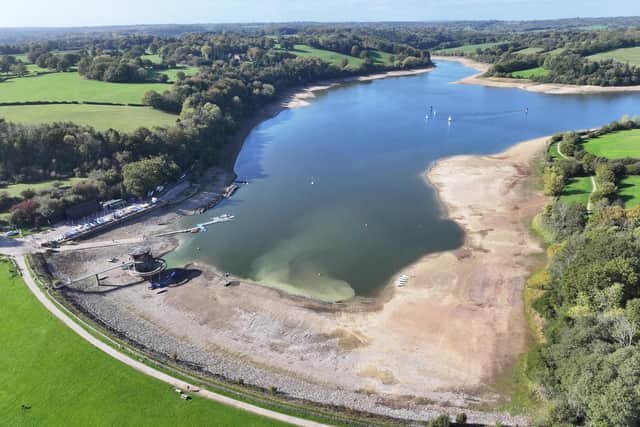
"Right now, Hampshire and Isle of Wight are in prolonged dry weather status but parts of Sussex are in drought due to low water levels at Ardingly Reservoir. If 100 per cent of rainfall happens, the status will change to recovery.
“However, if 80 per cent of rainfall occurs, prolonged dry weather status will continue. Should only 60 per cent of rainfall, all the counties will be in drought. There is only a two per cent to six per cent chance of that situation occurring.”
In October, the Environment Agency declared a drought in Sussex for the area supplied by South East Water (SEW) – changing the status of the areas around Haywards Heath and Eastbourne.
Drought is only over when water levels are ‘fully replenished’. England has seen below average rainfall for eight out of ten months so far this year, the Environment Agency revealed.
This means that flooding in drought is ‘possible’, including flash floods as dry soils ‘struggle to soak up intense downpours’.
The spokesperson added: “The Met Office has indicated a higher-than-usual likelihood of dry conditions over three months from November to January. This could cause drought conditions to worsen, leading to hosepipe bans, significant pressures on the environment and a risk to crop yields.
“The Environment Agency is urging the public to continue to play their part and use water wisely through winter, in anticipation of another drought year.”
Helen Wakeham – director of water at the Environment Agency – said there will be a drought next year, unless we get sustained rainfall through the winter.
She added: “The severity of that drought will depend both on the weather and the actions we take over winter following this very dry year.
“The public have been brilliant in using a little less water this summer and following the restrictions in some parts of the country. I would urge people to continue to be as efficient as possible with their water use this winter - even if it is raining outside. Our wildlife, our rivers and our public water supplies depend on it.”
Water minister Emma Hardy said recent rainfall was welcomed but the prolonged dry weather throughout this year ‘continues to pose risks to public water supplies, farming, and the environment’.
"We continue to work with the National Drought Group and water companies to maintain supplies for communities across the country,” the minister said.
"Climate change means we will face more frequent, severe droughts and flooding in the years ahead. That’s why this government is taking decisive action to secure our long-term water resilience, which includes building nine new reservoirs and investing in new pipes to reduce leakage.”
Will Lang, chief meteorologist at the Met Office, said it is ‘not possible’ to ‘definitively forecast weather for the next three months’.
But the chances of a dry period are ‘higher than normal’, he explained, adding: “A more average three-month period for rainfall is still the most likely scenario.
"It's important to note that rainfall patterns in England can be variable, so while some may see more rainfall, others will see less, possibly giving limited relief from long-standing dry conditions."