

Social media is awash with photos of the rare appearance – also known as aurora borealis.
The Met Office said they were more likely to have been seen in Northern Ireland, Scotland and northern parts of England – but they were visible across the UK, including the south coast of England.
People reported seeing the sky glowing pink and green – including in Chichester & Horsham in West Sussex and Eastbourne & Hastings in East Sussex. There were also sightings in Surrey.
It has been described by experts as one of the strongest geomagnetic storms for years. The US National Oceanic and Atmospheric Administration (NOAA) issued a rare solar storm warning – and such storms increase the chance of seeing the Northern Lights.
The Met Office said that ‘enhanced activity’ is expected to persist, but at reduced levels, through Saturday night into Sunday.
What are the Northern Lights?
The Northern Lights – or aurora borealis – appear as bright, swirling curtains of lights in the night sky and range in colour from green to pink and scarlet.
It is caused by charged particles from the sun hitting gases in the Earth's atmosphere.
The colours occur due to different gases in the Earth's atmosphere being energised by the charged particles.
The two most common gases in the Earth's atmosphere are nitrogen and oxygen. Oxygen atoms glow green – the colour most often seen in the Northern Lights, while nitrogen atoms emit purple, blue and pink.
The most impressive auroras occur when the sun emits really large clouds of particles called ‘coronal mass ejections’.
Ahead of the sightings, Krista Hammond, the Met Office’s space weather manager, said: “Multiple coronal mass ejections from the sun are expected to reach Earth in the coming days bringing the potential for aurora visibility over the UK, particularly on Friday night.
“While short nights at this time of year will limit the visibility window, if conditions are right there’s a good chance of sightings on Friday night.
“Aurora visibility may persist through Saturday night, but as it stands this is likely to be less widespread than on Friday night with northern parts of the UK most likely to continue to have the best viewing potential.”
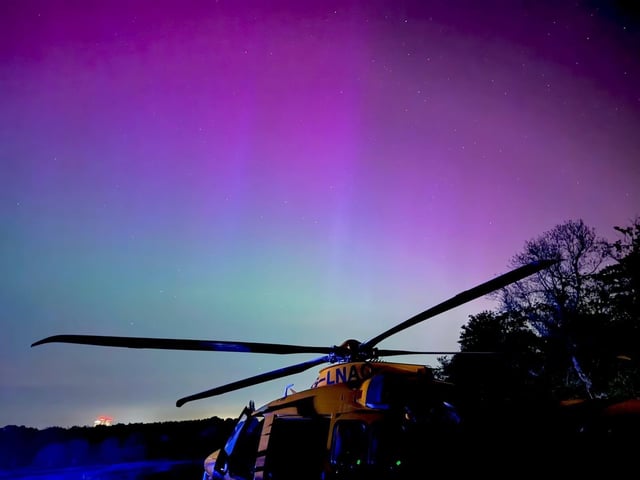
1. Northern Lights in dazzling display in skies over Sussex and Surrey
This photo shows an AW169 helicopter operated by Air Ambulance Charity Kent Surrey Sussex (KSS), based at Redhill Aerodrome, during the aurora borealis of 10/11 May.A KSS spokesperson said: "On 29th September 2013 we became the first Air Ambulance in the country to provide a 24/7 helicopter service all year round when a team flew to a patient involved in a road traffic collision near Canterbury, treated them and accompanied them to hospital. Since then, we have carried out 4,000 missions by helicopter at night, treating over 2,000 patients and flying for 2,000 hours. In that time our aircraft have flown approximately a quarter of a million miles at night, equivalent to flying around the Earth 11 times or travelling to the moon." Photo: Air Ambulance Charity Kent Surrey Sussex
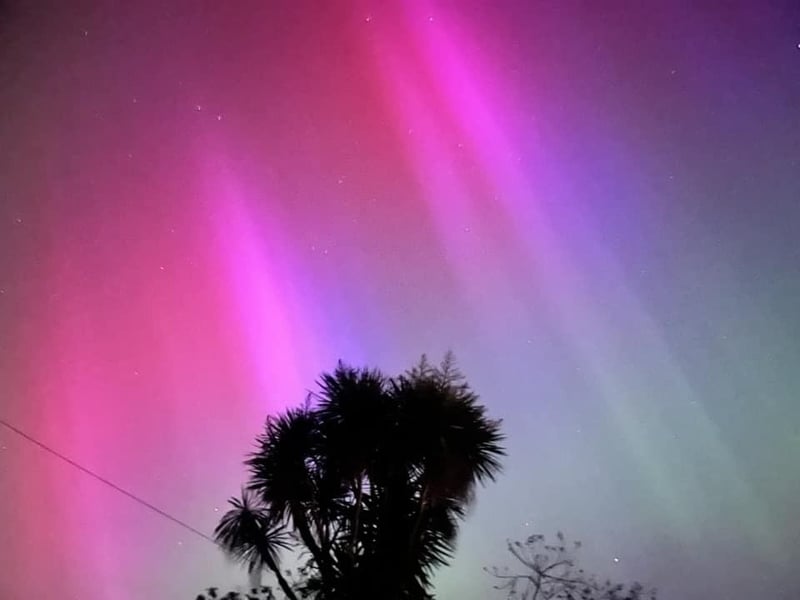
2. Northern Lights in dazzling display in skies over Sussex and Surrey
Charlotte Sweet took this photo of the aurora borealis in Worthing Photo: Charlotte Sweet
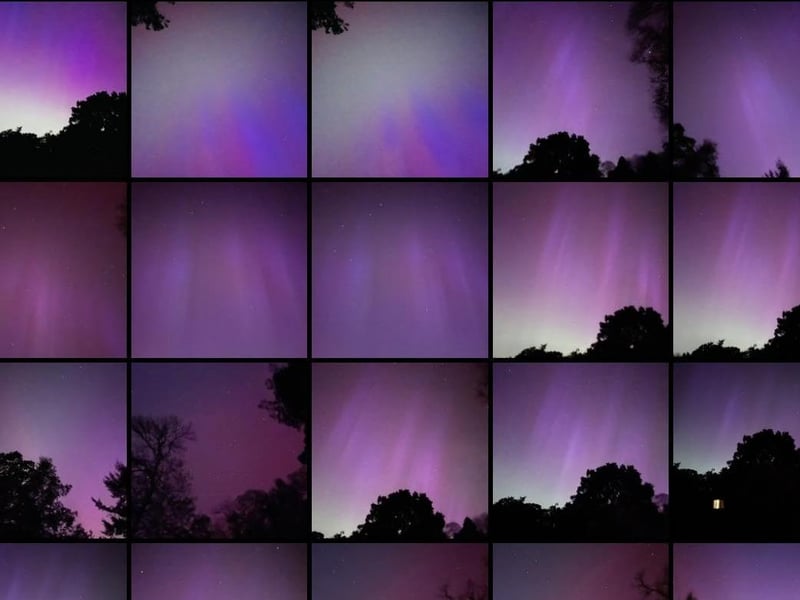
3. Northern Lights in dazzling display in skies over Sussex and Surrey
These photos were taken by Kate Bryant at Fittleworth Photo: Kate Bryant
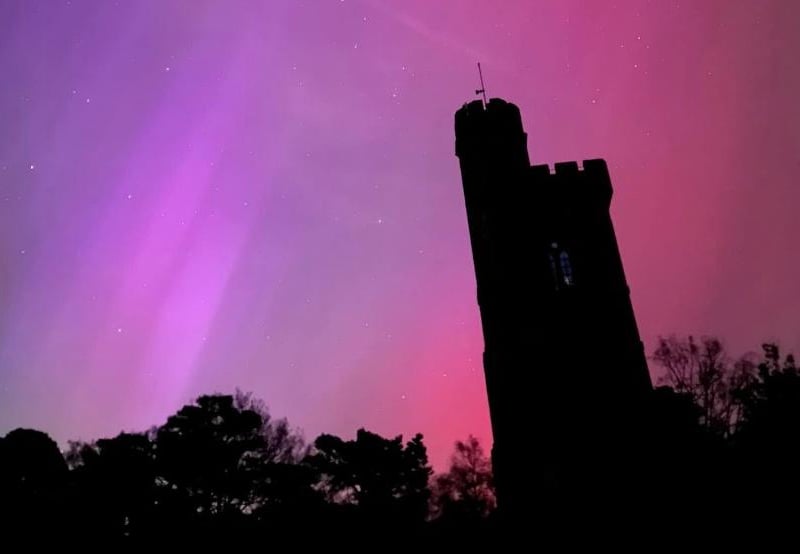
4. Northern Lights in dazzling display in skies over Sussex and Surrey
Owen Smith Carretero took this photo of the aurora borealis in Leith Hill, Dorking Photo: Owen Smith Carretero