
Saving Sussex's hidden past – inside the restoration of Little St Mary's, Bramber


In the historic village of Bramber, one of Sussex's most technically demanding heritage restorations has been quietly taking place.
Little St Mary's, a timber-framed building with origins dating back more than 500 years, initially appeared to require routine conservation work. Instead, it evolved into an extraordinary project that revealed centuries of hidden alterations, structural failures and forgotten craftsmanship. With every layer uncovered, the building told a new chapter of its story, demanding bespoke solutions rooted in traditional building techniques and modern conservation principles.
Research by heritage specialists has dated the earliest surviving fabric to the late fifteenth or early sixteenth century. Believed to have originated as a detached medieval kitchen before later becoming a dwelling, Little St Mary's is one of Bramber's most historically significant domestic buildings. Years of neglect, combined with inappropriate modern repairs, had left the structure vulnerable, with roof spread, decayed oak timbers, unstable flint walls and trapped moisture threatening its future.
An expert team
The restoration has been led by Green Heritage & Conservation Specialists under the direction of specialist heritage carpenter Parviz Shahnaazi, who has more than 27 years’ experience in specialist carpentry and joinery.
He has been working alongside conservation architects, structural engineers and local authority conservation officers. Their guiding principle has been clear throughout – preserve as much original historic fabric as possible and replace only what could no longer be saved.
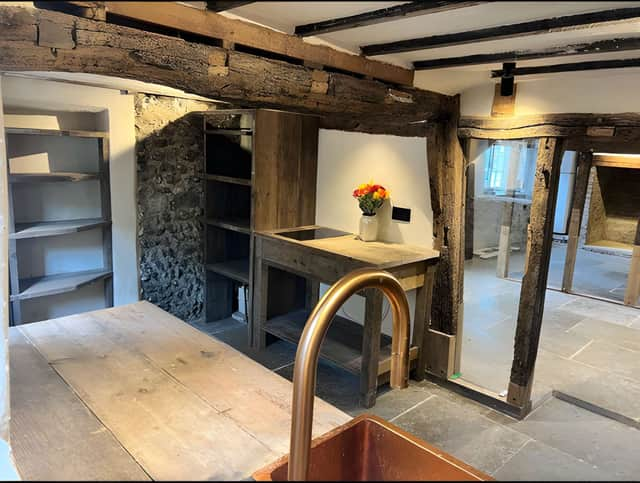
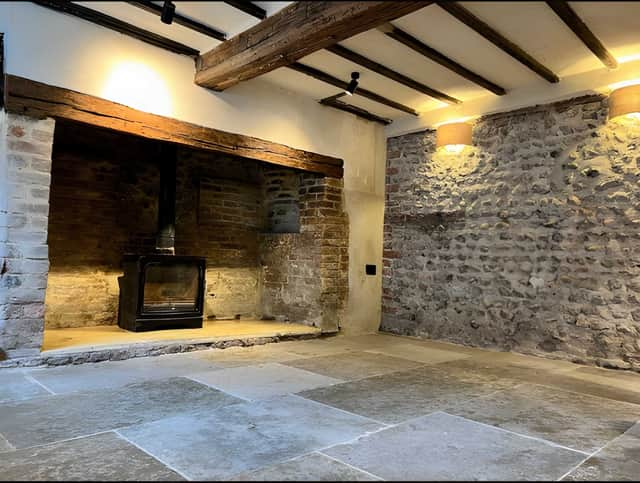
Achieving that goal has required an exceptional range of traditional skills. Oak carpentry using mortise and tenon joints and hand-crafted oak pegs has been combined with traditional flint masonry, hot-mixed lime mortars, breathable lime plasters, limecrete flooring, woodfibre insulation and the careful repair and reuse of original handmade clay roof tiles. These natural, breathable materials allow the building to perform as it was originally intended, improving durability and thermal performance while protecting its historic fabric for future generations.
Every stage of the project brought fresh challenges. Hidden structural movement, failing roof timbers and weakened masonry required carefully engineered solutions that respected the building's historic character. Rather than forcing modern construction methods onto an ancient structure, the restoration embraced the principles that enabled the building to survive for more than five centuries.
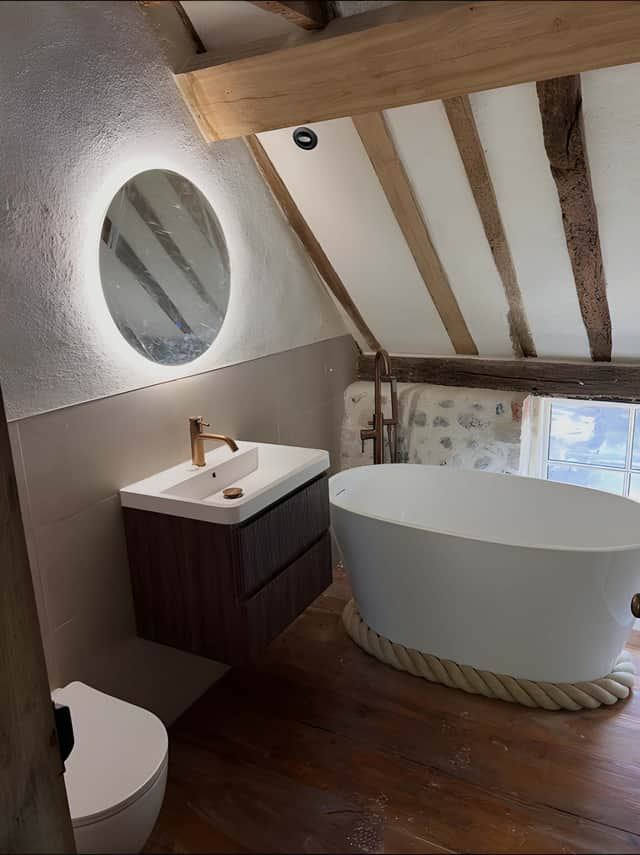
For Parviz Shahnaazi, it was a difficult task, but one he relished. He said: “Little St Mary’s has undoubtedly been the most challenging and rewarding conservation project of my career. It has involved working alongside conservation architects, structural engineers, conservation officers and a team of highly skilled craftsmen to preserve a building with more than 500 years of history. Throughout the project we’ve remained committed to one simple philosophy: retain as much original historic fabric as possible and repair the building using traditional materials and techniques wherever feasible.
“For Green Heritage & Conservation Specialists, Little St Mary’s represents far more than the restoration of a single historic building. It marks the evolution of the company into a dedicated heritage and conservation specialist, combining traditional craftsmanship with conservation-led thinking and working alongside architects, structural engineers and conservation officers to safeguard Britain’s historic buildings.”
Testimonial
Out of all the projects I have undertaken, including a Victorian loft conversion and the construction of commercial units, this has been the best experience I have ever had with a building company.
She added: “Parviz is unlike any builder I’ve met before. He is absolutely passionate about doing a job right, to the best finish, and takes immense pride in his craftsmanship, as so he should. I sincerely hope this project enables him to go forward and work with customers who appreciate his drive for quality and the standard of workmanship he delivers.
“This project has been extremely challenging because of the complexity of the building, but throughout it all Parviz remained committed to achieving the best possible outcome. Little St Mary’s stands as an example of what can be achieved when traditional craftsmanship, attention to detail and genuine pride in the work come together.”
A learning experience
For the team involved, the project became more than a restoration. As unexpected discoveries emerged, the building itself became the teacher, revealing how traditional construction techniques continue to outperform many modern interventions when applied with skill and understanding. Each repair deepened the team's knowledge of historic buildings and reinforced the value of conservation-led craftsmanship.
Historic buildings cannot be repaired by treating them as modern buildings. They must first be understood. That philosophy has guided every decision at Little St Mary’s and now forms the foundation of Green Heritage & Conservation Specialists.
Little St Mary's has become a defining project in the evolution of Green Heritage & Conservation Specialists, demonstrating how specialist craftsmanship, engineering expertise and collaborative conservation can work together to safeguard Britain's architectural heritage.
At a time when traditional building skills are increasingly rare, the restoration stands as a powerful reminder that preserving historic buildings requires far more than replacing old materials. It demands patience, knowledge and respect for the methods that created them. As Little St Mary's approaches the next chapter of its remarkable life, it offers an inspiring example of how Sussex's hidden past can be carefully preserved for generations yet to come.
Parviz Shahnaazi said: “For Green Heritage & Conservation Specialists, Little St Mary’s marks not only the restoration of an extraordinary historic building, but the beginning of the next chapter in our commitment to preserving Britain’s architectural heritage.”
To find out more about the team’s work visit their website.