
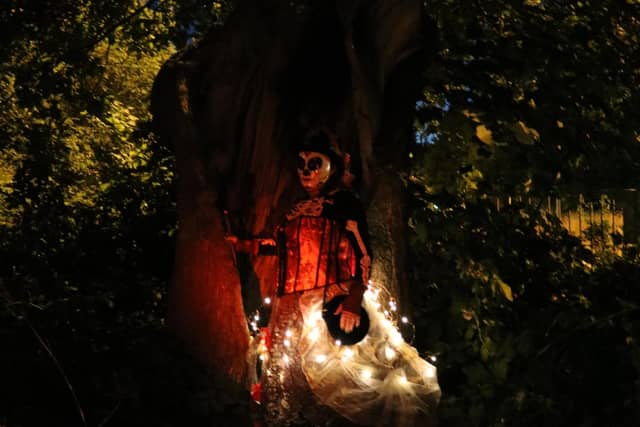


After a busy summer giving talks and leading guided walks for the Worthing Heritage Festival and the Festival of Chichester, Chris is offering four talks for autumn at the Sidney Walter Centre in Worthing on Saturday afternoons, and people can pay what they like.
Chris said: “I have given these types of talks in the past and they always seem popular. I find they bring in many new people who might not normally attend a talk about history or folklore.
“People are usually generous in what they give and if some people are short of cash, it is fine if they can give only a small amount.”
Hallowe'en will be the focus of the first talk, taking place on the day itself, so there is plenty of scope to talk about spooky happenings and haunted places.
Chris does point out, however, that in Sussex, it was traditionally Midsummer’s Eve on June 23 that was considered the most opportune time to commune with the spirit world.
He said: “In the twilight of that summer’s evening, skeletons would rise up from the roots of the Midsummer Tree at Broadwater, fairies would dance on Cissbury Ring and young maidens would make a midsummer pie - a strange ritual to determine who their true lover would be in the coming year.”
Chris will also be talking about the history of Bonfire Night in Sussex, giving many examples of riotous and tumultuous celebrations across the county in years gone by, including Chichester, Littlehampton, Worthing, Horsham and, of course, Lewes, 'the capital' of bonfire celebrations.
He said: “On one occasion, during the 19th century, a special detachment of Metropolitan Police had to be brought down from London by train to quell the disorder.
“But no town in Sussex was more lawless on November 5 than Rye. Here, bonfire boys assaulted the property, and even the person, of those who had annoyed or opposed them in previous years. The revenge attacks included dragging the mayor’s yacht from the harbour, setting it on fire and dragging it through the streets.”
Other long-forgotten late autumn traditions to be discussed include the blacksmith’s feast of St Clement’s Day on November 23, when the smiths and their apprentices would begin the day by firing their anvils.
Chris said: “In towns, such as Steyning, that had many blacksmiths, the sound of so many anvils being fired gave the impression to startled visitors of a military bombardment, rudely wakening them from their slumbers.
“Later in the day, all the smiths would meet for a dinner, with an effigy of St Clement, their patron saint and known to them as Old Clem, as guest of honour at the head of the table. During the feast, all the guests would sing the blacksmith’s anthem Twanky-dillo.”
The second talk focuses on Christmas and New Year customs and traditions, going right back to Medieval times.
Chris said: “We all say it don’t we? Christmas is not what it used to be. It is far too commercial, it starts far too early, everyone spends too much, and all spirit and meaning has gone out of the festival.
“Yet, one thing is for sure , Christmas has never been 'what it used to be'. It almost disappeared altogether as a day of significance in the early 19th century, which is why Charles Dickens felt moved to write A Christmas Carol, to try to remind his readers what Christmas once was, and should be. Scrooge is the embodiment of the hard-headed, cold-hearted modern businessman, concerned only with money and squeezing the last drop of life out of his employees.
“In Medieval times and into the Tudor period, Christmas was one long scene of debauchery and excess. The drinking, feasting, singing and 'rude’ behaviour was stretched out over all the 12 days of Christmas.
“A foreign visitor, arriving in England at this time and seeking accommodation at an inn in a coastal town, was shocked to see bodies littering the streets, and moans and groans emanating from open doorways and windows. He was convinced the population had succumbed to the plague, whereas, what he was actually witnessing was the consequence of 'lewd, naughty, and drunken behaviour', now culminating on Twelfth Night.
“During the Reformation in the 16th century, Protestantism sought to quell these excesses and return the population to a more Godly way of thinking. It was in the following century, though, when Oliver Cromwell was in power and his puritan soldiers enforced strict laws, that Christmas was actually outlawed.
“People could attend church in the morning and read their Bible in the afternoon, and that was it. To be fair, Cromwell himself was more moderate than many of his supporters and actually enjoyed dancing and a song or two. The average English man and woman lamented the loss of their much loved winter fun.
“The restoration of Charles II in 1660 saw some of the old Christmas revels return but they never recovered their former potency. During the 18th century, they declined again, until the nadir was reached that Dickens so resented.
“The earliest reference I have come across locally to Christmas is the custom of charitable giving on St Thomas’ Day, December 21, in an entry in the estate records for Michelgrove, the great country house that once stood on the downs, north of Patching. It states: 'Monday the Bull was killed for the poor of Clapham and Patching to be distributed among them tomorrow'.
“Until quite late into the Victorian era, widows of good character, known as Gooders, would process from house to house on St Thomas’ Day and receive alms, either in the form of money or gifts.
“What would have been a humiliating experience on any other day of the year was transformed on this day, by custom and tradition, into a rite of passage, and one that people accepted and expected. One old woman was heard to remark: 'Oh well, I ’spose I better do the rounds, ’twould put folk out not to'.
“For the young, there was the Mummers Play. No one really knows how old the play is. With its characters, such as St George and the Turkish Knight, some have wondered if its origins lie in medieval times and the crusades, but, on the other hand, England was at war with Turkey in the 1850s. With folk customs, you can never tell, they may be ancient, or they may be comparatively recent. Those who performed the play took it to big houses in the district, where they, like The Gooders, would receive gifts of money or cake and ale.
“Renowned folk singer and chronicler of all things Sussex, Bob Copper, described his father being part of the gang that took the Mummers Play around Rottingdean in the 1880s. Bob, who was a policeman in Worthing in the 1940s and had to wade into several Worthing pub brawls in his time, gives a description of the Mummers Play very different to the one many of us know from the performances by local Morris dancers.
“The Mummers, or Tipteers, as they were also known, of the 19th century were young and fired up with testosterone and beer. Bob describes how Black Jack and Old Father Christmas got into a fight and 'leathered into each other like a couple of tom cats'. So much for the peace and goodwill side of things!
“The Father Christmas we all think of, the Santa so beloved of Hollywood and TV adverts, really dates back only to the late Victorian period, in this country at least. Before that, Father Christmas was the spirit of the festival, an ethereal being – the bringer of good luck. The first member of the household to awake on Christmas morning would go downstairs, open all the doors and windows, and loudly exclaim 'Welcome, Old Father Christmas'.
“Most people were too poor to give each other presents but the presents they could afford went to the children. When I first started recording oral histories, in the late 1980s and early 1990s, those born before the First World War would often tell me their Christmas stocking would contain a sugar mouse and an orange, adding 'ah, children of today don’t know they are born'.”
• Hallowe’en, bonfires, and ghosts will be held on Saturday, October 31, at 2.30pm. Chris will talk about traditions, customs and folk tales associated with late autumn in Sussex, including St Clement and St Catherine’s feasts, and there will be some ghost stories, too
• Traditions of Christmas and New Year will be held on Saturday, November 28, at 2.30pm. Chris will talk about how Christmas and New Year were celebrated in Sussex in the past, including the Gooders, the Mummers and a consideration of whether the winters of the past were really more harsh. This talk will include folk songs linked to this time of year.
• Learning from History will be held on Saturday, January 30, at 2.30pm. This will be a challenging talk and there will be an opportunity for the audience to express their views.
Chris said: “We often hear the phrase 'learning the lessons of history', but what are these lessons and do people ever learn from the mistakes of the past?”
• Worthing since the ’60s: Where do we go next? will be held on Saturday, February 27, at 2.30pm. Chris was born in 1962 and he will be looking at how Worthing and West Sussex has changed in that time.
He said: “For eight years, I was a West Sussex county councillor – what did I learn from that experience and how can we make the most of our town and county in the years ahead?”
Chris runs a heritage consultancy, History People UK, and details can be found at www.historypeopleuk.co.uk His latest book, Sussex History, Folklore and People, was published in June and is available from independent bookshops and local museums, or you can order directly from Chris by emailing him at [email protected]
5. Autumn talks
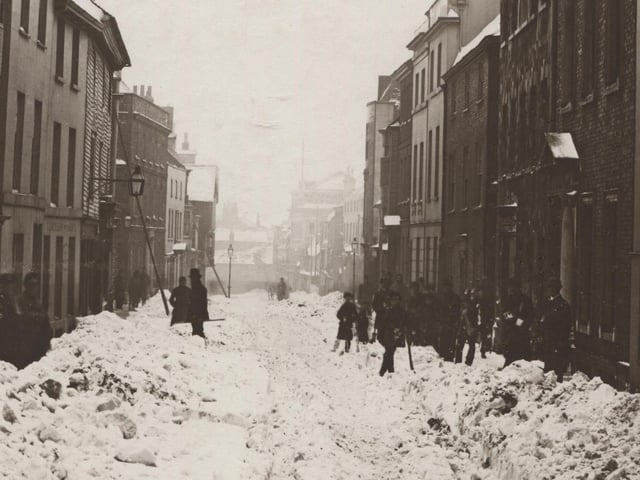
Deep snow at Lewes in 1881. Picture: Chris Hare Photo: Chris Hare

6. Autumn talks
Chris Hare runs a heritage consultancy, History People UK. Picture: Chris Hare Photo: Chris Hare