
FILM REVIEW: Kate Winslet superb in Lee, gripping WWII tale of model-turned-photographer
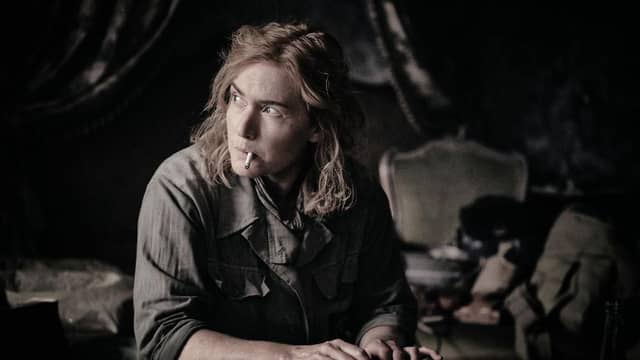

Lee (15), (117 mins), Cineworld Cinemas
It’s difficult to believe that Kate Winslet won’t be seriously in the running when it comes to the Oscars in a few months’ time. After picking up a Best Actress Oscar for her role as a concentration camp guard in The Reader in 2008, she might just be picking up another for someone seeing it absolutely from the other side, Lee Miller, the model-turned-war photographer whose Holocaust images remain searing to this day – for all that London Vogue refused to publish them at the time. The West Sussex-based star is at her very best in this tale of a remarkable woman who so famously lived in East Sussex at Farleys, the base now of the Lee Miller Archives. Winslet is doing what the very finest actors do – she is getting more and more interesting as the years go by.
The film is neatly, cleverly and occasionally rather too conveniently framed as Miller in discussion with a mystery “journalist”, looking through her photographs, the spur to flash back in time and to relive her war experiences. Miller starts at an idly affluent loose end before the war gives her renewed focus and with it the determination to photograph what’s happening on the front. She is thwarted by the British authorities – and then remembers that she is American which apparently gave her the access she needed, following the Allied invasion through to the liberation of Paris, where her journey might have stopped. And indeed would have stopped had her husband Roland (Alexander Skarsgård) had his way – a character played as someone never quite able to get or understand her.
But as she says, she’s always the last person to leave the party. And so she insists on following the war deep into the heart of Germany and deep into the horrors of the death trains and the concentration camps. Lee’s compassion, her shock, her need to be there are electrifyingly rendered by Winslet – assisted along the way by her forbearing fellow American and photojournalist David Scherman (Andy Samberg). Maybe there’s a feeling that neither Roland nor David never quite truly come alive in this film; maybe that’s simply a reflection of the fact that Winslet comes alive so thrillingly in her determination and her drive – this remarkable woman who was seemingly everything except a mother, a fact more vital to the film than first appears. The film is consistently beautifully shot and also shockingly shot, capturing something of war and something too of its inhumanity. And of course, we get Miller playfully, famously and rather bizarrely – after the Fuhrer’s death – bathing and posing for a picture in Hitler’s bathtub in his personal apartment. The film captures something of the ambiguity of the gesture. Maybe the only explanation lies in Miller’s impulsiveness. Maybe more could have been said about her own hidden trauma. As ever with any biopic, you do find yourself wondering much of it how much is fact, how much embellishment, how much is accurate, how much is just putting across the essence, but given that it is adapted from the 1985 biography The Lives of Lee Miller by her son Antony Penrose, presumably we can trust it and go with the flow. And what a flow it is – a classy, compelling, fascinating piece of cinema. Barely have the evenings started to draw in, and suddenly the cinema is looking up.