
REVIEW: Goodwood Art Foundation's winter programme is a theatrical triumph as memorable as any nightmare that projects you from sleep at 3am

At first glance, labelling the winter programme at the Goodwood Art Foundation as ‘Weekdays in Arcadia’ might seem both symbiotic and apposite.
After all, the foundation’s environment is one of tranquil beauty shielded by the South Downs while surveying the sea to the South.

This is pastoral harmony – a lush, unspoiled wilderness where artists and visitors live in unity with the landscape and its nature, excused from the stress of city life.
But that rather twee designation of Arcadia belongs to Roman writers and Renaissance artists.
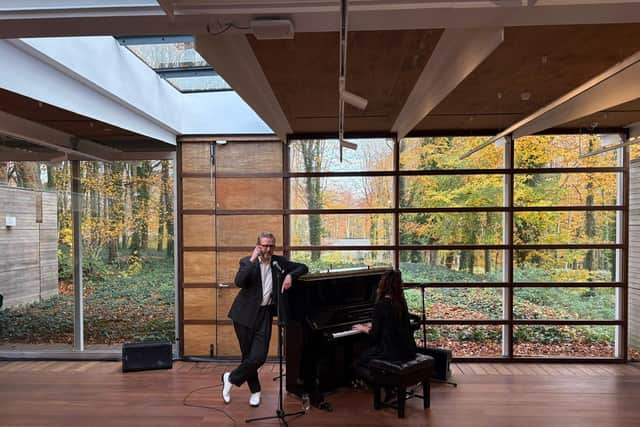
The ancient Greek definition was brutal. Harsh wilderness. Isolation. Dark forests concealing hunters and war-like tribes; and of course monsters.
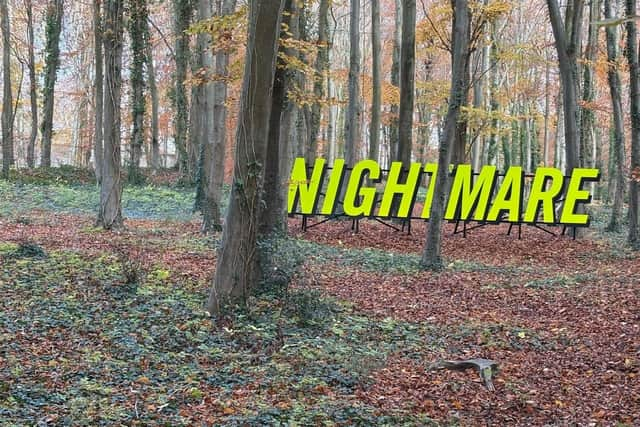
So the giant sign ‘Nightmare’ leering at unsuspecting woodland walkers warns of a darkness born of myth.
It might, in construct, seek to impersonate the Los Angeles ‘Hollywood’ iconic symbol of film fabrication and it’s true that this more daunting incarnation lives in a holly wood.
But the warning is clear. There is something unnerving, unexpected, a hint of dread as well as expectation, in the rhythmic manifestations of Ragnar Kjartansson’s first major UK exhibition in more than ten years.
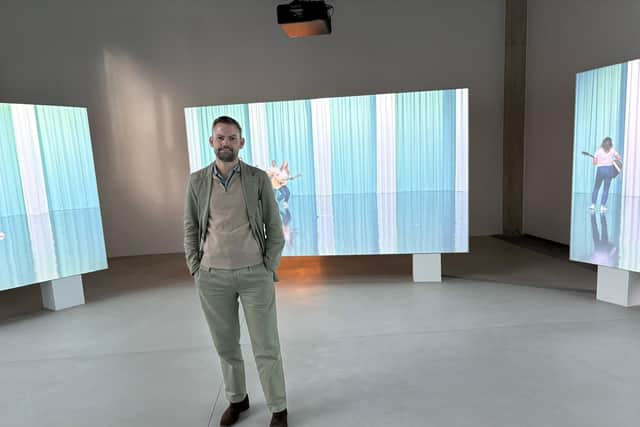
Kjartansson lives and works in Reykjavík, engaging multiple mediums, creating video installations, performances, drawings, and paintings that draw upon historical and cultural references.
His background in theatre and performance underpin much of his work – as does his cyclical experiences of shepherding in southern Iceland.
So beyond the word nightmare, a series of landscape paintings in the Pigott Gallery bring a sense of certainly and peace; the partnership of contemporary art and landscape which is the Foundation’s foundation.
There is haunting repetition too.
No Tomorrow is an hypnotic six-channel video installation featuring eight female performers from the Iceland Dance Company moving between screens, singing and playing acoustic guitars, developed in collaboration with choreographer Margrét Bjarnadóttir and composer Bryce Dessner.
The screens engulf you. Holding you captive emotionally and – almost – physically.
Meanwhile, imbued with theatrical experience, a six metre high outdoor installation Epic Waste of Love and Understanding takes inspiration from a classic public monument, drawing on the language of 19th century memorial architecture, while using the methods of stage painted wooden scenery for construction.
The inscription is from a personal conversation, we are told. The platform makes is public and permanent. And yet not quite. The wood will not survive just as the emotion that prompted the phrase ‘an epic waste of love and understanding’ will succumb to something gentler. In time.
A large-scale porcelain installation Guilt and Fear is domesticated. These are salt and pepper shakers for the dining room table. But there are 500 pairs. Fresh from the kiln. With Delft inspiration and robustness which shouts of normality, and a manicured shape of the mausoleum which urges a finality too.
None of it, of course, quite real. There is drama in the art, and the music, and the shape, and the structures. The words prod and pry at the imagination, clinging with a mental adherence.
Not permanent; or at least not beyond April 12, 2027, when the exhibition ends.
Kjartansson said: "I am interested in the almost fictional or Poussin like elements of the landscape at Goodwood Art Foundation and the idea of encountering monuments to sorrow and shakiness in the woodlands. To somehow make this place between nature and public space personal.”
It is all that. It is a little more too. The landscape is an enduring objective reality; the personal punctuation individual to anyone drawn hypnotically toward it.
Eleanor Clarke, Curator, Goodwood Art Foundation, added: “It is an honour to present Kjartansson’s new and recent works at Goodwood Art Foundation for our winter season. These works illustrate the breadth of his multidisciplinary practice and his ability to provoke thought and reflection. Beneath the wit and theatricality of his work lies a sustained engagement with global politics, vulnerability and the emotional complexities of human experience. Across our galleries and deep into the woodland, visitors will discover the artist's blend of humour and melancholy in a uniquely resonant environment.”
Goodwood Art Foundation is all about quality and exception. The food in ‘24’ its restaurant of architectural significance both in built form and on the plate, is a triumph.
Its artistic ambitions are global, uncompromising, never reassuring, always contagious. This exhibition, without resorting to any Hollywood horror movie, is as monstrous as it is magnificent.