
‘Be the Grit in the Oyster’: Campaigner Urges Action on Nature Loss
See the latest news from Your World at https://www.sussexexpress.co.uk/your-world
Petworth’s Roger Morgan-Grenville has always been an activist in some form. A former soldier, business owner and now nature writer and campaigner, he says, “If someone like me, in a very privileged position, in a privileged part of the world, doesn’t do anything. Who is?”
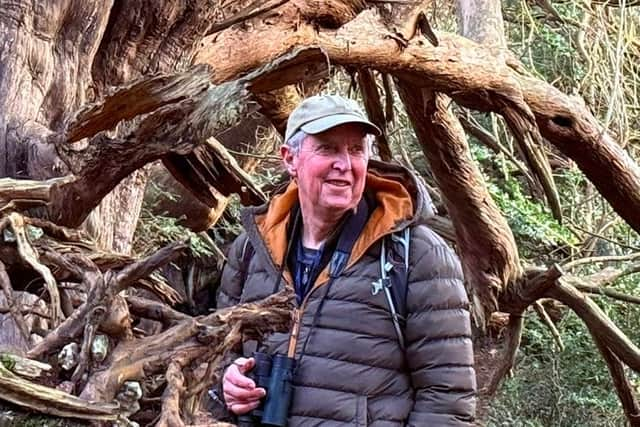

This week, as the UN celebrates World Environment Day, with a special focus on protecting biodiversity and ecosystems, Mr Morgan-Grenville, who works as a guide at the Knepp Estate and has written several books, including “The Restless Coast: A Journey Around the Edge of Britain”, reflects on the importance of talking about nature restoration.
“Everyone talks about climate change. Less people talk about biodiversity, and no one talks about bio abundance. Biodiversity is seeing one linnet in a hedge, bio-abundance is seeing 80 of them, the way your grandparents would have.”
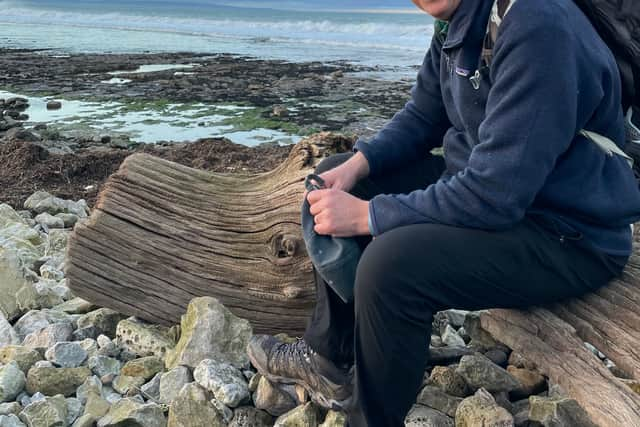
He says that even in the woods and meadows of the South Downs, there has been nature loss: “I think sometimes the beauty of the South Downs disguises some of the bad stuff that’s going on.
One small example is the lettuce farming down the road in Tillington. It is completely inappropriate for the area. We shouldn’t have all that plastic on the fields, and it ruins the drainage and the ditches.
More broadly here, we pay more attention to private property than we do to public good, and we pay more attention to heritage than we do to the environment.”
Bio-abundance plays a crucial role in maintaining the health and stability of the ecosystems we all rely on to exist. A decline in one species can have a ripple effect across an entire ecosystem.
“You can say every second breath you take is using oxygen created by phytoplankton photosynthesising in the ocean. You can tell people that every third mouthful you eat is pollinated for free by an insect, and every third pill you take is plant-based in some way. But that can be quite hard to take on board.”
Mr Morgan-Grenville tells the story of Chairman Mao’s war on tree sparrows during his ‘Great Leap Forward' campaign. As rural farmers moved to the cities, food production in China dropped. Chairman Mao blamed this on "four pestilences", one of which was the lowly sparrow, which he said had been eating the grain.
It turned out the birds had been eating a bit of grain, but not as much as they were eating the locusts and aphids, which spoiled it. The death of half a billion sparrows helped to trigger a famine in which 45 million people died.
“We have no idea what will happen when ecosystems break down, but there are stacks of things we can do here, in our area, to make a difference.
We can create insect factories in our gardens, because insects are at the base of the whole food chain. Once the small insects come, then the birds, then the raptors and finally the mammals. The whole thing can just take off.”
Making small changes like letting ivy grow, putting up a little pond and leaving sticks out and grass unmown encourages nature and bio-abundance, which he says, “hates tidiness.”
Luckily, he says, there’s been a shift in our sense of beauty, “from this ordered best-kept village style that was prevalent when I was growing up, to being more chaotic and nature-led.”
Mr Morgan-Grenville says that it is important to be “a bit awkward, to be the grit in the oyster” as you push for change.
He talks about his project as a Parish Councillor to encourage swifts to the area. After installing 50 boxes in the village, the birds are back for the first time in 20 years. Sharing a photo of three swift eggs in one of the boxes on his house, he says that one can’t “faff around waiting for grants or permissions – it is always easier to apologise after the event.”
The reintroduction of swifts to the villages between Midhurst and Petworth is particularly important because “they are an indicator species. What is good for them, ecologically speaking, is good for everything else.
They are so noticeable, screaming in the air – and wonderfully prehistoric. They tap into people’s sense of beauty and excitement. If the chicks that we have in our box fledge, they won’t touch the ground until they return next year. They will sleep, eat and mate on the wing. It’s just incredible.”
Mr Morgan-Grenville is firm in his belief that there is hope, “If we can pull back 5% of our needs, we can make a difference. Nature can recover very quickly.”
But he says that the idea that we can reach net-zero and not change our lifestyle is unrealistic, and politicians just don’t get it: “It was reprehensible for Angela Rayner as Housing Minister to say councils are free to sell off allotments to raise cash.”
He also points to other changes the government could make: “If rural buses were more regular, people who live in villages would not be so reliant on their cars. For those commuting to Chichester, the opening up of Centurion Way all the way to Midhurst would make a huge difference.
One of the reasons the Cocking tunnels are closed, which I used to play in as a boy, is the bats. But at some point, I think we have to realise that we can’t just protect one species at the expense of the greater good.”
Reflecting on his career as a campaigner and writer, Mr Morgan-Grenville says, “My generation had everything, and I feel an incredible sense of reverse unfairness. I want to be an agent of change, a storyteller who can make nature sexy, exciting and fun.”
By speaking up about nature restoration, the importance of bio‑abundance, and by continuing to “make a nuisance” of himself, he hopes to keep people here excited about the environment and committed to repairing our vital ecosystems.