
Chichester Probus Club members hear about The City of London and its Livery companies
See the latest news from Your World at https://www.sussexexpress.co.uk/your-world
Guilds set up in the City of London in medieval times are continuing as Livery companies to support their trades and professions and contributing a great deal to charity and life in the community.
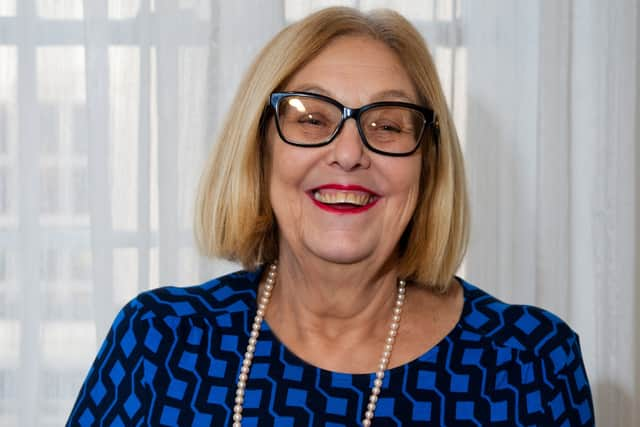

Members of Chichester and District Probus Club heard this at their recent monthly meeting at the Harbour Hotel, Chichester (Nov 12).
The speaker was Adele Thorpe, now retired after a career in finance. Her subject was the City of London and the Livery companies.
She said: “We call the City of London the Square Mile. It is not square and it is not a mile.” Following boundary changes, it now measured 1.16 square miles and its shape was very irregular.
It generated nearly £113 billion towards the economy, raised £1.3 billion in business rates, and had its own governance and police force.
About 614,500 worked there each day. Many people were surprised how much the number had increased since Covid and the trend to homeworking.
The chief executive of each Livery company was called a Clerk – the custodian of company treasures and history - and she had served as Clerk to five. Each company selected a Master to lead and she served as one for a year, carrying out 206 engagements.
Adele said she had been granted the Freedom of the City of London and her daughter was a Freeman too by patrimony, the first ever to be given the honour via her mother. They had each received a book on the conduced expected of them, as had every Freeman since 1437.
The Livery Companies began as trade guilds, many of which had been active before 1066. They acted as protectionist organisations to which members paid to belong. Livery referred to the distinctive ceremonial clothing worn by each company which enabled identification in an age when most people were illiterate.
The Weavers’ Company held the oldest charter in existence. Granted by King Henry II in 1155, it gave the guilds a monopoly over the textile craft and the right to supervise craftsmen in and around the City of London.
The earliest Liveries acted rather like trading standards organisations. Members who breached guidelines could be removed from the livery and could no longer trade in the City. This was a terrible punishment and banished to the nearest free trade town which was Coventry giving rise to the saying “Sent to Coventry.”
The bakers imposed such strict rules that their members started baking batches of 13 so the never gave short measures, hence the saying: “Baker’s dozen.”
She said: “Although the Livery companies have their roots in the past they are not relics. They have adapted, they continue to support their professions, and they contribute a great deal to charity and the life of the City.”
The Lord Mayor of the City was an international ambassador for the UK’s financial and professional services. (Alderman Bronek is the 698th, who recently succeeded Lady Dame Susan Langley).
Most people would know about the Lord Mayor’s Show which had been televised live by the BBC annually since 1937, making it the longest running TV show.
The event always took place the day after the official handover. Dame Susan’s procession was over three miles long and included over 7,000 people, 350 horses and 200 floats. It was the largest unrehearsed procession in the world, yet timings kept within three minutes.
Although many Liveries had ancient names, there was still one to support every trade or profession. All had four aims : to support their trade or profession; support the Lord Mayor and the City of London; provide fellowship; and to give to charity.
Adele said: “I emphasise charity because collectively the Livery is in the top six grant-making bodies in the country. Between them they donated £81million to charity last year.”
The club is open to new members who have, or have had, a career in business or government in their own right. More details at https://chichesterprobus.club