
Horsham Society: Horsham's precious trees
See the latest news from Your World at https://www.sussexexpress.co.uk/your-world
This weeks column is by Oliver Farley
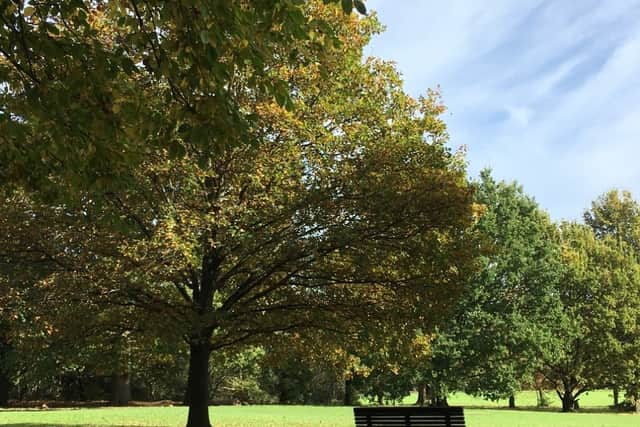

For almost three quarters of a century the Horsham Society has been maintaining a watchful eye over the quality of civil life in Horsham. Its Executive Committee meets monthly as does the Planning sub- committee. In essence the Society tries to do what every concerned citizen would do if only they had the time. Anything which affects the town’s environmental wellbeing and the public realm is of interest.
One issue for the Society is the long term protection of our trees, both the large specimen trees in streets and gardens, and the smaller ones that will one day replace them. We are fortunate to have good tree cover in most of the town providing a habitat for wildlife and softening what would otherwise be a bleak urban landscape. It is our responsibility as residents to ensure the same will be true for future generations.
Many of Horsham’s trees indicate where field hedges once ran. There are fine mature oaks, for example, behind the houses in Kingslea, off Kings Road. Comptons Lane still boasts numerous ancient markers. The Causeway is renowned for its lines of small leaved limes, which are regularly severely clipped to control their shape and possible intrusion into the neighbouring properties.
Many, but not all, of our specimen trees are protected by Tree Preservation Orders which ensure that they cannot be removed save for exceptional circumstances and that they are properly maintained.
However, all too often we find that residents buy a property with one or more trees within their boundary and soon decide they would like them removed. Our general approach is that the trees were there first. Buying a property with trees which form part of the local street scene and environment brings with it a responsibility to look after them.
In some cases owners seek to remove trees on the grounds that their roots are causing, or threatening to cause, damage to property; or their roots stand in the way of a proposed house extension. Each case must be examined on its merits but in the case of new building works instead of damaging conventional footings it is sometimes possible to construct a concrete raft supported by piles which cause minimal disturbance to existing tree roots and allows the tree to continue to successfully coexist with the property.
Trees can be amazingly resilient. A decade or so ago horse chestnut trees were infested with leaf miners. The foliage browned off and fell prematurely though many infected individuals survived. The row of chestnuts at the cricket field in Mannings Heath appeared to be badly attacked a few years ago but this year have recovered quite remarkably, or so it appears. Perhaps the hot summer finished off the leaf miners.
Trees can be recorded on the Woodland Trust Ancient Tree Inventory (ati.woodlandtrust.org.uk). Many are already known but all need your vigilance as well as that of the Horsham Society.
For more information see www.horshamsociety.org