
The Hastings musical time capsule: can you help us bring these lost voices back to life?
See the latest news from Your World at https://www.sussexexpress.co.uk/your-world
A community heritage project in Hastings is appealing to the nation for help uncovering the stories behind some extraordinary musical archives dating from the 1880s to the 1960s.
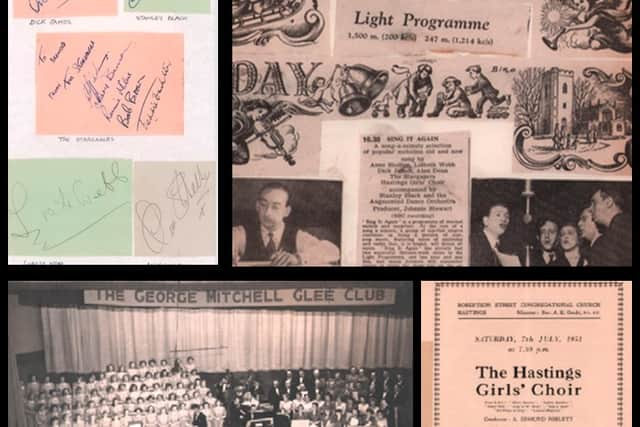

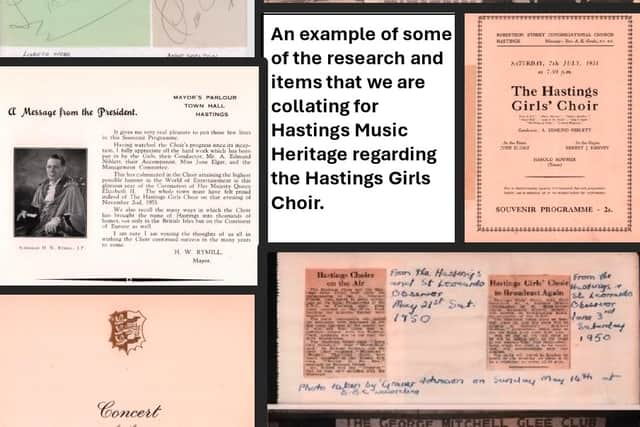
At the heart of the appeal is a scrapbook lovingly compiled by the late Miss Plum, documenting the Hastings Girls’ Choir from the 1950s onwards. This choir auditioned girls from the age of 12 to 25 and became a national and international success.
The scrapbook contains concert programmes, memorabilia and autographs from famous performers associated with the choir during the height of its success.
The Hastings Girls’ Choir was far more than a local children’s choir.
The girls performed alongside professional entertainers and made recordings with singer Steve Conway, including songs that subsequently appeared in the British record charts. They also appeared at major venues and were heard by radio audiences overseas.
Now Hastings Music Heritage wants to find the women who were those girls.
“Were you one of them?”
The project is appealing to former members of the Hastings Girls’ Choir:
Was your mum, aunt in the choir? They would be over 88 years of age now but we would love to know their story.
Did they perform at major concerts? Meet famous singers?
Do you still have the uniform dress, photographs, programmes, letters or memories?
Most importantly:
Would you be willing to be interviewed so that future generations can hear your story?
The project wants to record first-hand memories before they disappear.
“We don’t just want the programmes and photographs,” says the project team. “We want to hear the voices of the people who were there or from family members who were told the stories. — what it felt like to be a young girl travelling, performing and suddenly finding yourself part of something much bigger.”
A German POW choir that became a Hastings sensation
The research has also uncovered another extraordinary story.
After the Second World War, thousands of German prisoners of war remained in Britain. One of the camps was at Normanhurst, near Battle.
They formed a choir which became surprisingly popular around Hastings.
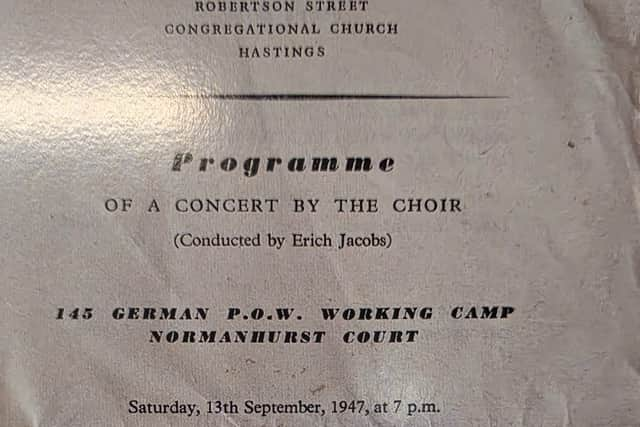
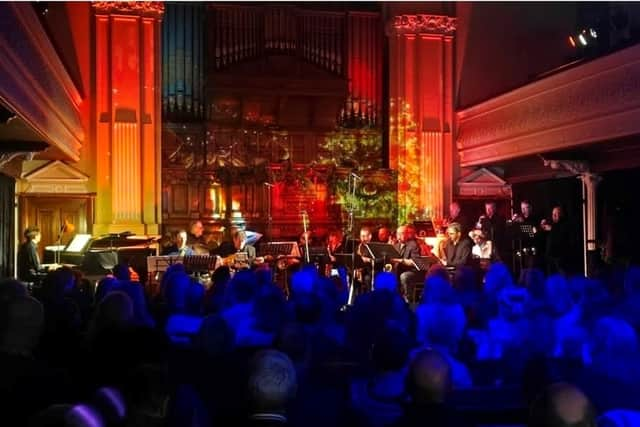
The musicians performed concerts at Robertson Street Congregational Church and other places in the Bexhill, Hasting’s area. Contemporary accounts describe the excitement surrounding their performances, with audiences sometimes filling venues before the doors could even close.
A surviving programme records the Choir of the 145 German P.O.W. Working Camp, Normanhurst Court, performing at Robertson Street Congregational Church on Sunday 13 September 1947.
Who were these musicians?
Where did they come from?
What happened to them after they returned to Germany?
And what did the people of Hastings think about listening to German musicians so soon after the war? Do you know anything about this?
The project wants to find out.
And then there is the Dickens mystery…
Researchers are also investigating an intriguing family connection involving Charles Dickens’s brother in law who was the organist for a while at Robertson Street Congregational Church. His son was the child that Dickens used for the character of Tiny Tim in a Christmas carol.
Who was he?
What did he play?
And what role did he have in the extraordinary musical life of Robertson Street Congregational Church?
The project is appealing for anyone who may have the answer — particularly families with old photographs, family papers, diaries, letters, newspaper cuttings or church records.
Hastings: a musical town hiding in plain sight
The research is revealing that Hastings and St Leonards had a remarkably rich musical culture.
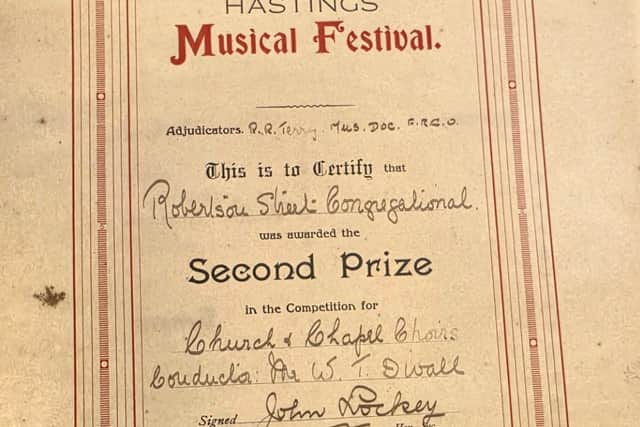
Robertson Street Congregational Church played an important role in that story, providing musical education and performance opportunities for generations, including choirs, young singers, instrumentalists, festivals, competitions and concerts.
The Hastings Girls’ Choir is one part of that much bigger story.
The project is now asking people across Britain:
What is hiding in your loft, cupboard or family album?
The appeal is particularly interested in material dating from:
1880s – 1960s
Choirs and singers, Hastings Girls’ Choir, Hastings Philharmonic Choir Robertson Street Congregational Church, Church organists and musicians Normanhurst POW musicians, Bands and orchestras, School music Music festivals, Concert programmes and tickets, Sheet music Newspaper cuttings, Photographs, Posters, Diaries and letters, Personal memories
You don’t have to donate your originals.
The project can photograph, scan or record material and return the originals to their owners.
“One scrapbook can unlock an entire history.”
Miss Plum’s (nee Radcliffe) scrapbook demonstrates why these personal collections matter.
A programme, photograph or autograph kept by one person for decades can suddenly become evidence of a much larger story.
Hastings Music Heritage is now asking the public to help put the missing pieces together.
If you were part of the Hastings Girls’ Choir, knew someone who was, have information about the Normanhurst musicians, or can help solve the Robertson Street/Dickens mystery, the project would love to hear from you.
CAN YOU HELP?
Were you there?
Do you know someone who was?
Do you have something that could help tell the story?
Please contact Hastings Music Heritage.
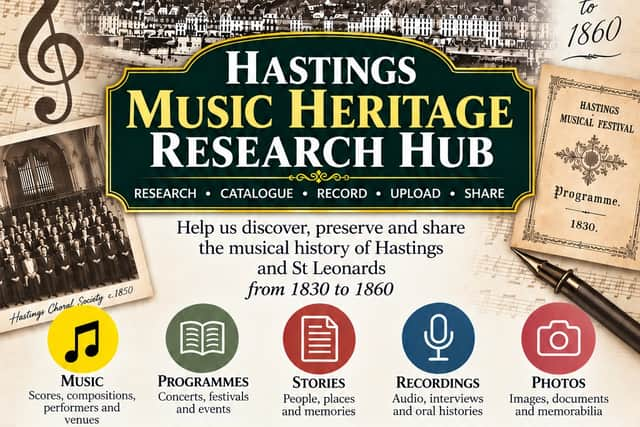
Hastings Music Heritage is a community project preserving and researching the musical history of Hastings and St Leonards, with the support of National Lottery Heritage.
The website should you wish to upload directly any materials, information etc is https://www.hastingsmusicheritage.org.uk If you would also like to help in any other way with the ongoing Heritage research and preservation of Robertson Street United Reformed Church where this all relates to you can find information on https://www.stewardship.org.uk/partners/20445384