

Celebrating the centenary, volunteers who run the club have been tracing the history of the site in Broadwater Street East.
Documentary sources suggest the property was built as a private dwelling in 1828. The first owner was Ford Knowles and it was at the rear of the premises that Knowles Bakery was first established, before expanding to 25 branches across the south coast.
According to local sources, the house later passed to C.A. Elliott, the owner of Elm Villa, later the site of the The Elms public house further down the road. It is thought he was most likely responsible for naming the property Yew Villa.
By the end of the 19th century, it was owned by a Mr Redford and occupied by Joseph Grenyer. In 1924, it was bequeathed for the specific use of a Working Men’s Club, serving the needs of the local community.
The main fabric of the building is flint, a typical building material of the period, today disguised by a covering of render. There have been changes over the years, including a new extension.
Where the back bar now stands used to be a wooden snooker shed. This was demolished in 1989 and a new extension built, to include a kitchen and darts area, stage and dance floor. The snooker table was moved to the first floor and a new secretary’s office and committee room created.
Geoff West is the longest-serving committee member, having joined in 1964 at the age of 22. He has served on the committee in various capacities and was presented with a Long Service Award from the CIU in 2006.
The club has always been run by an elected managing committee, in accordance with club rules. The first committee meeting was held on August 25, 1925. To mark the centenary, a weekend of special events was held for members.
The club was registered under the Friendly Societies Act of 1896 and the original rule book records 'the objects of the society were to afford to its members the means of social intercourse, mutual helpfulness, mental and moral improvement and rational recreation'.
The club was affiliated to the Working Men's Club and Institute Union (CIU) in 1937. Over the years, the building has been continually modernised and refurbished, providing a welcoming space at the centre of the community, while retaining the original values of the traditional Working Men’s Club, with members having an equal share.
As with much of the hospitality industry, the club was affected by the impact of Covid but moving with the times has ensured that since the pandemic, it has continued to go from strength to strength, with current membership standing at around 800.
Earlier this year, the club was delighted to host a photoshoot with Scottish and Brighton & Hove Albion footballer Billy Gilmour for a special Euros edition of Men’s Health.
Secretary Nicky Bywater said the magazine selected the location as they desired the setting of a traditional Working Men’s Club and loved the look of the Broadwater club. All fees received were donated to Air Ambulance Kent Surrey Sussex, in addition to £500 from the club’s charity fund.
Over the years, the family friendly, not-for-profit club and members have raised a significant amount for charitable causes and will continue to do so.
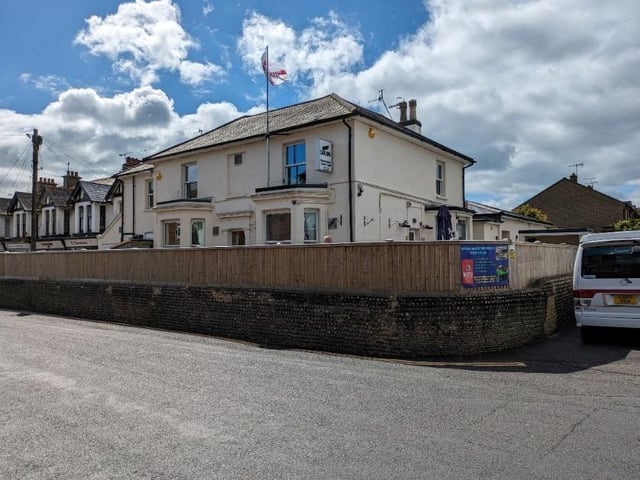
1. Broadwater WMCC
Broadwater Working Men's Club, in Broadwater Street East, Worthing Photo: Broadwater WMCC
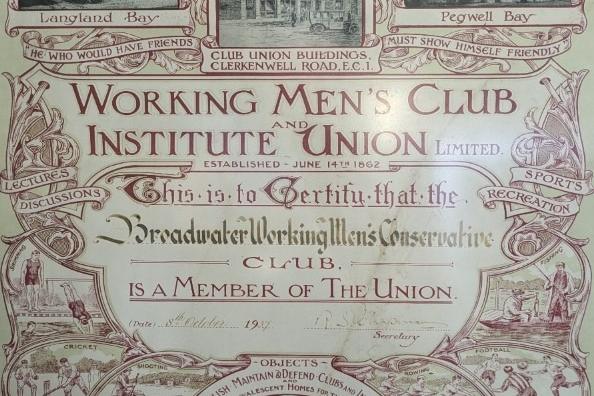
2. Broadwater WMCC
Broadwater WMCC certificate of affiliation to the Working Men's Club and Institute Union (CIU) in 1937 Photo: Broadwater WMCC
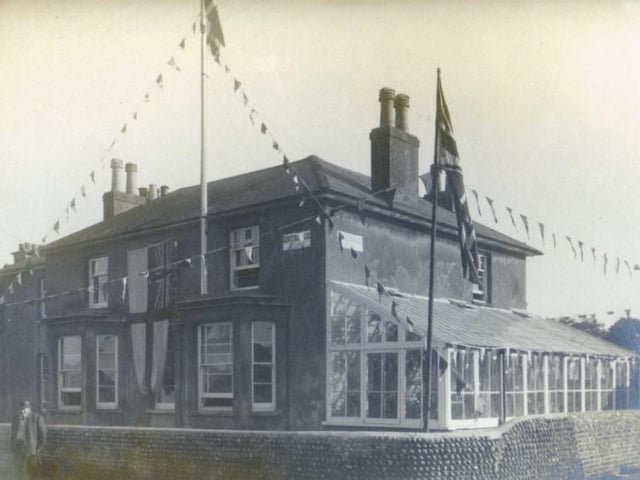
3. Broadwater WMCC
Broadwater WMCC in the 1930s Photo: Broadwater WMCC
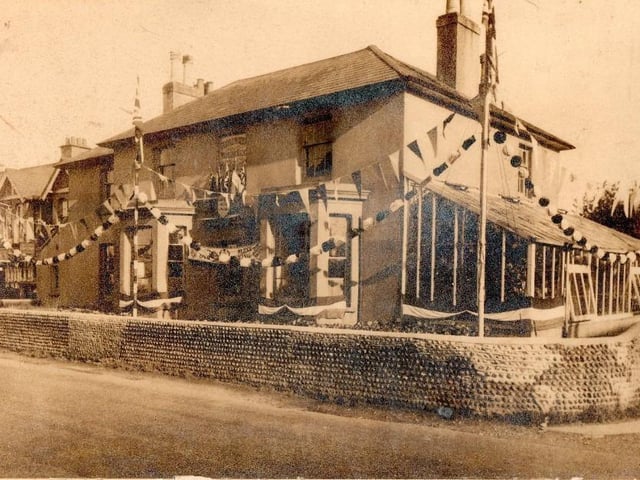
4. Broadwater WMCC
Broadwater WMCC in the 1930s Photo: Broadwater WMCC