
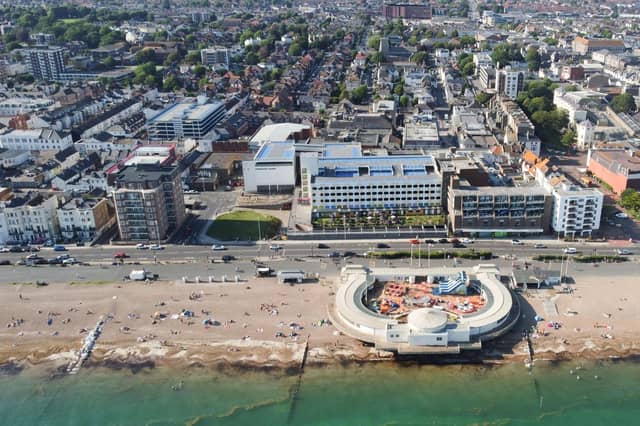

We noticed that some significant buildings have totally vanished in today's landscape but some are still there. Some remain as prominent today as they did 208 years ago and some stand fast, tucked between more modern additions to Worthing. St Paul's Church, now The Venue, in Chapel Road, stands out as an example. It was opened in 1812 as Worthing Chapel of Ease, at that time when Worthing was being developed into a town. Alongside it is Ambrose Place, where the Regency houses were just being built by Ambrose Cartwright. Portland Road is another fascinating example. It used to run south to the sea but is now cut off completely by Marks & Spencer. Some of those buildings from the early days, however, are now Grade II listed to preserve them.
The high street in most towns is where you find the shops but not in Worthing – though High Street, as it is still named, was once the main street. It is interesting to see the changes along Warwick Street and to note how Stanford’s Cottage once had a clear view to the sea but is now surrounded by buildings. Further west, buildings from the early 19th century in Bath Place and Montague Place are also Grade II listed and you can easily compare them to the models on the diorama.
Worthing Museum, in Chapel Road, is free to visit. It is open Wednesday, Friday and Saturday 10am to 5pm, Thursday 10am to 8pm, and Sunday 11am to 3pm. Visit wtm.uk/museum for more information.
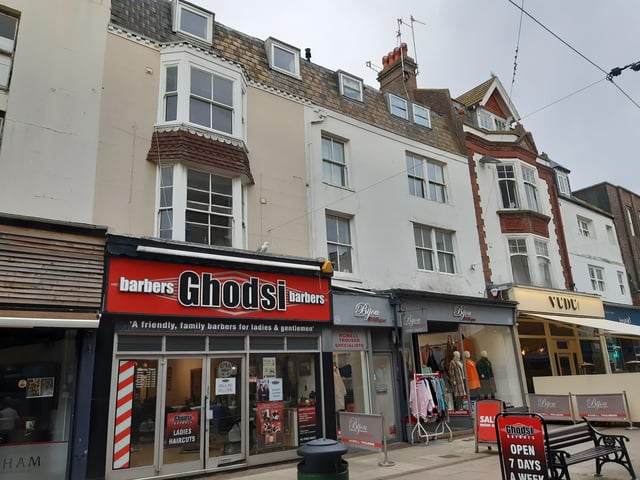
25. Worthing in February 2023
The north side of Warwick Street as it is today Photo: Elaine Hammond
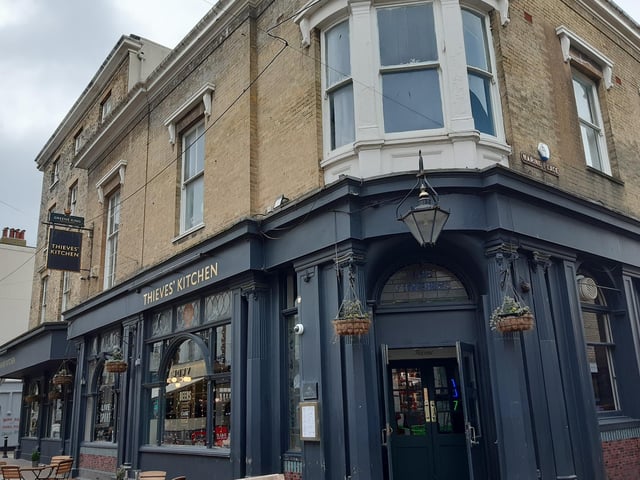
26. Worthing in February 2023
Parts of Thieves' Kitchen date back to 1808 Photo: Elaine Hammond
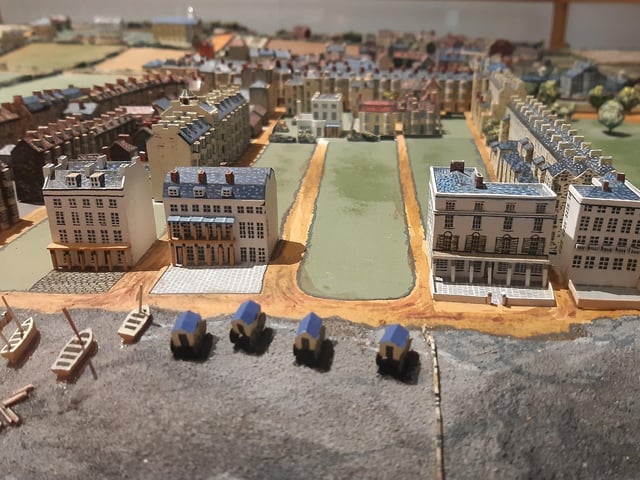
27. Worthing in 1815
Stanford's Cottage in the diorama of Worthing in 1815, at the end of Paine’s Field, and the larger, now demolished, Bedford House beside it Photo: Worthing Museum / Ronald M. Windle
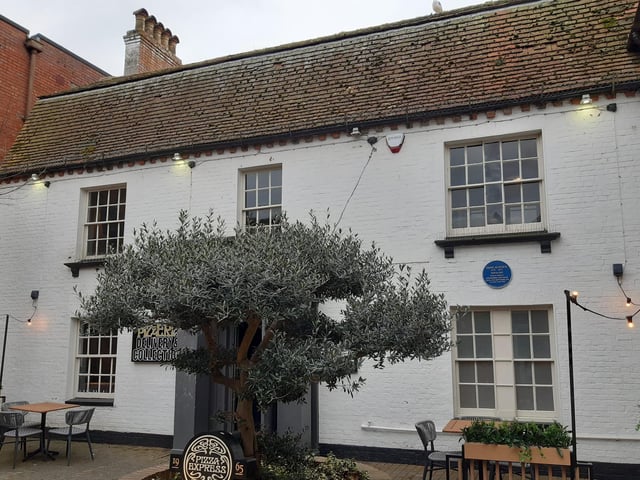
28. Worthing in February 2023
Stanford's Cottage, now Pizza Express, is where author Jane Austen stayed with her mother and sister at the end of 1805 Photo: Elaine Hammond