

Figment Arts has been exploring stories from the south east coast, researching the places where they come from and related museum collections.
The Worthing-based studio's artists have created work inspired by the county's heritage, including the Midsummer Tree skeletons in Worthing, Cissbury Ring fairies and Knucker Hole dragons of Lyminster and Sompting.
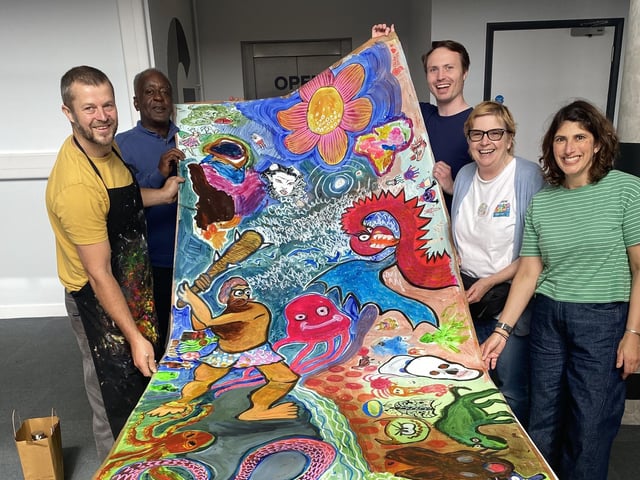
The artists have worked with more than 600 members of the public to create huge paintings, each themed on a different folk tale, and thanks to a grant from the National Lottery Heritage Fund, formed partnerships with Worthing Museum, Newhaven Museum and Hastings Museum.
David Parker, artistic director, said: "Another Sussex is the culmination of two years of working with people from Worthing to Hastings, exploring local folklore as a theme. This major exhibition will open in Worthing on the re-opening of the museum after a 12-month closure.
"Our exhibition includes some large-scale collaborative pieces alongside individual responses from our studio group. We’ve been researching these stories and the places they come from. Through large-scale collaborative paintings and individual artworks, these tales have been reimagined and reinterpreted, offering fresh, contemporary perspectives on local heritage.
"Artists from Figment Arts Studio and workshop participants have responded to stories about local legends of Sussex folklore, such as the Knucker Dragon of Lyminster, the Midsummer Oak, and the spectral hounds of Sussex.
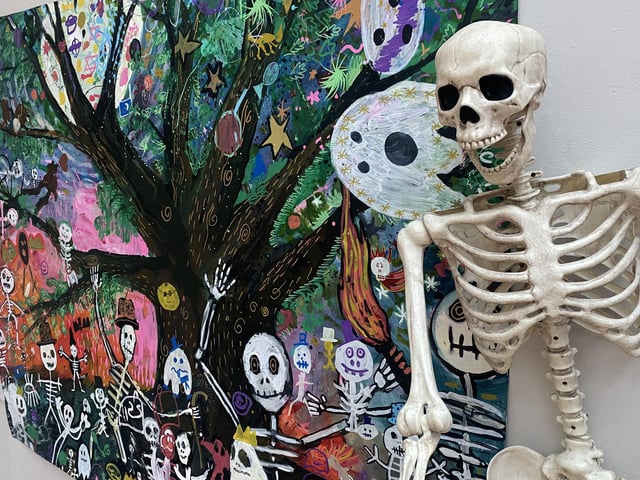
"This year is the 20th anniversary of the saving of the Midsummer Oak, the Worthing tree where skeletons are said to dance at Midsummer’s Eve. We’ll be telling this story and others as part of our exhibition."
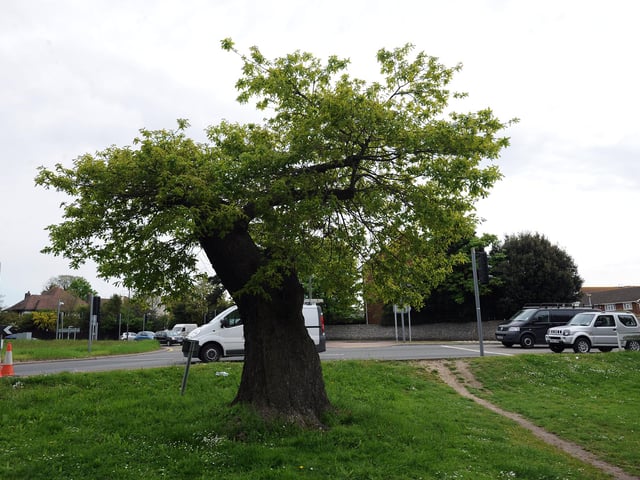
The tree stands on land by the Grove Lodge roundabout in Broadwater. There is a strange tale of skeletons rising up from its roots at midnight on Midsummer's Eve.
The oak tree is more than 300 years old and its story has been passed down the generations for centuries. No one knows for sure how old the legend of the dancing midsummer skeletons started but Charlotte Latham, the 'Godmother' of English folklore studies, remembered hearing it as a child in the early 19th century.
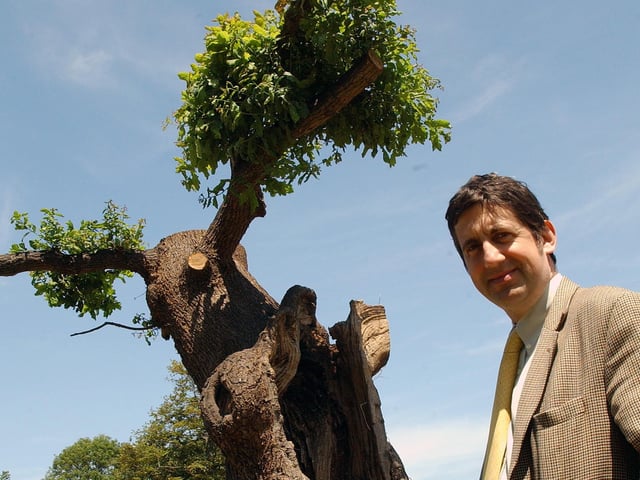
Local historian Chris Hare saved the tree during works on the main road in 2006 and since then, there has been annual gathering at the tree at midnight on June 23.
Anglo-Saxons believed roots of trees were connected to the spirit and underworld. Old trees like oak and yew were thought to have special powers. In the south of England, people thought the spirits were around at Midsummer because it was the shortest night and longest day.
Jacqueline Simpson, author of The Folklore of Sussex, admitted the identification of the Midsummer Tree was necessarily tentative, since the information given in Charlotte's 1878 article on West Sussex Superstitions – the oldest known source – was vague. Charlotte said it was 'at the foot of the South Downs', beside the lane leading from Findon to Worthing.
Documenting the tree in her book, Jacqueline says Midsummer, rather than Hallowe’en, was judged the best time for communing with the spirit world. There are records that say on Midsummer’s Eve, skeletons would rise up from the roots of a Broadwater tree, link arms and dance around it.
Jacqueline agreed with Chris that it could be the old hollow tree on the triangular spit of land between Warren Road, South Farm Road and Offington Road. As children in the 1940s, she and her friends used to say it was haunted.
Chris has said this old tree is a symbol of Worthing’s past and the strong associations that people once had with the landscape in which they lived. The compromise to keep it was for it to be truncated rather than being felled.
Research by Jacqueline and Chris into the Knucker Hole dragons has also informed artists working on paintings for the Another Sussex exhibition.
Legend has it that Knucker Holes in Sussex are home to wingless water dragons and various tales of them have been told for centuries.
The Knucker Dragon is a creature of Saxon folklore that is said to live in bottomless ponds. These Knucker Holes strangely never dry out, whatever the weather, and are permanently brimming with cold, fresh water.
Knucker Hole comes from the AngloSaxon nicor, ‘water monster’, and it is said the Lyminster one held a dragon. One story tells that local man Jim Pulk / Puttock baked a poisonous pie for the dragon but some of the poison stayed on his hand and he died wiping his mouth after a celebratory pint.
Another version says a wandering knight killed him and was offered the king’s daughter by way of thanks. His tomb can still be seen inside St Mary Magdalene Church at Lyminster, with faint marks supposed to be the hero’s sword laid across the dragon’s ribs. The church also has a stained-glass depiction of the tale.
Other Knucker Holes are said to have been located in East Worthing, Shoreham, Lancing and Sompting. The Sompting Brooks Nature Trail includes a sculpture by artist Janine Creaye depicting the Sompting Knucker Dragon.
The Knucker Hole on the Sompting Estate was restored by Church Farm in October 2014. This pond is bottomless and perpetually springing, and stories of a water creature have passed through the centuries.
Fairies and witches also feature. The last home of the fairies in England is said to be Harrow Hill, near Patching. Archaeologists discovered dozens of ox skulls buried here close to the Neolithic flint mines and a golden calf was believed to be buried at nearby Blackpatch Hill.
Fairies can be seen dancing up at Cissbury Ring on Midsummer’s Eve and at Chanctonbury Ring, various stories suggest you can raise Julius Caesar and his armies by counting the trees, or see a druid or a Saxon killed at the Battle of Hastings.
Stones of Steyning and the story of St Cuthman were also explored. There is a stone in the porch of St Andrew's Church in Steyning that reputedly gave the town its name. Opposite, a sculpture of St Cuthman, the builder of the original Saxon church, looks on.
The area was once known as Cuthman's Port, a prosperous trade centre with a market and a mint. Cuthman was a shepherd from the seventh century who grew up in Chidham. It is said he sat on a large stone in his field of sheep and he once drew an invisible boundary with his staff that kept his animals safe while we went to collect food – seen as a miracle.
When his father died, he and his mother were left destitute so they journeyed east, in the direction of the rising sun, with Cuthman pushing his invalid mother in a wooden wheelbarrow-style cart. They settled in Steyning and built a chapel.
Another Sussex will run at Worthing Museum from Saturday, March 28, to Sunday, June 21. There will be a Midsummer Open Event on Thursday, June 18, from 6pm to 7.30pm with singing, storytelling and celebration.
1. Another Sussex
A Figment Arts workshop in Newhaven in June 2025 Photo: David Parker
2. Another Sussex
The Skeleton Tree collaborative painting, inspired by the oak tree in Worthing where skeletons are said to dance at Midsummer’s Eve Photo: David Parker
3. Another Sussex
This old tree is a symbol of Worthing’s past and the strong associations that people once had with the landscape in which they lived Photo: Stephen Goodger
4. Another Sussex
Chris Hare with the Midsummer Tree in Broadwater in 2006, after it saved it from being felled Photo: Stephen Goodger