
A&E consultant leads toad safety patrols outside Chichester

As the 2026 toad migration at Brick Kiln Ponds – near Stansted Park – draws to a close, volunteers are reflecting on a season of quiet heroism.
Armed with torches, gloves, and high-visibility jackets, the group has been patrolling the roads at dusk, rescuing hundreds of toads and dozens of newts from oncoming traffic.
There are a growing number of volunteers from across the Chichester district but more is always needed. Half the battle has been trying to slow the traffic.
The urgent migrating toad rescue has been coordinated by Dr Ray McGlone, local A&E consultant and amphibian expert. Not satisfied with saving human lives, the remarkable Dr McGlone spends his evenings saving amphibians.
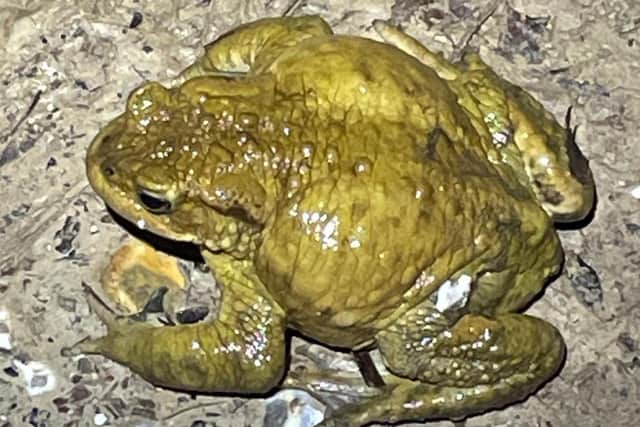

Explaining the urgency, he said: "There has been a 70 per cent reduction in UK toads over the past 30 years due to habitat loss and road kill. The toads migrate back to their ancestral ponds/lakes at night usually in February though it does depend on the temperature at least 8C and humidity (they like it wet).
"With global warming the toads have been migrating earlier so they are crossing roads in the dark during commuter time – so more cars to kill them.
“It’s estimated that 20 tonnes of toads are killed on the UK’s roads every year.”
Dr McGlone first discovered this crucial crossing in 2021.
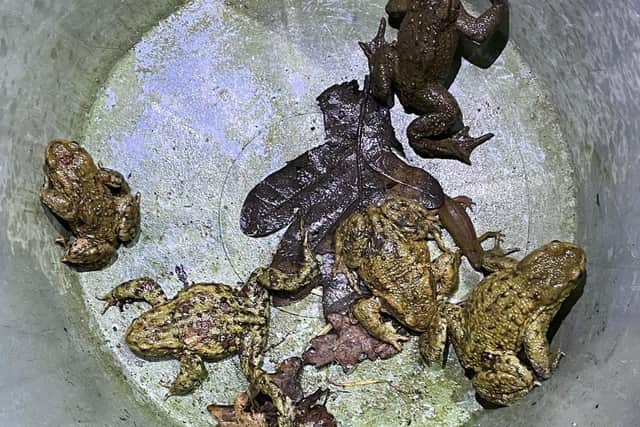
“Eventually a retired GP told me that one of his old patients used to help out near Stansted Park. So, in 2021, I drove to the site whilst it was raining in February, having seen on Facebook that the Sussex migration had started. I was unprepared, so got soaked trying to rescue all the many toads being killed by traffic.”
Now in its fourth year, the patrol has made a real difference.
Volunteers, often just six at a time, move carefully up and down the road, spotting the large, speckled toads – especially the females, which are particularly beautiful – and carrying them safely to the ponds.
Among the volunteers is Deborah Richards.
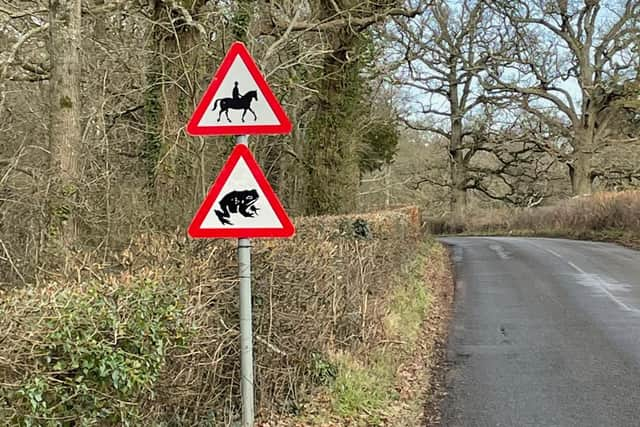
She said: “There is a steady stream of traffic, which never used to exist. And that's why it's really important that we're there to slow down the traffic and pick them up as much as we can. But in fact, it's really slowed down.
“And people are now, in the last couple of days, picking up toads. They've been to the pond, they've spawned, and they're coming back and crossing back to the woods.
"They only come out when it's damp or wet, and also over a certain temperature. The recent days have been dry and actually quite cold at night.”
Dr McGlone said one elderly patroller said there, in the 1970s, used to be hundreds crossing the road. But now, ‘with the increased traffic’, the numbers have declined drastically, Dr McGlone said.
He added: "When we are patrolling, the death rate is still around ten per cent, but without a patrol it is nearer 50 per cent. We try and target commuter time when there are more cars. Alas the toads are unaware of the Green Cross Code.”
This year, more than 390 toads and 25 newts were rescued, with 146 casualties recorded.
For Dr McGlone, the work is deeply personal.
"You might ask why an A&E consultant is spending his free time doing this,” he said.
“It goes back to my childhood in Northumberland.
"On Sundays in the summer once the family had gone to mass we would travel to a forest river in the Cheviots. The river teemed with wildlife and I spent many happy afternoons there.
"Twenty years later on a short break we visited the site and alas the river was absolutely dead killed by excess fertiliser from farms. In my life time I have witnessed the slow death of nature.
"I now have a nature Pond, breed British butterflies, have bird and bat boxes and nurture solitary bee colonies... all in my back garden.”
As the season ends, the volunteers’ quiet work has not only saved lives but inspired the local community.
And Mrs Richards said Dr McGlone should get immense credit.
"He's rather a wonderful guy,” she said. “Not only is he saving lives in the hospital, but he's saving the toads as well.”
Drivers are urged to stay vigilant, and anyone interested in joining next year’s patrols can register via Froglife’s ‘find your nearest toad crossing’ page. It is a reminder that sometimes heroes don’t wear capes – they wear gloves and carry a bucket.